About this place
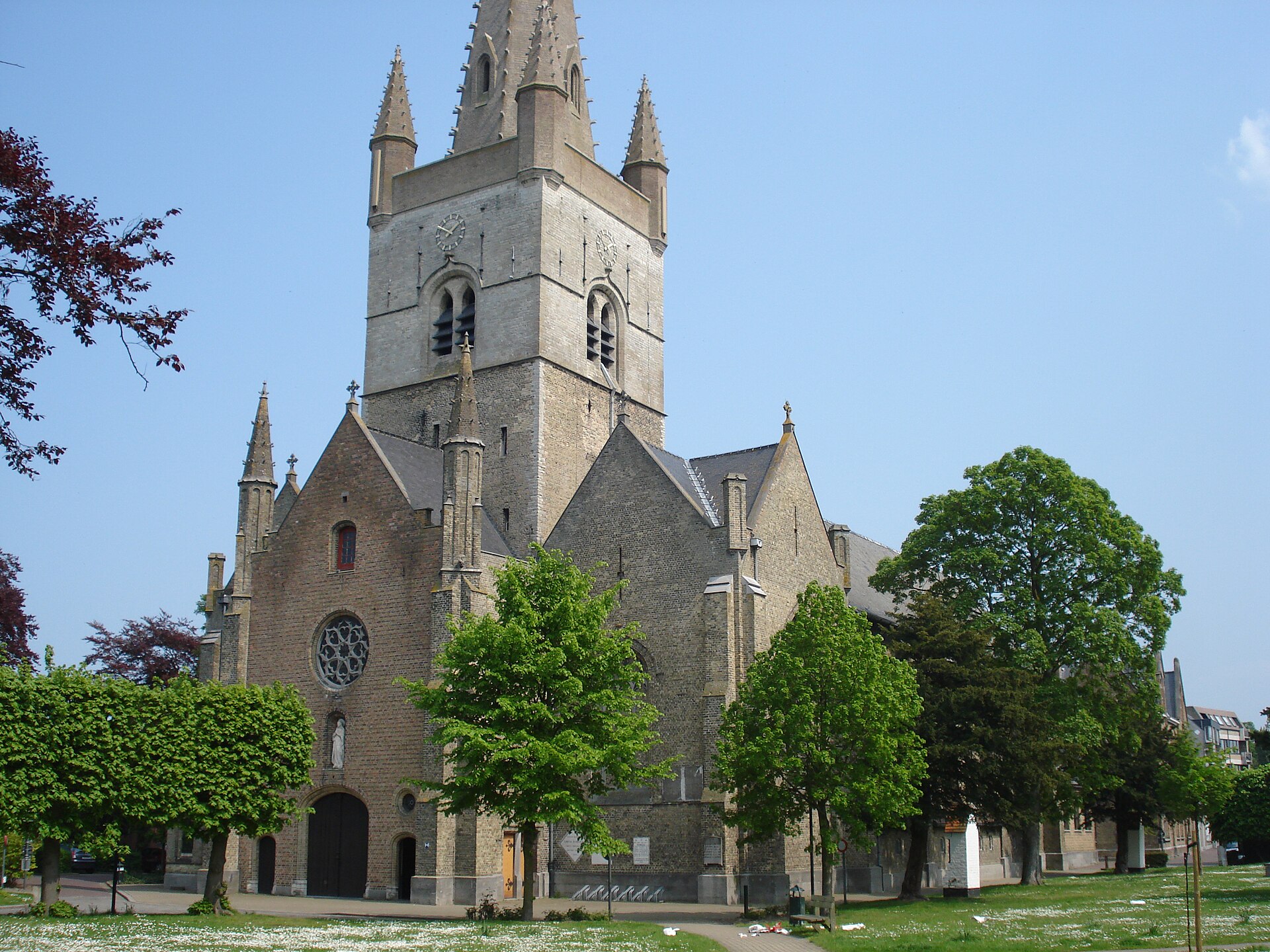
Onze-Lieve-Vrouw-Tenhemelopnemingskerk is the parish church standing at the heart of Gistel, a small town in the Belgian province of West Flanders. The neo-Gothic building visitors see today has crowned the town's central square since the mid-19th century, but the site itself has served as a place of worship for over a thousand years.
How old is the site really?
The earliest surviving written reference to Gistel dates back to 988 and mentions an "ecclesia" — most likely a modest chapel rather than a full church. Historians place the construction of the very first place of worship here around the 10th or 11th century. That original structure was built from wood and clay, the standard building materials for religious sites in the region at the time.
Why did the church need to grow?
As the settlement expanded and pilgrims increasingly travelled to Gistel to visit the resting place of Saint Godelieve — the town's patron saint — the simple wooden chapel could no longer meet demand. A larger, stone structure became necessary. By the year 1400, the church had developed into a cruciform building with two side aisles, a layout reflecting its growing importance as a pilgrimage destination.
What happened to the medieval church?
The medieval building did not survive intact. On 31 January 1488, the church was destroyed by fire, set deliberately by the troops of Maximilian of Austria during military action in the region. The loss wiped out centuries of architectural heritage, though the site continued to function as a place of worship in the years that followed.
What stands there today?
The church visitors encounter now is a neo-Gothic hall church, built between 1853 and 1867 to a design by architect Pierre Buyck. It replaced an earlier Gothic building that, by the mid-19th century, had deteriorated to the point where continued use and repair were no longer practical. The new church took over the parish's religious functions and has served that role ever since.
What is inside worth noticing?
The interior holds several features of note. The left aisle is dedicated to Our Lady and houses a Baroque altar together with stained-glass windows, giving this part of the church a distinct, more intimate character. A carved wooden pulpit dating from 1730 stands out as a fine example of the woodcarving craftsmanship typical of Flemish Baroque church furnishing. The church also displays processional banners and large 18th-century paintings by the Bruges painters Jan Garemijn and Jozef van de Kerckhove, evidence of the parish's wealth and standing during the early modern period.
The exterior is worth a closer look too: the gable carries a relief referencing the legend of Saint Godelieve, depicting the scene of her strangulation by Hacca and Lantbert. This detail ties the building directly to the local cult of the town's patron saint, whose story is intertwined with the very origins of the site.
Frequently asked questions
Is the current church the same building as the medieval one? No. The present neo-Gothic church was built between 1853 and 1867 on the site of an earlier Gothic building, which itself replaced the original medieval church destroyed by fire in 1488.
Why is the church dedicated to the Assumption of Mary? The dedication (Onze-Lieve-Vrouw-Tenhemelopneming, meaning "Our Lady's Assumption into Heaven") is one of the most common Marian church titles in Flanders and points to a long-standing Marian devotion tradition at this parish.
What is the church's connection to Saint Godelieve? The church and the pilgrimage traffic associated with it grew in part because of the presence of Saint Godelieve's resting place in Gistel — her cult was a key factor behind the original chapel's expansion into a larger church.
Who designed the current building? Architect Pierre Buyck, who designed the 1853–1867 reconstruction.
Nearby places

Earn badges for the places you visit
Download NextOnTrip, discover new places and check off your trails.