About this place
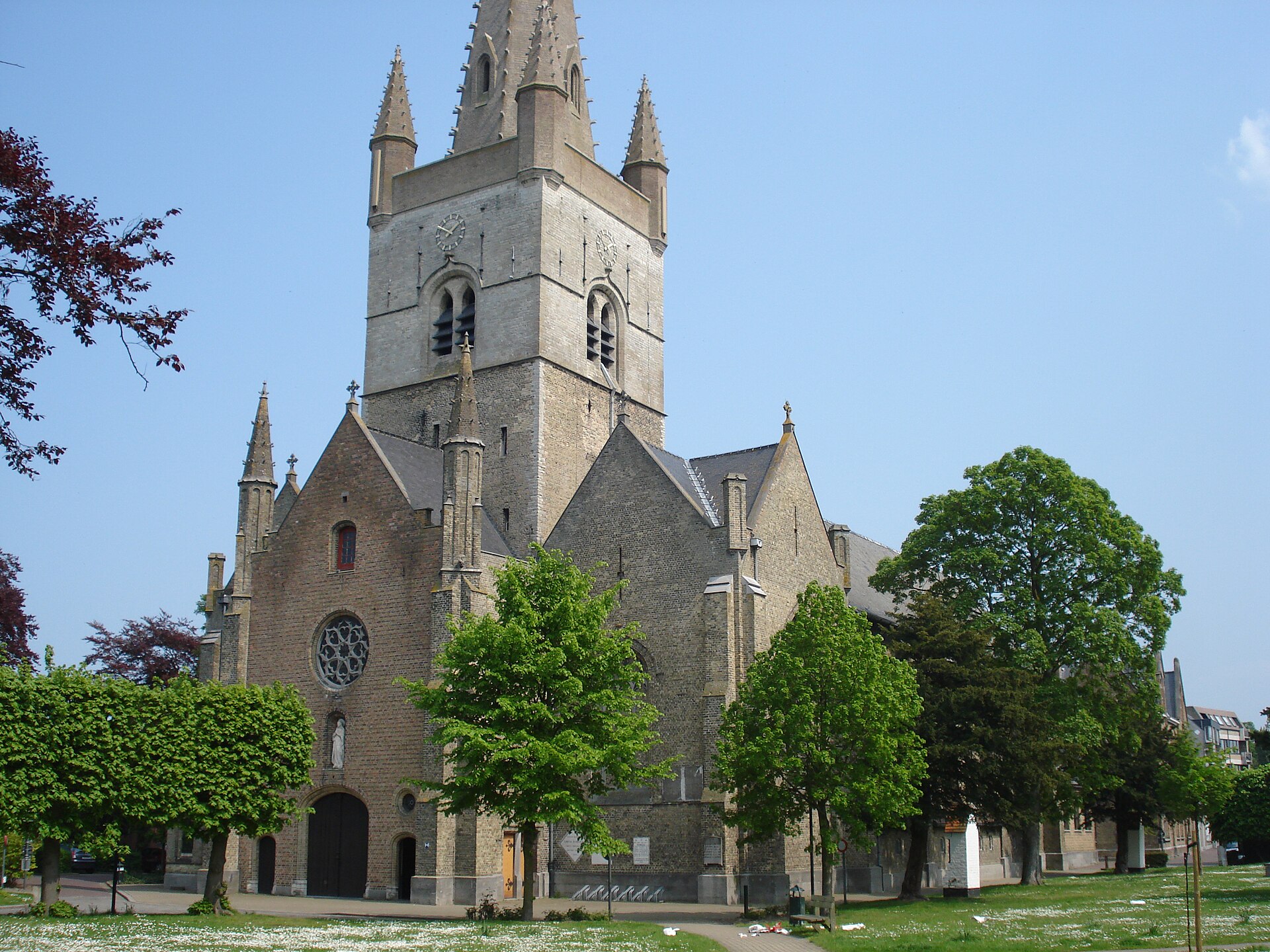
Dominicanenkerk is a neo-Gothic monastery church in Ostend, tucked away on Christinastraat 95 in a quiet part of the city far from the seafront promenade and casinos. It's an easy stop for travelers wanting to see a side of Ostend beyond the beach resort image, and its backstory involves an unusual architectural borrowing from a demolished medieval church in Ghent.
When did the Dominicans arrive in Ostend?
The Dominican order settled in Ostend in 1873. For several years the friars simply rented properties along Christinastraat while they established themselves in the city, without yet having a permanent church of their own. It wasn't until 1880 that they set up a temporary chapel, marking the start of a more settled presence in Ostend.
How was the current building constructed?
Construction of the neo-Gothic chapel began at the end of 1882. The architectural design came from Auguste Van Assche, while the adjoining monastery was designed by Father Raymondus Biolley — a pairing of a lay architect and a friar-designer that shaped the finished complex. The chapel was dedicated to Saint Catherine of Siena, an important figure for the Dominican order, and building work was completed in 1883.
Why does the church echo Ghent's Gothic style?
The most distinctive part of the church's history is its architectural model. Its floor plan follows that of the former Dominican church in Ghent, a Gothic building dating from 1240 to 1290. That medieval church was demolished in 1860, but not before it had been carefully measured and documented. Those records let the so-called Scheldt Gothic style — a regional Gothic variant tied to the Scheldt river basin — resurface strongly in this nineteenth-century Ostend building, even though it was built centuries after its Ghent model.
What damage has the church survived?
The building didn't escape the twentieth century's upheavals unscathed: it suffered damage during both world wars. Repairs followed in the aftermath, including work on the stained-glass windows and the organ, helping restore some of the interior's original character.
What is the church used for today?
The story of this site didn't stay purely religious. In 2004, the monastery church was handed over to the non-profit organization Poverello, which works with poor and homeless people. That transfer gave the building a continuing social role, pairing its architectural heritage with an active charitable function in the modern city.
Frequently asked questions
Where exactly is the Dominicanenkerk located? At Christinastraat 95 in Ostend, Belgium, in a quiet area away from the seafront promenade.
When was the church built? Construction began at the end of 1882, and the chapel dedicated to Saint Catherine of Siena was completed in 1883.
Who designed the building? The chapel was designed by architect Auguste Van Assche, while Father Raymondus Biolley designed the monastery.
Why is the style called Scheldt Gothic? Because the building's layout was modeled on the demolished thirteenth-century Dominican church in Ghent, a landmark example of that regional Gothic variant.
What is the building used for now? Since 2004 the monastery church has belonged to the non-profit Poverello, which supports poor and homeless people.
Nearby places

Earn badges for the places you visit
Download NextOnTrip, discover new places and check off your trails.