About this place
Obelisco de la Fuente Castellana is a 19th-century obelisk and one of Madrid's oldest surviving public monuments, now standing in Parque de Arganzuela on the banks of the Manzanares River. Its current setting has little to do with its original address, since the column's story begins back when Paseo de la Castellana was first being laid out as one of the city's grand avenues.
Where did this obelisk come from?
The monument was commissioned by King Ferdinand VII to mark the birth of his daughter and heir, the future Queen Isabel II, in 1830. Events, however, overtook the original plan: Ferdinand VII died on 29 September 1833, and his death coincided almost exactly with Isabel's third birthday and her accession to the throne. The foundation stone was laid on 10 October 1833, and construction took roughly five years to complete. The architectural design came from Francisco Javier de Mariátegui, while the sculptural work was carried out by José de Tomás.
What does the monument look like?
The obelisk stands nearly 20 metres tall. Its centerpiece is a slender column that originally served as the focal point of a fountain, which is where the name "Fuente Castellana" comes from. The column rests on a circular granite basin typical of the ornamental fountains built in 19th-century Madrid. The overall style is neoclassical, in keeping with other public monuments erected in the city during that period.
Why has it moved so many times?
This is one of the few Madrid monuments to have changed location repeatedly over nearly two centuries. It was first installed at the newly opened Paseo de la Castellana, at what is now the Glorieta de Emilio Castelar, where it functioned as a working fountain until 1869. At that point, its basin was replaced with landscaped greenery, and the accompanying sphinx sculptures were moved to Retiro Park. The obelisk itself was dismantled in 1906 and re-erected eight years later, in 1914, at Plaza de Manuel Becerra, where it once again worked as a fountain for several decades. Its most recent move came at the end of the 1960s, when the monument was relocated to Parque de Arganzuela beside the Manzanares River, becoming part of a new ornamental fountain now known as the Fuente de Arganzuela.
Where can visitors find it today?
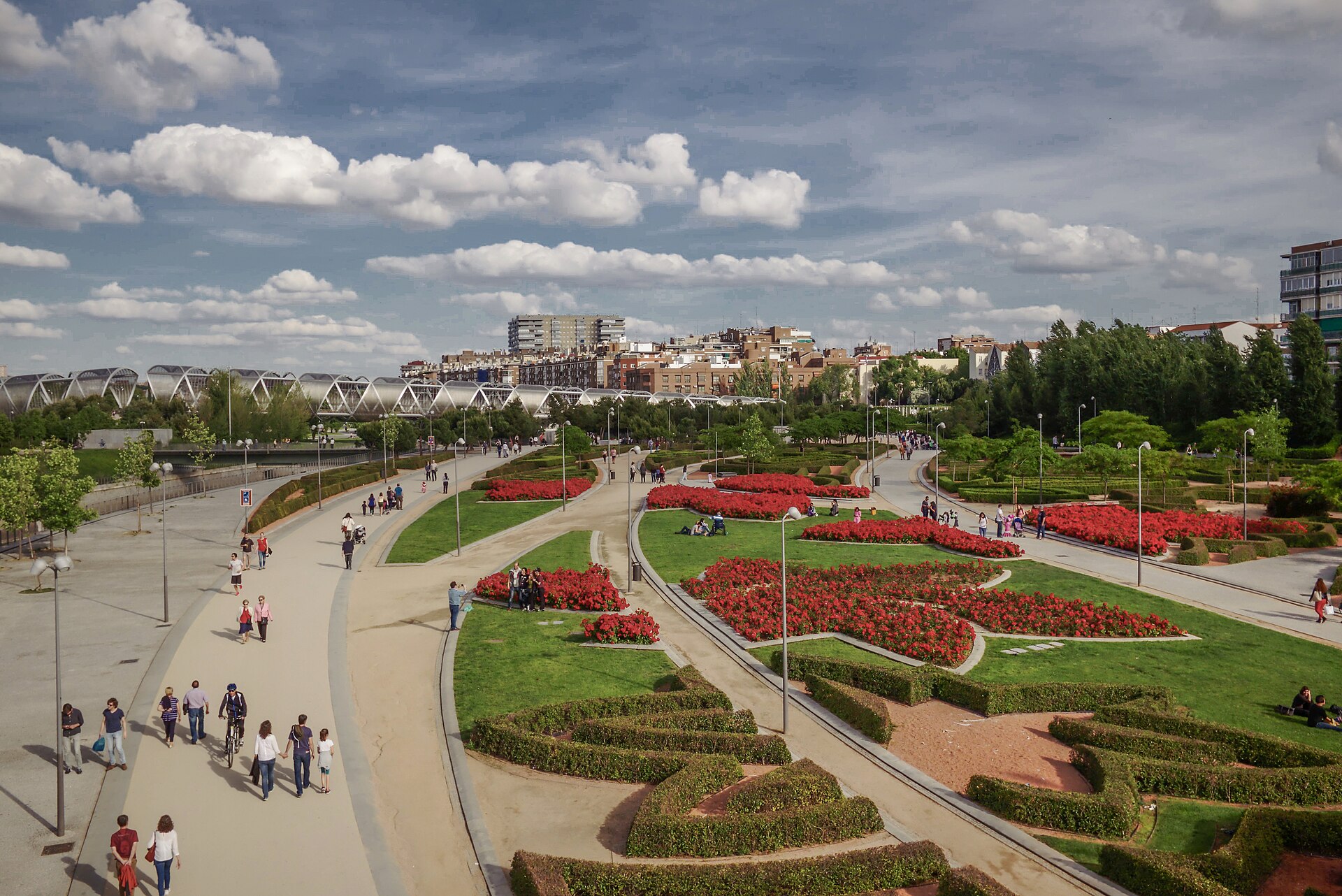
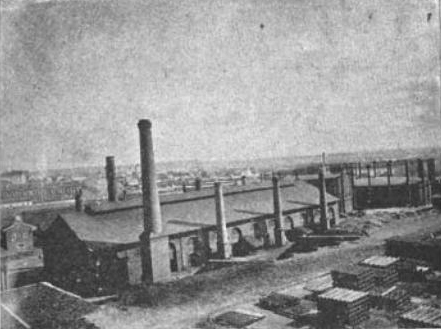
Today the obelisk stands within Parque de Arganzuela, surrounded by greenery and walking paths that run alongside the Manzanares, close to the former municipal slaughterhouse complex Matadero Madrid. It's a quieter part of the city, popular with locals for walking and cycling, so visitors can take in the monument without the crowds found at Madrid's more central sights. It pairs well with a stroll through the park and a visit to the nearby Matadero cultural centre.
Frequently asked questions
Is the obelisk still in its original location? No. It originally stood on Paseo de la Castellana, was later moved to Plaza de Manuel Becerra, and since the late 1960s has been located in Parque de Arganzuela beside the Manzanares River.
Who designed the monument? The architectural design was created by Francisco Javier de Mariátegui, and the sculptural elements were made by José de Tomás.
How tall is the obelisk? The column stands nearly 20 metres high and rests on a circular granite basin.
Why was the monument built? Ferdinand VII commissioned it to commemorate the birth of his daughter Isabel II in 1830; construction ultimately coincided with her accession to the throne in 1833, following her father's death.
Nearby places

Earn badges for the places you visit
Download NextOnTrip, discover new places and check off your trails.