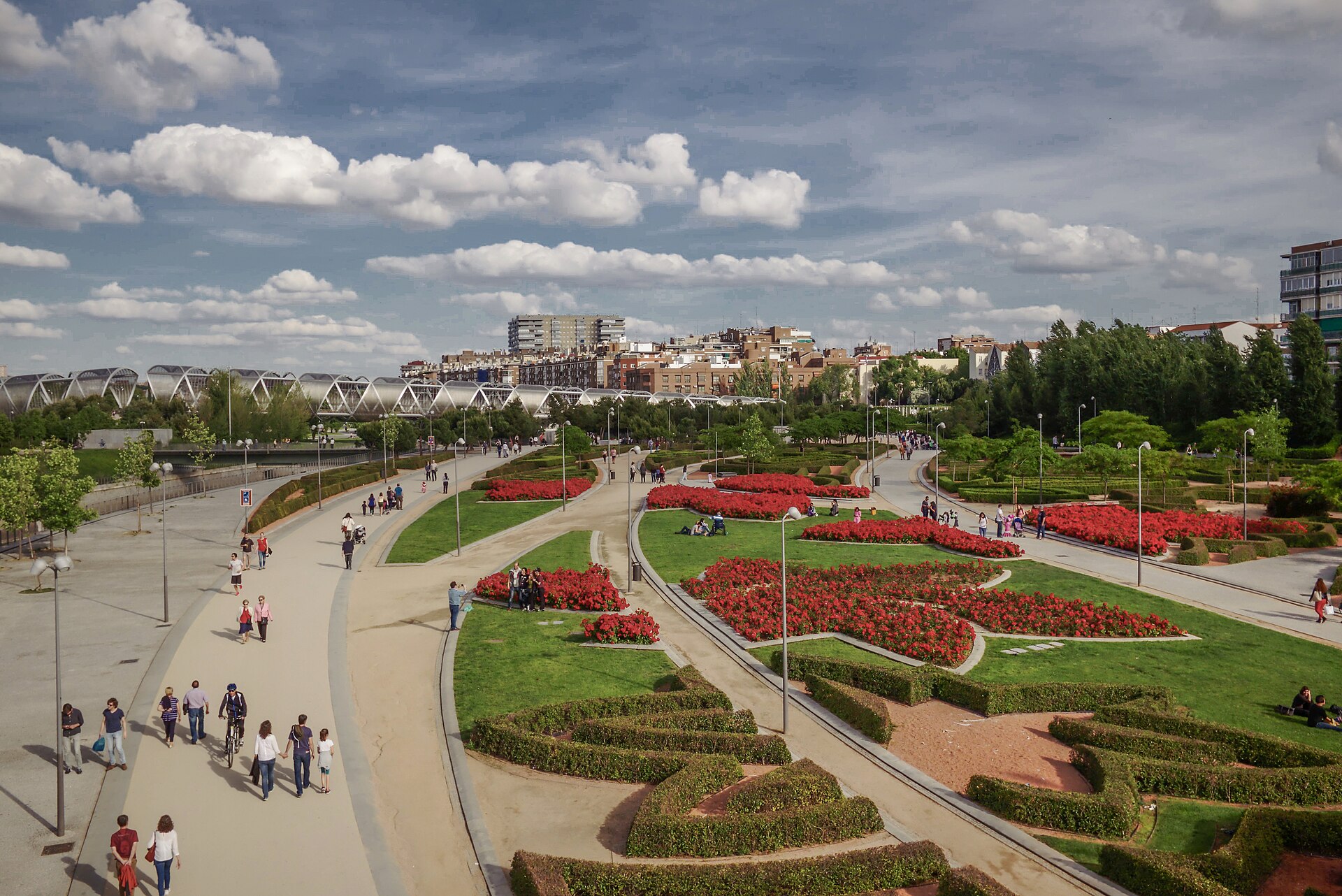
About this place
Madrid Río is one of Madrid's largest urban parks, stretching along the Manzanares River from the Puente de los Franceses bridge down to the Nudo Sur junction. The site once carried the M-30 ring road along the riverbank; once that stretch was buried underground between 2005 and 2011, the surface above it was turned into a green corridor running more than 6 kilometers and covering over 106 hectares. The redevelopment was chosen through an international competition launched by Madrid's city council in 2005, with architect Ginés Garrido leading the winning design.
How do you get to Madrid Río?
Because the park runs the length of the river, there's no single entrance — visitors pick whichever access point suits their route. The metro stations Príncipe Pío, Puerta del Ángel, and Marqués de Vadillo all sit within walking distance of the riverbank and are the easiest way in. City buses running along the surrounding streets and BiciMAD bike-share docks are good alternatives, dropping riders straight onto the park's paths. From central Madrid, walking from the Royal Palace toward the Segovia bridge takes only about fifteen minutes, making it a natural extension of a sightseeing route through the old town.
What is there to see?
The park's bridges are its defining feature, old and new alike. The Puente Monumental de Arganzuela, designed by Dominique Perrault, forms a distinctive spiralling structure over the water. The twin Matadero and Invernadero bridges stand out for their vaulted underpasses decorated with mosaics by artist Daniel Canogar. Nearby are the Puente del Principado de Andorra and the Puente Oblicuo, alongside much older crossings — the Puente del Rey, Puente de Segovia, and Puente de Toledo. The view from Puente de Segovia is one of the best vantage points in the city for the Almudena Cathedral and the Royal Palace rising above the river.
Along the banks, the Parque de Arganzuela section offers football, basketball, and tennis courts, skating tracks, a climbing wall, and a skatepark. In summer, fountains and water jets turn part of the park into an informal "beach," a favorite with families looking to cool off on hot days. After dark, the park regularly hosts open-air concerts and cultural events. Just next door, in what used to be the city's slaughterhouse, Matadero Madrid now runs as a cultural center with exhibitions, a cinema, and event spaces.
When should you visit?
Spring and autumn are the most comfortable seasons for a long walk or bike ride, with mild temperatures and quieter paths than in summer. The summer season draws the biggest crowds in the evenings and on weekends, when the fountains run and outdoor events take place. Winter tends to be the calmest stretch, appealing to anyone who wants a quiet riverside walk away from the city center's bustle.
Frequently asked questions
Is there an entrance fee for Madrid Río? No, it's a free public park — walking, cycling, and using the sports courts cost nothing year-round.
How much time should you set aside? The stretch between Puente de Segovia and Puente de Toledo can be walked in about an hour, but covering the park's full length with a few stops takes a relaxed half-day.
Is Madrid Río a good choice with children? Yes — the summer water features and playgrounds, plus the flat, wide paths, make it easy to bring kids along by foot, bike, or scooter.
What else pairs well with a visit? A stop at Matadero Madrid right next door, and a walk toward the Royal Palace and Almudena Cathedral, both visible from the Puente de Segovia.
Nearby places

Earn badges for the places you visit
Download NextOnTrip, discover new places and check off your trails.