About this place
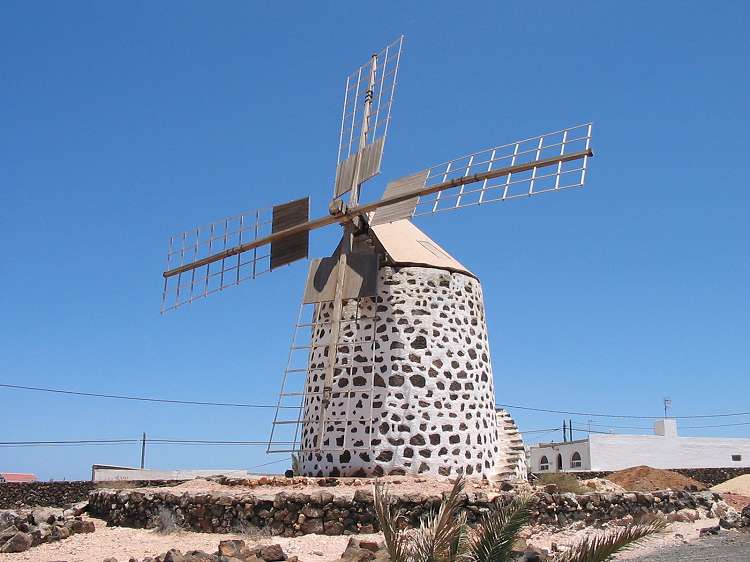
Northwestern windmill on La Montañeta stands on a small hill in the municipality of La Oliva, on the island of Fuerteventura. Listed as a cultural property, it forms part of a small windmill cluster together with a neighbouring mill on the same rise.
What is this place?
The montañeta once carried two windmills: one belonging to the Fajardo family, the other to the Calero family. The Calero mill survives today and has been restored, while the structure covered here is its north-western neighbour, recorded in the Canary Islands' cultural heritage registers. Windmills like this one were always built on elevated ground, to catch the steady, strong winds that define Fuerteventura's climate.
Their purpose was singular: grinding grain into flour and gofio, the toasted cereal flour that has been a staple of majorero (Fuerteventura islander) cooking for generations. Four wind-driven blades turned stone grinding wheels inside the tower. Mills like this one are the reason Fuerteventura was once nicknamed the "granary of the Canary Islands" — surplus grain and gofio were shipped from here to the other islands of the archipelago.
How many of these windmills survive?
Fuerteventura once counted close to a thousand mills and molinas (the traditional feminine-form windmill) across the island. Today only around twenty survive in the majorero countryside, and 23 mills and molinas have been declared Bienes de Interés Cultural — assets of cultural interest — by the Canary Islands government. The windmill on La Montañeta falls into this protected category.
How do you get there?
The site sits in the municipality of La Oliva, in northern Fuerteventura — a region also known for the nearby Corralejo dunes and the village of Villaverde, home to another surviving pair of mills. A car is the easiest way in; local roads lead directly to the hill where both windmills stand. It's worth pairing the visit with other mills in the area — Molino de Corralejo, Molino de El Roque or Molino de Los Lajares — to build a day trip around Fuerteventura's windmill heritage.
What will you see on site?
A stone mill tower typical of Canarian architecture, set against the dry, volcanic landscape that defines northern Fuerteventura. The spot is quiet and rarely crowded, making it a good short photo stop on a route between Corralejo and the island's interior.
When should you visit?
Early morning or late afternoon offer the best light and cooler temperatures than midday. With little shade or vegetation around, bring water and sun protection, especially in summer.
Frequently asked questions
Can you go inside the windmill? The site is protected as a cultural landmark rather than run as a museum with regular opening hours, so visits are mostly limited to viewing it from the outside.
What's the difference between a molino and a molina? Molino and molina are simply the masculine and feminine grammatical forms of "windmill" in Spanish as used on Fuerteventura — both refer to the same type of grain-grinding structure.
Is it worth combining this with other windmills nearby? Yes — the municipality of La Oliva preserves several other mills, including those at Villaverde, Corralejo and Los Lajares, making it easy to build a short themed route around the island's gofio and milling history.
Why were windmills built on hills like La Montañeta? Elevated spots gave the blades the best exposure to Fuerteventura's strong, constant winds, which were essential for turning the grinding wheels efficiently.
Nearby places

Earn badges for the places you visit
Download NextOnTrip, discover new places and check off your trails.