About this place
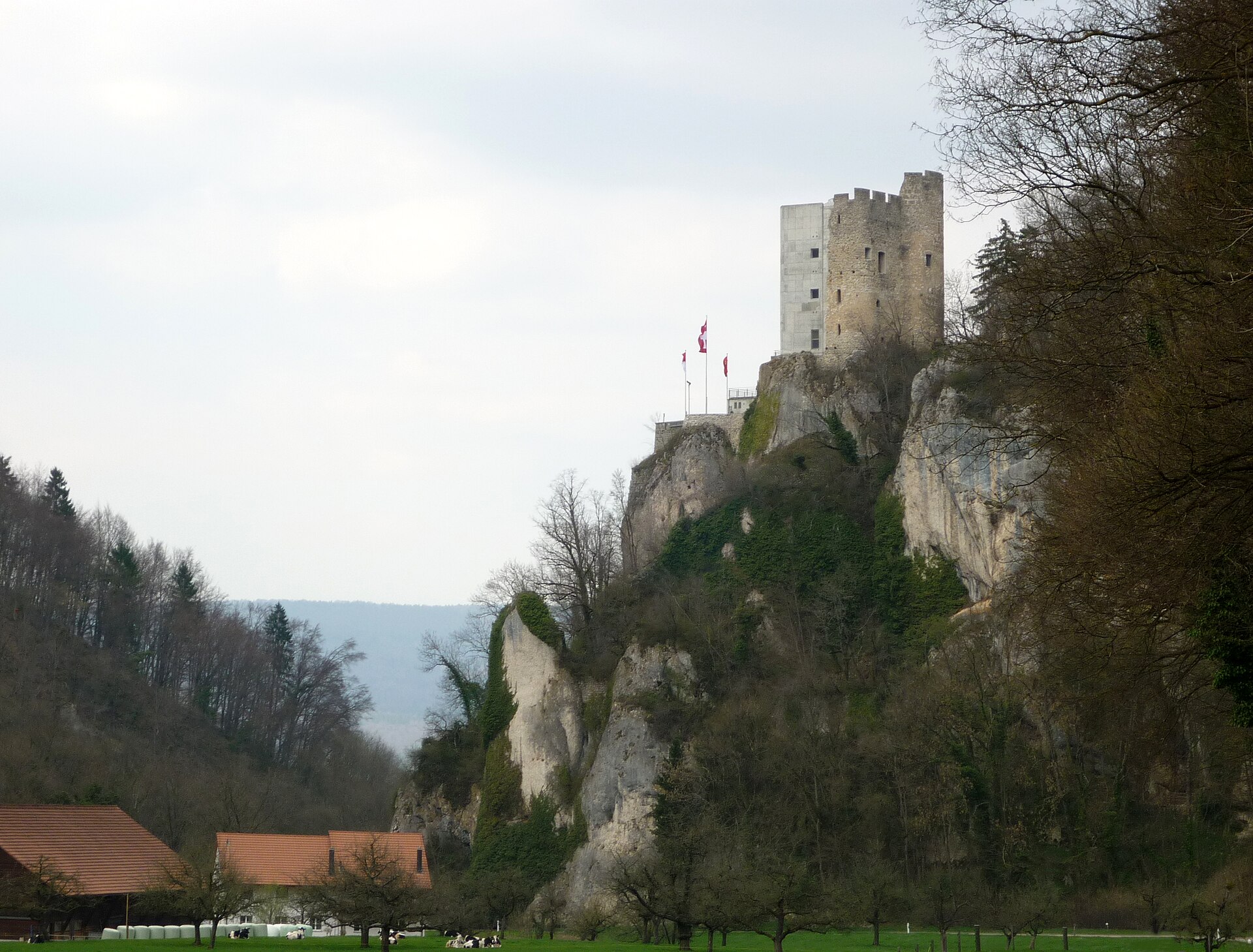
Neu-Thierstein Castle is a medieval castle ruin in the Swiss municipality of Büsserach, in the canton of Solothurn. Also known as Schloss Thierstein, it is regarded as a symbolic landmark of the Lüsseltal valley and the Schwarzbubenland region. It is one of the most recognisable sights in this corner of north-western Switzerland, and a rewarding destination for a quiet outing away from the country's busiest tourist routes.
Where is Neu-Thierstein Castle?
The ruin stands above the village of Büsserach in the canton of Solothurn. The surrounding area is the hilly Lüsseltal valley, where local roads have linked nearby settlements and the monastery of Beinwil for centuries. The site lies at roughly 47.385 N, 7.538 E. The Schwarzbubenland region is rural in character, and the castle dominates the valley landscape.
How and why was the castle built?
According to the available sources, the castle was founded around 1100. It is usually linked to the Saugern-Pfeffingen family, who are thought to have built it as the seat of the advocacy (Kastvogtei) over Beinwil monastery. The fortress therefore served an administrative and political purpose as well as a defensive one, allowing its holders to oversee church property and the surrounding countryside.
A new section was added around 1294/95, which explains the "Neu" (new) in today's name. The castle's original name, Bello, is documented in 1321, while the name Thierstein appears in records in 1400. The Counts of Thierstein also feature in the castle's story and gave the fortress its later name.
The Solothurn era
In the 15th century the castle repeatedly came under the control of the city of Solothurn, which occupied it in 1445, 1467 and 1499. After the Thierstein counts died out in 1522, Solothurn took the castle permanently. It became the administrative centre of the secular bailiwick (Vogtei) of Thierstein. A Solothurn Landvogt, the official governing the district on behalf of the city, resided here until 1798.
From demolition auction to romantic ruin
In 1798 the castle was put up for auction with demolition in mind. It was not pulled down, however. In the 19th century private individuals who valued it as a romantic ruin saved it from destruction, which is why its surviving core can still be seen today.
What can you see on site?
The principal surviving element is the residential tower. Traces of an outer bailey, the outer part of the fortifications, are also visible. In 1997 the municipality of Büsserach took over the ruin to make restoration possible. That same year part of the tower collapsed, and its south-west corner was later rebuilt. A glass roof was added as weather protection, improving the building-physics conditions of the masonry and shielding it from moisture.
Frequently asked questions
Is Neu-Thierstein a ruin? Yes. It is a castle ruin whose main surviving element is the residential tower.
Which country and canton is it in? Switzerland, in the canton of Solothurn, in the municipality of Büsserach.
When was it built? It was founded around 1100, with a new section added around 1294/95.
Who owns it today? The municipality of Büsserach took over the ruin in 1997 to enable restoration. Sources also mention a later change of ownership without naming the new owner, so check current access arrangements before visiting.
Is the castle connected to a monastery? Yes. It was built as the seat of the advocacy over the nearby Beinwil monastery.
Why is it called Neu-Thierstein? "Neu" refers to the new section added in the late 13th century, and "Thierstein" to the counts associated with the fortress; the name is documented from 1400.
Nearby places

Earn badges for the places you visit
Download NextOnTrip, discover new places and check off your trails.