About this place
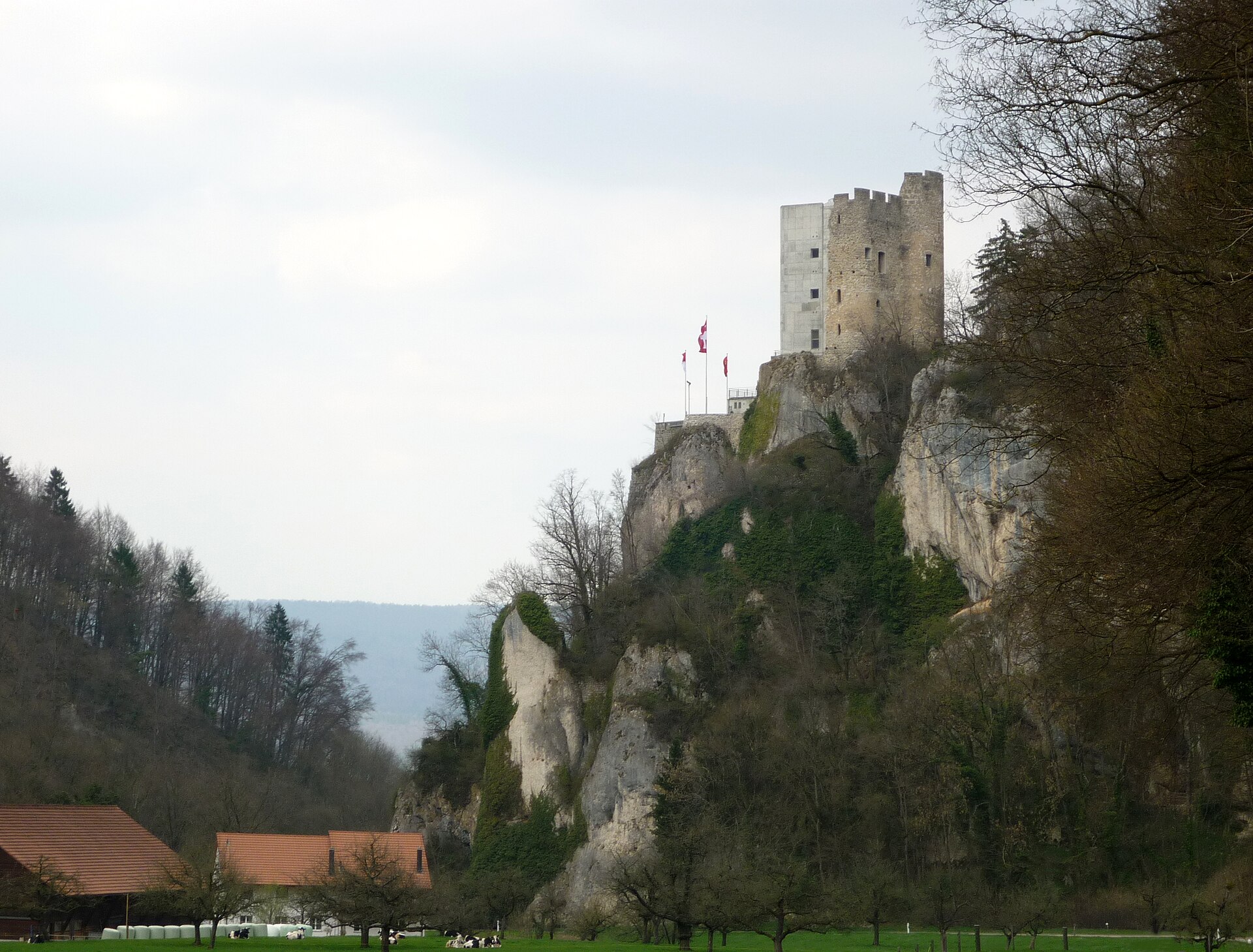
Gilgenberg castle ruin stands on a rocky ridge above the village of Zullwil in the canton of Solothurn, Switzerland. It is a medieval stronghold that served for centuries as a seat of local power, and today it is a freely accessible goal for walks in the Swiss Jura.
Where is Gilgenberg castle ruin?
The castle sits above Zullwil in north-western Switzerland, in the canton of Solothurn, at roughly 47.38° N and 7.61° E. The ridge gave defenders a wide view of the surroundings and natural protection. Today the same position rewards visitors with pleasant views.
How was Gilgenberg castle built?
According to the Historical Dictionary of Switzerland, the castle was built around 1300 on top of an older structure dating from about 1200. The builders are identified as the lords of Ramstein. The name refers to their coat of arms showing two crossed lilies, called "Gilgen" in the local dialect, which was in use from 1265. The first written mentions of the castle date from 1312, 1315 and 1326.
Who ruled the Gilgenberg lordship?
A letter of investiture issued in 1371 defined the rights of the Gilgenberg lords. The lordship included Meltingen, Zullwil and Nunningen. It was originally allodial property, meaning it was not held as a fief, yet it was placed under the overlordship of the Bishop of Basel in return for protection. Some accounts link damage to the castle with the Basel earthquake of 1356, though the extent of the damage is not clearly documented.
What happened in the 16th century?
In 1525, during the Peasants' War, rebellious peasants occupied the castle. In 1527 Hans Imer von Gilgenberg sold the lordship, which passed to the city of Solothurn. The castle then became the seat of a bailiff (Landvogt), an official who administered the surrounding villages on the city's behalf.
Why is Gilgenberg a ruin?
In 1798, during the upheaval that ended the old order, local residents set the castle on fire. It has remained largely a ruin ever since. Earlier damage and the passage of time have also taken their toll.
Has the ruin been preserved?
Yes. About forty years ago the walls were restored with support from the federal government and the canton. Apprentice masons carried out much of the work, combining heritage protection with craft training. As a result the surviving sections of wall are secured and the site can be explored.
Frequently asked questions
Is there an entrance fee? Available information indicates that the ruin is freely accessible to visitors.
Can I hold an event here? According to burgenwelt.org, the site can be rented for private events. It is worth confirming details with local organisers.
Who built the castle? The lords of Ramstein are most often named. Some English-language sources say they were earlier known as the lords of Brislach, but the Historical Dictionary of Switzerland names the Ramstein family directly.
When did the castle stop being a seat of power? After 1527 it was the seat of a Solothurn bailiff. It was burned in 1798 and has been a ruin since.
Who is this place for? Anyone who enjoys castles, regional history and walks in the Jura. The ruin pairs the clear story of a medieval lordship with the landscape around Zullwil.
Nearby places

Earn badges for the places you visit
Download NextOnTrip, discover new places and check off your trails.