About this place
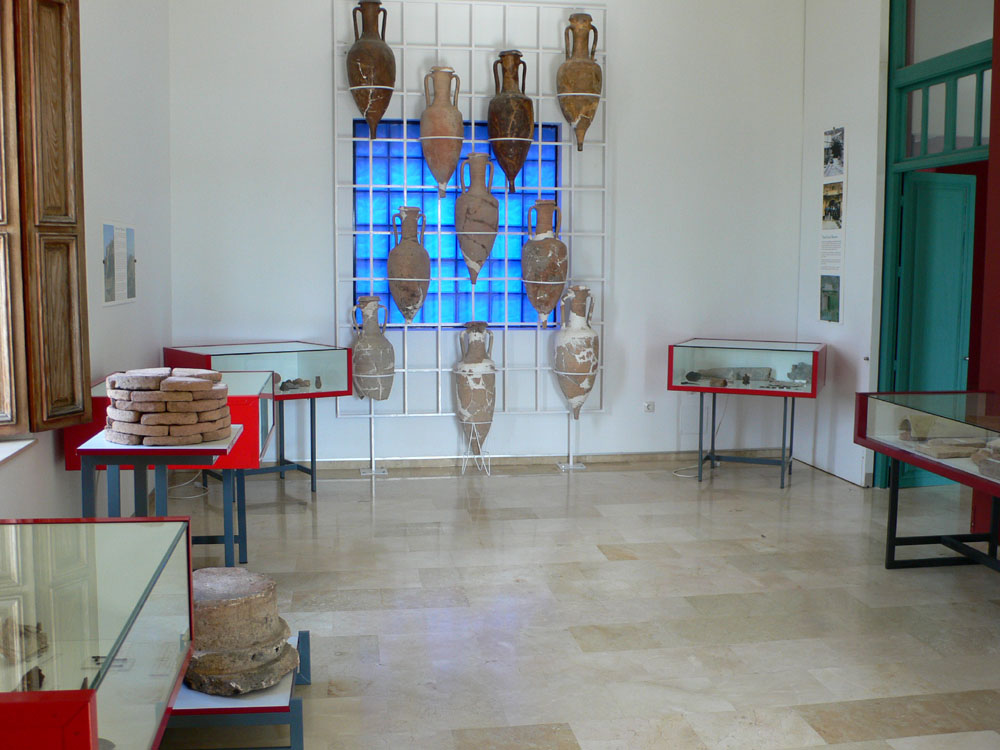
Museo Arqueológico de La Unión is a small archaeological museum, but it isn't actually located in La Unión's town center — it sits in Portmán, a coastal former mining settlement that belongs to the municipality of La Unión, in the Region of Murcia. The building itself has history: it was originally the Hospital de Caridad (Charity Hospital), built in 1892 to treat miners injured in accidents at the nearby pits. Today that same building tells the story of thousands of years of mining in the Sierra Minera district.
What will you see inside?
The collection is spread across three rooms and walks visitors chronologically through the area's mining past, from prehistoric extraction activity through to more recent industrial exploitation. The heart of the museum, though, is its Roman-era material: when these mines belonged to Carthago Nova (present-day Cartagena), they were worked intensively for silver, lead, iron, and zinc. Silver from these very hills once flowed into the Roman treasury, helping fund the Republic's and later the Empire's ambitions.
The single most valuable piece on display is a set of fragments from a large polychrome mosaic recovered from the Roman villa of Paturro, found near Portmán. The mosaic dates from between the 1st century BC and the 3rd century AD and is considered one of the most significant Roman mosaics in the whole Region of Murcia. Look closely at the precision of the tesserae and the surviving color palette — a level of preservation that's genuinely rare among Roman mosaics unearthed in this part of Spain.
How do you get there?
Portmán lies on the Costa Cálida coastline, a short drive from central La Unión and close to Cartagena, which is the most practical base for planning a visit by car or local public transport. The village sits at the heart of the famous Sierra Minera de Cartagena-La Unión mining district, so it's worth pairing the museum with a look at the surrounding, dramatically scarred mining landscapes and Portmán Bay itself — a body of water whose seabed was partially filled in by decades of nearby smelting waste, making it a landmark of industrial history in its own right.
When should you visit?
Given its compact exhibition space, the museum works best as one stop within a longer day exploring the mining region — combined, for example, with the Parque Minero de La Unión or a walk around Portmán itself. It's worth checking current opening hours directly with La Unión's local tourism office before setting out, since the museum has been known to close temporarily for renovation work — don't assume fixed hours without confirming on the day.
Who is this museum for?
This is a must for anyone interested in mining history or Roman archaeology, and for travelers curious about why this stretch of the Murcian coast has drawn people searching for metal ores for thousands of years. Because the exhibition is small, a visit typically takes 30 to 45 minutes, making it an easy addition to a route through Cartagena and the surrounding area.
Frequently Asked Questions
Where exactly is the Museo Arqueológico de La Unión located? The museum is in Portmán, a coastal village that belongs to the municipality of La Unión, housed in the former Hospital de Caridad building dating from 1892.
What is the museum's main highlight? Fragments of a polychrome mosaic from the Roman villa of Paturro, dated between the 1st century BC and the 3rd century AD.
How long does a visit take? Because the museum has only three rooms, a visit usually takes 30 to 45 minutes.
Is it worth combining with other nearby attractions? Yes — Portmán sits in the middle of the Sierra Minera de Cartagena-La Unión mining district, close to the Mining Park and the striking Portmán Bay, so it's worth planning extra time in the area.
Nearby places

Earn badges for the places you visit
Download NextOnTrip, discover new places and check off your trails.