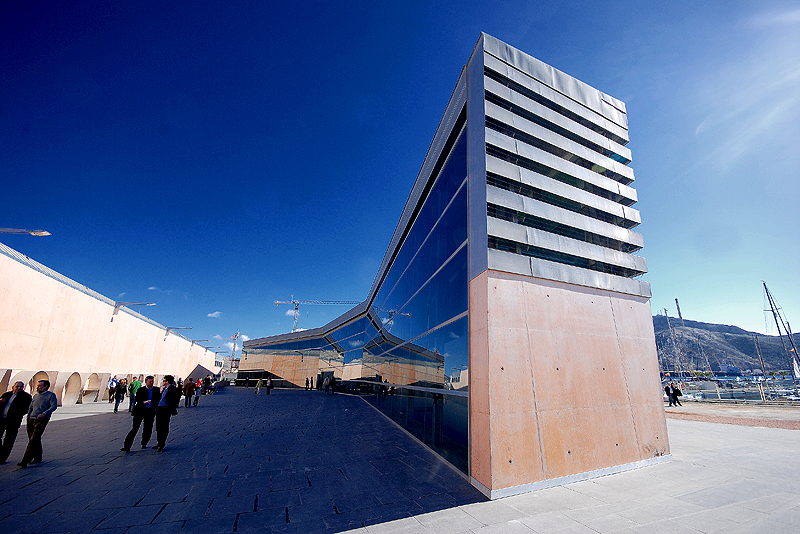
About this place
The National Museum of Underwater Archeology (ARQUA) is Spain's national museum dedicated to underwater archaeology, located in Cartagena, in the Murcia region. The museum belongs to the network of National Museums of Spain and is attached to the Ministry of Culture, making it one of the country's leading institutions for the study and display of maritime heritage.
What will you see inside?
ARQUA's collection is built around objects recovered from shipwrecks along the Spanish coast, spanning an unusually wide chronological range — from the Phoenician shipwrecks found off Mazarrón to vessels as recent as the 19th century. Visitors can trace the development of Mediterranean seafaring across thousands of years, moving from the earliest Phoenician ships through the Roman and medieval periods and on to more recent trading and military vessels.
The exhibits combine recovered artifacts with explanations of how underwater archaeology is actually carried out — locating wrecks, documenting them in situ, and conserving objects once they are brought to the surface. This makes the museum appealing both to history enthusiasts and to anyone curious about the technical side of maritime archaeology.
How do you get there?
Cartagena sits on the Mediterranean coast in the Murcia region, in southeastern Spain. The city has good rail and road connections to the rest of the region and to nearby resort areas along the Costa Cálida. The museum is located in the historic part of the city, close to the harbor, which makes it easy to combine a visit with a walk along the waterfront and a look at Cartagena's other historic sites.
When is the best time to visit?
The Murcia region has a Mediterranean climate, with mild winters and hot, dry summers. Because the museum's exhibits are indoors, a visit works year-round, but spring and autumn make it easier to pair the museum with outdoor activities such as strolling through Cartagena's old town or exploring the coastline. In summer, expect higher temperatures and busier crowds in the city center.
Why combine it with a visit to Cartagena?
Cartagena has a long, layered history as a Phoenician, Carthaginian and Roman port, and traces of each period are visible throughout the city center. A visit to the underwater archaeology museum fits naturally into a broader tour of the city, since its focus on shipwrecks and maritime trade is directly tied to the history of the harbor around which Cartagena itself grew.
Frequently Asked Questions
How is this museum different from a typical archaeology museum? It focuses exclusively on underwater heritage — shipwrecks and objects recovered from the sea — rather than on land excavations, which makes it a rare specialization even by European standards.
How old is the oldest part of the collection? The earliest pieces come from Phoenician shipwrecks discovered off Mazarrón, near Cartagena, making them among the oldest documented vessels found in this part of the Mediterranean.
Does the collection only cover ancient history? No — the chronological range runs from Phoenician times all the way to the 19th century, so the museum shows the continuity of seafaring across many different eras.
Is it worth combining with other sights in Cartagena? Yes, the museum sits close to the harbor and the historic city center, making it easy to plan a day that covers both the exhibition and Cartagena's other landmarks.
Nearby places

Earn badges for the places you visit
Download NextOnTrip, discover new places and check off your trails.