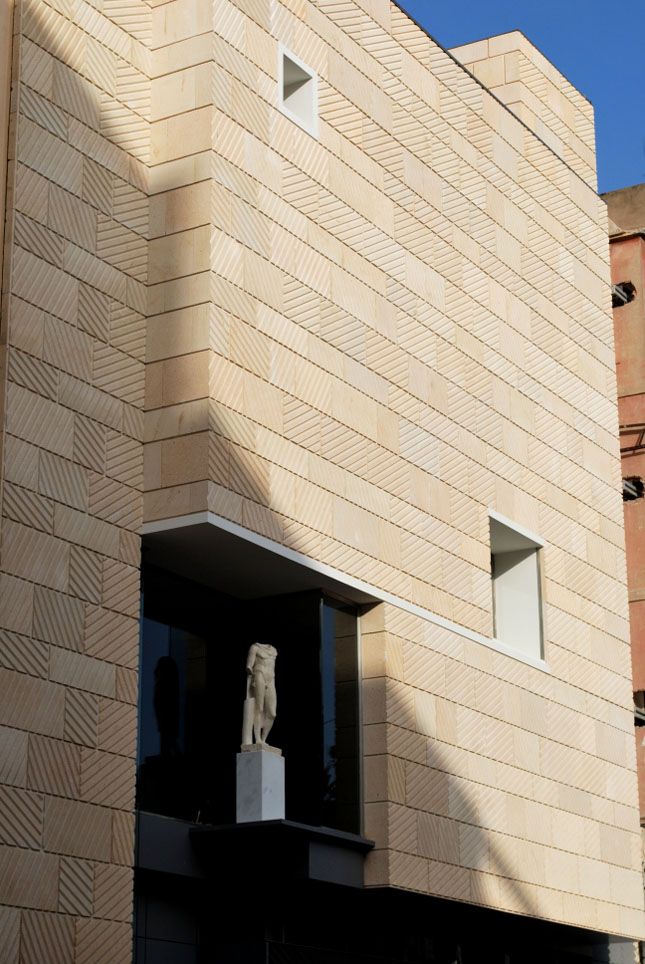
About this place
Museo del Teatro Romano de Cartagena is a museum in Cartagena, in Spain's Murcia region, dedicated to an ancient Roman theatre unearthed right in the heart of the city. Rather than just housing artefacts, the building itself acts as a guide, leading visitors from a modern entrance structure through a stretch of the old town and down to the actual theatre ruins.
How was the Roman theatre discovered?
The remains came to light in 1988, during the demolition of houses in Cartagena's historic centre. Until that point there was no historical record or prior archaeological trace suggesting a monument of this scale existed underneath the old town. The chance discovery triggered years of excavation campaigns that gradually revealed more and more of the structure, turning an ordinary demolition site into one of the city's most significant archaeological finds.
Why does this theatre matter so much for Cartagena's history?
The size and quality of the building point to how important Cartagena — ancient Carthago Nova — once was within Roman Hispania. The theatre ranks among the largest of its kind found on the Iberian Peninsula, with seating for roughly 7,000 spectators. A venue of that capacity implies a city with real administrative and economic weight, capable of drawing crowds comparable to the biggest Roman theatres known in Hispania.
Who designed the museum, and when did it open?
The museum building was designed by Rafael Moneo, one of Spain's most acclaimed architects and a Pritzker Prize laureate. His design goes beyond a conventional exhibition hall: the building works as a passage linking the modern city to the ancient monument, walking visitors step by step deeper into the past until they reach the ruins themselves. The museum opened to the public on 11 July 2008, following years of conservation work and exhibition preparation.
What will visitors see on a tour?
The visit begins in the modern exhibition wing, where finds from successive excavation campaigns are displayed — architectural fragments, decorative elements, and everyday objects connected to the theatre's use in antiquity. From there the route runs through remnants of old Cartagena, letting visitors see how different historical layers stacked up on the same spot over time. The route ends at the exposed ruins of the seating tiers, orchestra, and stage — a monument that lay hidden beneath the city for centuries before its rediscovery.
Frequently asked questions
Where is the Museo del Teatro Romano de Cartagena located? The museum sits in the historic centre of Cartagena, in Spain's Murcia region, right next to the exposed ruins of the ancient theatre.
When was the Roman theatre in Cartagena discovered? The ruins were found in 1988 during the demolition of houses in the old town — before that, no historical source had recorded the theatre's existence.
How many people could the theatre hold? The theatre's seating could accommodate around 7,000 spectators, making it one of the largest Roman theatres ever found in Hispania.
Who designed the museum building? The building was designed by architect Rafael Moneo, and the museum opened to visitors on 11 July 2008.
Nearby places

Earn badges for the places you visit
Download NextOnTrip, discover new places and check off your trails.