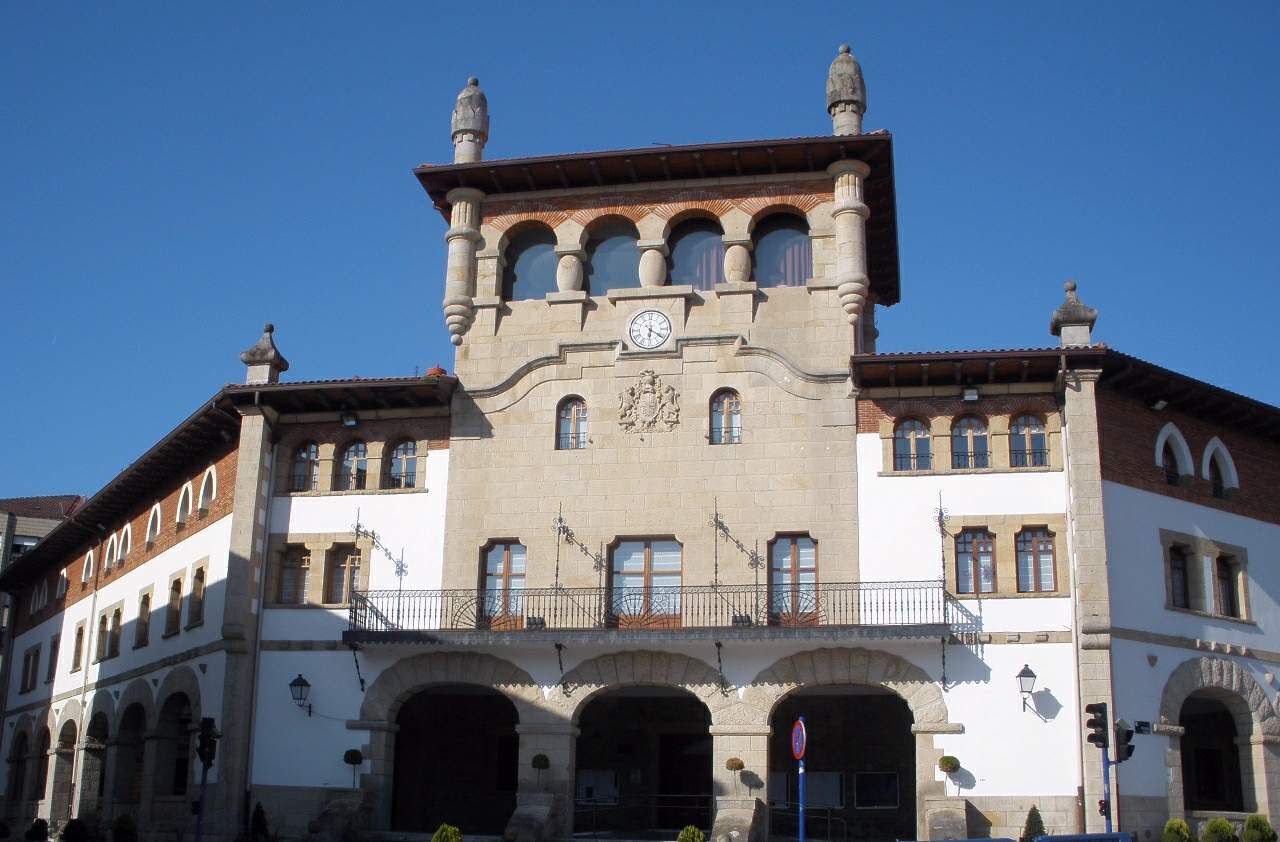
About this place
Mungia Town Hall serves as the seat of local government for this small town in the Biscay province of the Basque Country. Standing right in the heart of Mungia, the building has remained one of the town's most recognizable landmarks for nearly a century, drawing the eye of residents and visitors alike.
How do you get there?
Mungia sits about 20 kilometers from Bilbao, reached via a well-signposted regional road. Driving is the most convenient option, with parking available near the main square in the town center. Travelers relying on public transport can catch one of the regular buses running from Bilbao to Mungia, a trip that typically takes 30–40 minutes. The town hall itself stands within the old town, so once you reach the center, it's just a short walk away.
What will you see there?
The current town hall building dates back to 1927. Its design drew on the neo-Cantabrian style, a movement popular in public architecture across northern Spain at the time. The most striking feature is the tower crowned with turrets, which dominates the façade and remains visible from many points around town. Buttresses reinforce the front of the building, while the second floor features pointed, Gothic-inspired windows.
At street level, a wide portico opens onto the square — a design typical of Basque municipal buildings, historically used as a gathering space and informal trading area. The upper sections are finished in brick, creating a visual contrast with the stone base and marking a clear division between the building's levels. Above the portico sits a large coat of arms of the Anteiglesia de Mungia, along with a decorative corbel echoing Baroque detailing.
The building's history hasn't been entirely peaceful. The original structure, completed in 1927, burned down during the Spanish Civil War on June 13, 1937. The reconstructed building preserved its original architectural character, and it remains a defining landmark of the town to this day.
Today, the tower houses functions that go well beyond municipal administration: a public library, a media center, cinema screening rooms, and exhibition spaces. That mix keeps the building active not just as a seat of government, but as a genuine cultural hub for the local community.
When should you visit?
The town hall can be admired from outside year-round, and the square in front of it is freely accessible at any time. Late afternoon light works especially well for photographing the façade and tower, highlighting the texture of the stone buttresses and brickwork. If you're planning to step inside — to visit the library, an exhibition, or catch a film — it's worth checking opening hours in advance, since these can differ from the administrative offices' schedule.
Spring and early autumn are the most comfortable seasons for exploring Mungia on foot, with mild temperatures and a quieter atmosphere around the town hall square compared to the larger cities of the Basque Country.
Frequently asked questions
Can you go inside Mungia Town Hall? Parts of the building serve public functions — the library, cinema rooms, and exhibition spaces are open to visitors during their respective opening hours. The administrative offices themselves aren't open to tourists.
What architectural style is the building? It was designed in the neo-Cantabrian style, with clear Gothic touches (the pointed windows) and Baroque elements (the corbel and coat of arms).
Is the current building the original from 1927? The original 1927 structure was destroyed by fire during the Spanish Civil War in 1937. The building standing today is a reconstruction that preserved the original architectural character.
Is it worth combining a visit with the rest of Mungia's old town? Yes — the town hall sits within the historic center (casco histórico), so a single walk lets you take in other historic buildings nearby as well.
Nearby places

Earn badges for the places you visit
Download NextOnTrip, discover new places and check off your trails.