About this place
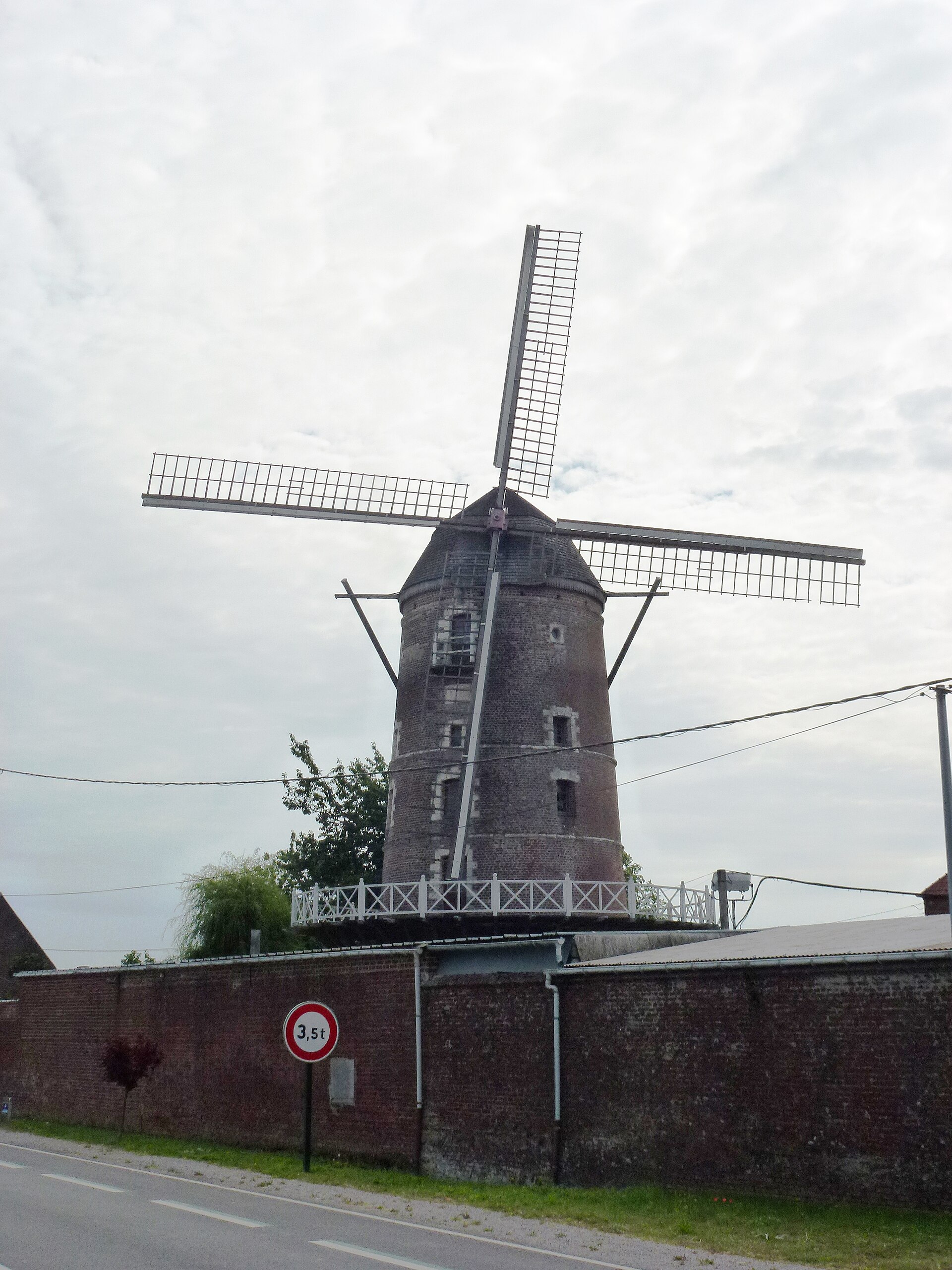
Moulin Debacker is a historic windmill standing in Moringhem, a small village in Pas-de-Calais just a few kilometres from Saint-Omer. Also known as Moulin d'Achille, it is one of the rare stone tower mills in French Flanders that has kept its complete technical machinery intact to this day.
Where does the mill's name come from?
The mill carries the name of the family that has looked after it for decades: Charles Debacker and his wife have owned the property since 1964. Before that it was known as Moulin d'Achille, after the last working miller who ran the flour production here. Both names remain in use today and appear on local signage and in regional guides.
When was it built and how did it operate?
The mill was raised in 1799, shortly after the French Revolution abolished feudal privileges — which is why it is sometimes referred to as a "revolutionary mill." It was built from local white stone rather than the timber typical of the region's older mills. Standing roughly 11 metres tall, it belongs to the tower-mill type with a rotating cap that lets the sails be turned to face the wind. Flour production continued without interruption until 1950, when the mill ceased commercial activity.
What is inside the mill?
The main draw of Moulin Debacker is its fully preserved mechanism. Inside are three large wheels along with a cap-rotation system built from a double set of cast-iron rollers running on rails — one track laid horizontally, one vertically. This arrangement let the miller turn the upper section of the mill, sails included, to catch the wind without dismantling any part of the machinery. Specialists point out that it is the only fully restored stone mill of this period in the region, making it a rare surviving witness to northern France's wind-powered milling industry.
Why does the mill have new sails?
After standing bare of sails for years, owner Charles Debacker had them rebuilt, and new arms were fitted in 2010. That restoration gave the mill back its familiar silhouette, recognisable from a distance, even though flour milling itself was never resumed — today the building serves purely as a heritage site and visitor attraction. Its historical value was formally recognised on 10 July 2015, when the mill was listed as a monument historique.
When can you visit Moulin Debacker?
Since the mill remains private property, access to the interior is limited to a handful of occasions each year. It is most commonly open during the Fête des Moulins in May and during the September Journées du Patrimoine (European Heritage Days), when the owners welcome visitors and demonstrate how the mechanism works. These openings are the best chance to see the wheels, rails and rotation system up close rather than just read about them.
How do you get to Moringhem?
Moringhem sits right next to Saint-Omer, one of the larger towns in Pas-de-Calais, which makes the mill an easy day-trip stop for anyone exploring the Audomarois area and its network of canals and marshes, the Marais Audomarois. The village itself is thoroughly rural, and the mill is visible from a distance thanks to the rise of ground it stands on.
Frequently asked questions
Can Moulin Debacker be visited all year round? No — as private property, it opens to visitors mainly during the Fête des Moulins in May and the Journées du Patrimoine in September.
What makes Moulin Debacker stand out from other mills in the area? It is the only fully restored stone mill from the late 18th century in this part of the region, still fitted with its original rotating mechanism and three wheels.
Is the mill still used to produce flour? No, production stopped in 1950. Today the building serves only a heritage and educational purpose.
Why is the mill also called Moulin d'Achille? That is its historical name, taken from the last miller who operated it before ownership passed to the Debacker family.
Nearby places

Earn badges for the places you visit
Download NextOnTrip, discover new places and check off your trails.