About this place
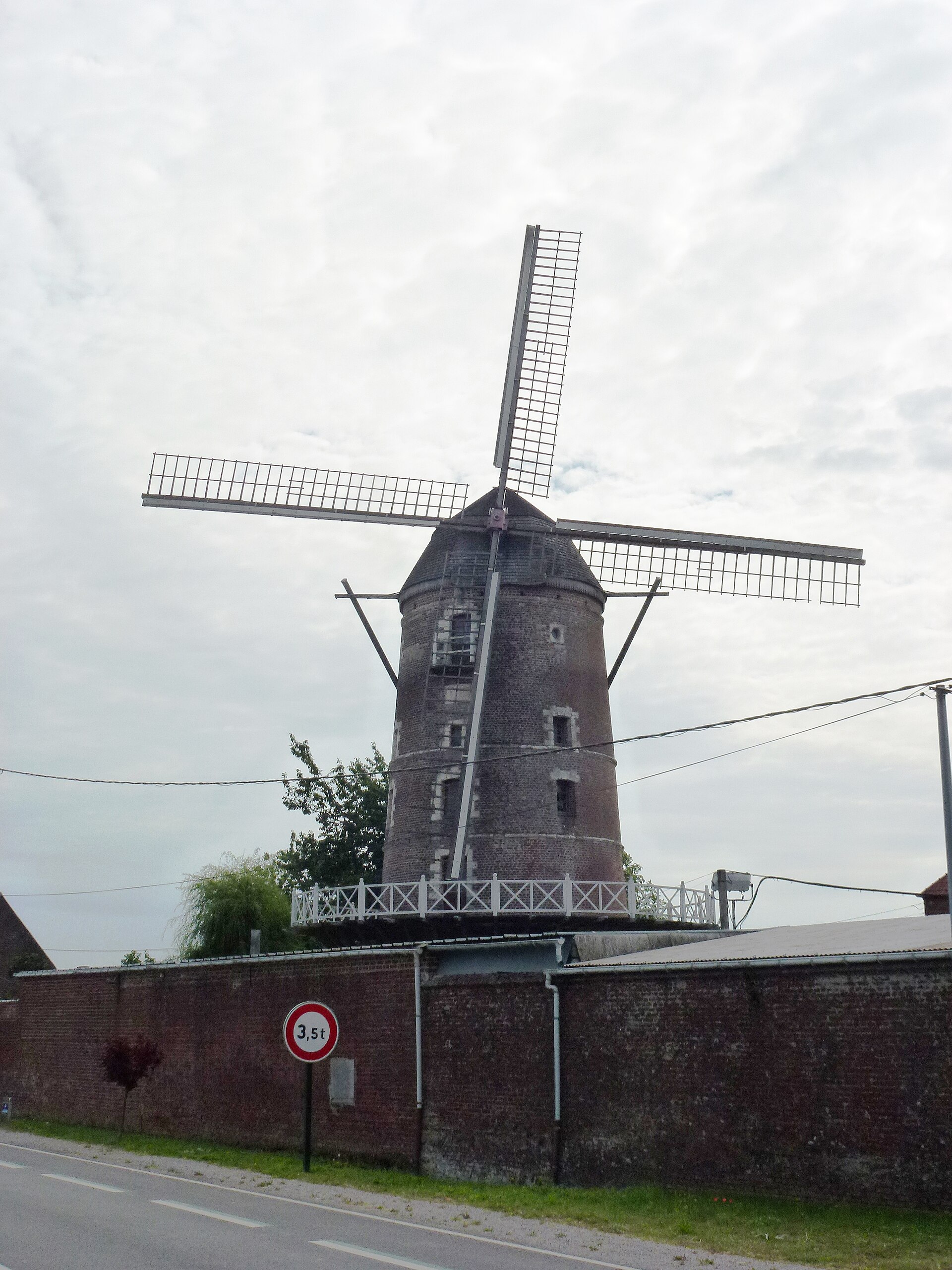
Moulin de Watten (also called Moulin de la Montagne) is a historic windmill standing at the summit of Mont de Watten, a hill overlooking the small town of Watten in the Nord department of France. Both the mill and the hill have long been landmarks of the flat Flanders landscape — visible from far away, and offering wide views over the surrounding plains and canals in return.
How old is the mill?
The site's history goes back to the 17th century. The hill already appears on plans of the Watten fort in 1644, and one of the wooden beams inside the mill is dated 1731. The original mill was built of wood and belonged to Watten abbey. When the abbey buildings were later demolished, part of the reclaimed materials were used to rebuild the mill — physically tying the story of the monastery to the story of the windmill.
Why was it built on this particular hill?
Mont de Watten is not just any rise in the terrain. Between 1644 and 1646 it held a fort made up of five earthen bastions linked by curtain walls, used as a gathering point for royal troops before campaigns. The mill was later built directly on the remains of these earthworks, on the very bastion that captain Siret named "Le Protecteur" ("The Protector") in 1796. At 72 metres above sea level, the hill stands out sharply in the flat Flemish plain, which is exactly why the site mattered strategically for centuries — and later, visually.
What happened to it in the 20th century?
The mill worked as an active grinding operation until 1930, and its last miller died in 1935. A storm in 1937 tore off two of its sails. During the Second World War, German forces stripped the roof and internal mechanism to turn the structure into an observation post — the same hilltop position that mattered to the 17th-century fort proved useful to the military again, three centuries later.
What does it look like today, and can you visit?
The mill was listed as a historic monument (monument historique) in 1977. In 1985 the municipality of Watten bought the building back and committed to a full restoration: a new roof went up in 1987, new sails in 1988, and a new grinding mechanism was installed in 1994, once again making the mill capable of grinding grain. Today Moulin de Watten is open as a heritage site and viewpoint, and the marked trail up the hill (sentier de la Montagne de Watten) lets visitors combine the visit with a short walk around the summit and its old fortifications.
What should you know before visiting?
The best way to see the mill is to combine it with the walking trail leading up Mont de Watten — the route is short but rewards visitors with panoramic views over the surrounding countryside, reaching as far as the coast on a clear day. It's worth allowing time not just for the windmill itself but also for a walk along the traces of the old earthen bastions that are still visible in the terrain.
Frequently asked questions
What is the difference between "Moulin de Watten" and "Moulin de la Montagne"? They refer to the same building — both names are used interchangeably. "Moulin de la Montagne" ("mill on the mountain") describes its position atop Mont de Watten, while "Moulin de Watten" simply names it after the town.
Is the mill still in working order? Following the restoration completed in 1994, when a new mechanism was installed, the mill is technically capable of grinding grain again, though today it functions mainly as a heritage landmark and tourist attraction rather than an active production site.
Why is the mill built on old fortifications? The hill was already used for military purposes in the 17th century, when a fort with five bastions stood here. Once the defensive need disappeared, the raised earthworks provided a natural, elevated site for building a windmill.
What can you see from the top of Mont de Watten? At 72 metres above the flat Flanders plain, the summit offers sweeping views over Watten and the surrounding countryside, making it a popular viewpoint even for visitors who aren't specifically interested in the mill itself.
Nearby places

Earn badges for the places you visit
Download NextOnTrip, discover new places and check off your trails.