About this place
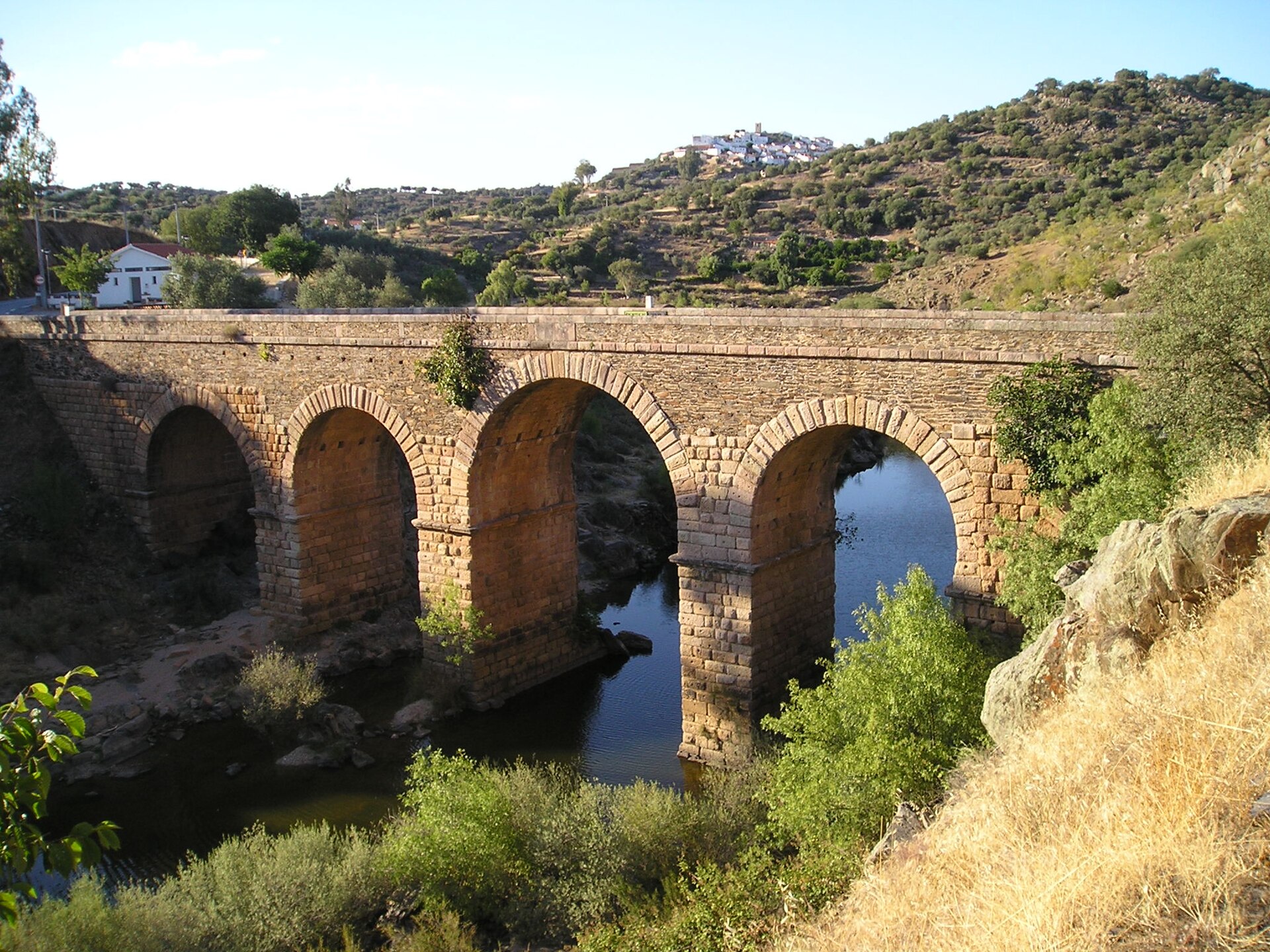
Alcántara Bridge spans the Tagus River right next to the small Spanish town of Alcántara in Extremadura. It is one of the best-preserved feats of ancient Roman engineering anywhere, and remarkably, it is still a working crossing after nearly two thousand years.
What makes this bridge so remarkable?
The bridge stretches 194 metres across the Tagus, carried by six stone arches with spans ranging from 14 to 29 metres. The deck rises almost 50 metres above the riverbed, an extraordinary height for Roman-era construction. The entire structure was built without mortar: the granite blocks were cut and fitted with such precision that their own weight and geometry hold the bridge together. That technique, combined with exceptionally solid pier foundations, is why the bridge has survived in largely unchanged form since antiquity.
Who built it, and when?
Construction took place between 104 and 106 AD, during the reign of Emperor Trajan, who was born in Spain and ranks among the most significant rulers of the Roman era. The design is credited to the architect Gaius Julius Lacer. At the midpoint of the bridge stands a 10-metre triumphal arch dedicated to Trajan, giving the crossing its distinctive, monumental centrepiece.
Where does the town's name come from?
The bridge gave the town its name, not the other way around. Alcántara derives from the Arabic word for bridge, a reminder of how thoroughly the structure shaped local identity from the period of Muslim rule on the Iberian Peninsula onward. For centuries it remained the only durable crossing over the Tagus in this part of Extremadura, and the town grew up naturally around it.
Has the bridge survived in its original form?
Largely, yes, though not without damage. The structure itself has not changed since it was completed, but it has been damaged several times over the centuries during military conflicts — as a strategic border crossing, it repeatedly became a target in wartime. Even so, its key elements, including the triumphal arch, remain intact enough today to convey the full scale of the original design.
Why is it worth visiting?
Alcántara Bridge offers a rare chance to see Roman engineering on a monumental scale, set within the largely untouched landscape of the Tagus valley. The sheer height of the deck above the river, the raw granite arches, and the triumphal arch rising at the centre make a strong impression at any time of year. It is also a bridge that still does exactly what it was built to do — walking across it means following the same path travellers have taken for almost two millennia.
Frequently Asked Questions
How long is Alcántara Bridge? The bridge is 194 metres long and consists of six arches with spans ranging from 14 to 29 metres.
When was the bridge built? It was built between 104 and 106 AD, during the reign of Emperor Trajan, to a design by the architect Gaius Julius Lacer.
Does the town's name come from the bridge? Yes, the town of Alcántara was named after the bridge, and the word itself comes from Arabic, meaning "bridge."
How high above the river is the bridge deck? The deck rises nearly 50 metres above the bed of the Tagus, making it one of the tallest surviving Roman bridge structures.
Nearby places

Earn badges for the places you visit
Download NextOnTrip, discover new places and check off your trails.