About this place
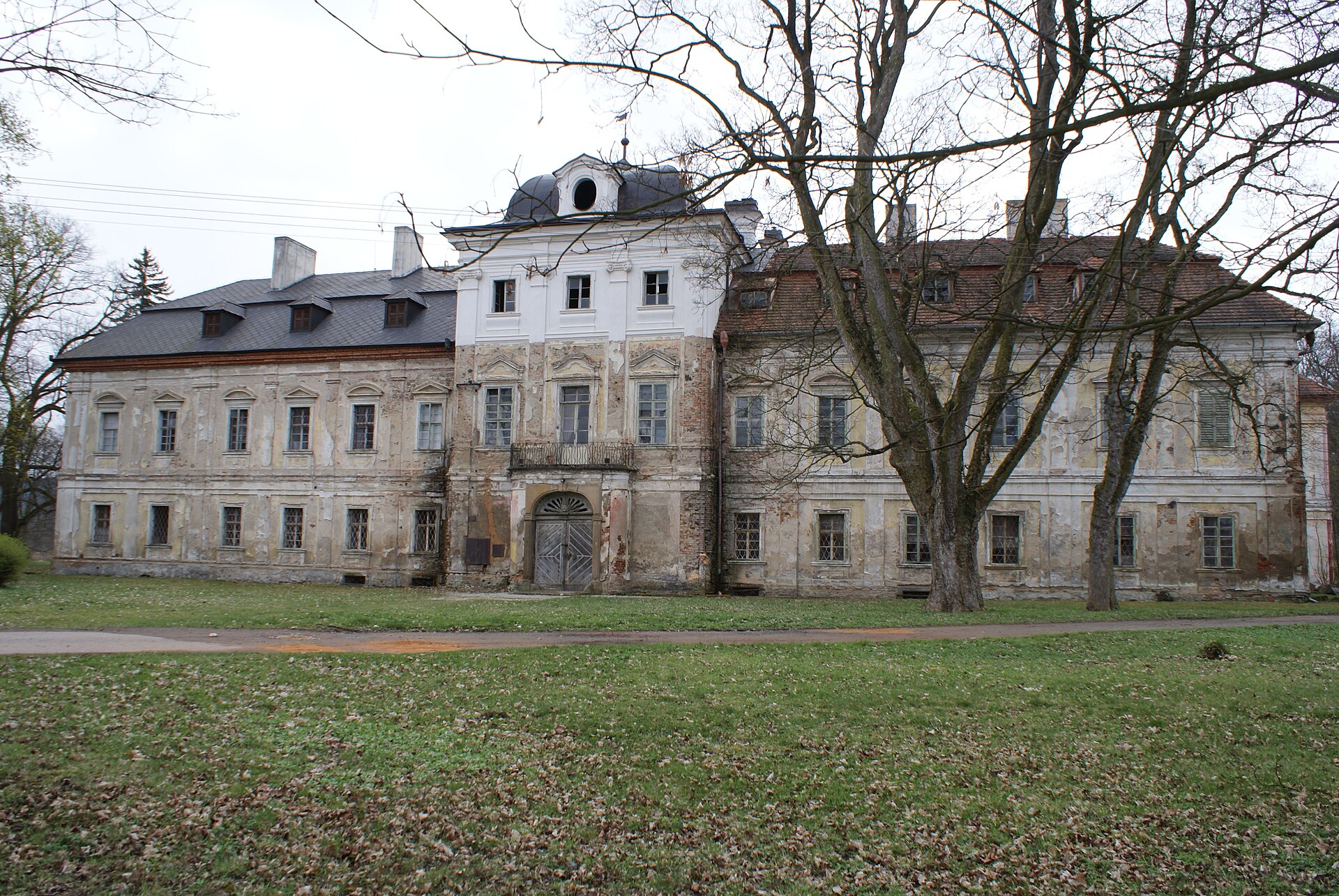
Morzin Palace in Dolní Lukavice is a baroque residence in the municipality of Dolní Lukavice, in the Plzeň-jih district of southern Bohemia, roughly twenty kilometres from Plzeň. The building went up in the early eighteenth century on the site of an older stronghold, and its history is tied to one of the region's most influential noble families — and, for a few years, to the young Joseph Haydn.
How did the palace come to be?
The Dolní Lukavice estate passed to the Morzin family in 1666. It was Ferdinand Maxmilián Morzin who shaped the residence as it stands today: in 1708 he had the older fortified building on the site torn down and commissioned Pilsen-based architect Jakub Auguston the Younger to design a new, representative seat. The result was a three-wing baroque palace laid out in a horseshoe shape, a layout typical of aristocratic residences of the period in Bohemia. The family estate kept growing, with further additions recorded in 1712 and 1717.
Why is the palace linked to Joseph Haydn?
Ferdinand Morzin, and later his son Karel Josef František, were known as active patrons of music. They kept a household orchestra of sixteen musicians — a substantial ensemble for a private residence outside Vienna. Between 1758 and 1760, the conductor of that orchestra was Joseph Haydn, still early in his career at the time, before he went on to work for the Esterházy family. His stint in Dolní Lukavice is regarded as one of the first significant steps of his professional path as a composer and Kapellmeister.
What happened to the palace after the Morzins?
In 1780, Karel Josef Morzin sold the entire estate to Karl Friedrich, Count of Hatzfeld, who at the time held the position of minister of the interior. Fourteen years later, in 1794, the estate passed to Hugo Damian, Count of Schönborn, who in 1811 established a family entail over the property to keep it from being divided among heirs. In the twentieth century, ownership moved to Czechoslovak diplomat Ferdinand Veverka. After 1945, following accusations that he had collaborated with the Germans during the war, the estate was confiscated by the state. The roof was partially repaired in the 1990s, and in 2000 the property was formally returned to the Veverka family.
Are Lišice and Dolní Lukavice the same place?
No — they are two distinct, closely connected places. Lišice is a self-standing village, first documented (under its earlier name, Lišce) in 1379. Since 1960, however, it has been administratively part of the Dolní Lukavice municipality in the Plzeň-jih district, lying a few kilometres from the municipal centre, near Přeštice. That is why some records and databases file items from this area under Lišice, even though the palace itself physically stands in the village of Dolní Lukavice — a matter of shared administrative territory rather than a location error.
Frequently asked questions
Who built the palace in Dolní Lukavice, and when? The current baroque palace was built starting in 1708 on the initiative of Ferdinand Maxmilián Morzin, designed by Pilsen architect Jakub Auguston the Younger, on the site of an earlier fortified building.
What was Joseph Haydn's connection to the palace? Between 1758 and 1760, he directed the Morzin family's household orchestra of sixteen musicians — one of the early steps of his career as a composer.
Who owned the palace after the Morzin family? It passed to the Counts of Hatzfeld (from 1780), then to the Counts of Schönborn (from 1794), who placed it under a family entail. Later, the estate belonged to Czechoslovak diplomat Ferdinand Veverka.
What happened to the palace after 1945? The state confiscated it after the owner was accused of wartime collaboration with the Germans. The estate was returned to the Veverka family in 2000, after the roof had already been partially restored during the 1990s.
Are Lišice and Dolní Lukavice the same village? No — they are separate places. Lišice has been an administrative part of the Dolní Lukavice municipality since 1960, though it existed independently as a village going back at least to 1379.
Nearby places

Earn badges for the places you visit
Download NextOnTrip, discover new places and check off your trails.