About this place
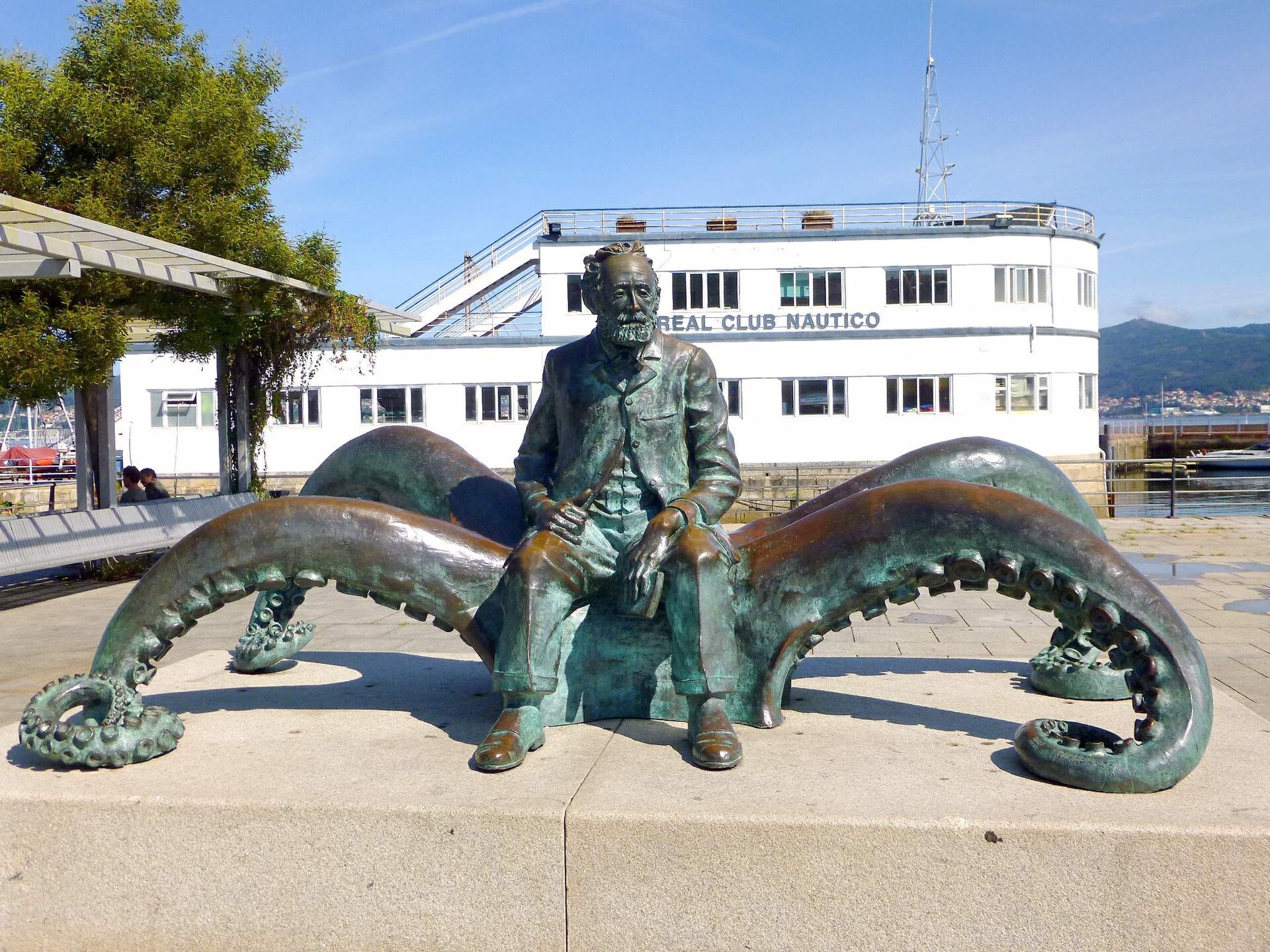
The Monument to Jules Verne stands proudly on the waterfront of Vigo, a port city on Spain's Ría de Vigo in Galicia. Cast in bronze, the statue shows the writer seated astride a giant squid-like sea creature — a direct nod to his most famous novel, "Twenty Thousand Leagues Under the Sea."
Why does Vigo have a Jules Verne monument?
The link between Verne and this city is no coincidence. In the novel, Vigo Bay is the very spot where Captain Nemo, aboard the Nautilus, discovers a sunken treasure — a reference to real history: in 1702, during the Battle of Vigo Bay, a Spanish treasure fleet and its French naval escort were destroyed here by an Anglo-Dutch force, and legends of gold still resting on the seabed persist to this day. Verne wove this episode into his story, permanently placing Vigo on the literary map of Nemo's underwater adventures.
The monument was unveiled in 2005, marking the 100th anniversary of Verne's death. It was created by Galician sculptor José Molares, known for several large-scale works across the region. The bronze figure stands roughly 2.5 meters tall and weighs more than 1,500 kilograms — a substantial, striking piece that has become an unofficial landmark of Vigo's seafront promenade.
How do you get there?
The monument sits on Muelle de las Avenidas, the city's main waterfront promenade, right next to the port and marina in the heart of Vigo. It's an easy walk from the city center — just a few minutes from the main squares and shopping streets. There's no entrance, gate, or ticket: the statue stands in open public space and can be visited at any hour.
What will you see there?
Beyond the sculpture itself, it's worth lingering on the waterfront — the spot offers views across Ría de Vigo, one of the most scenic bays on the Galician coast, and on a clear day you can spot the Cíes Islands in the distance, often ranked among Europe's most beautiful beaches. The monument itself is a favorite photo stop: the dynamic pose of the writer riding a sea creature draws both tourists and locals looking for a memorable snapshot.
When is the best time to visit?
Since the monument stands outdoors on an open quay, it can be visited year-round. Spring and early autumn offer the most comfortable conditions for sightseeing and photography, with mild temperatures and soft afternoon light falling across the statue from the direction of the bay. In summer, the waterfront tends to get busier due to tourist traffic and cruise ships docking at the port of Vigo.
Frequently asked questions
Is there an entrance fee for the monument? No, the monument stands in a public open-air space on the waterfront and can be visited free of charge at any time.
Why does Jules Verne have a monument specifically in Vigo? Because the writer set the hidden treasure of "Twenty Thousand Leagues Under the Sea" in Vigo Bay, referencing the real sunken Spanish treasure fleet from the Battle of Vigo Bay in 1702.
Who designed the sculpture? It's the work of Galician sculptor José Molares, unveiled in 2005 on the 100th anniversary of Verne's death.
How much time should I set aside? It's a quick stop — 10 to 15 minutes is enough to view the sculpture and take photos, though it pairs well with a longer walk along the full Muelle de las Avenidas promenade.
Nearby places


Earn badges for the places you visit
Download NextOnTrip, discover new places and check off your trails.