About this place
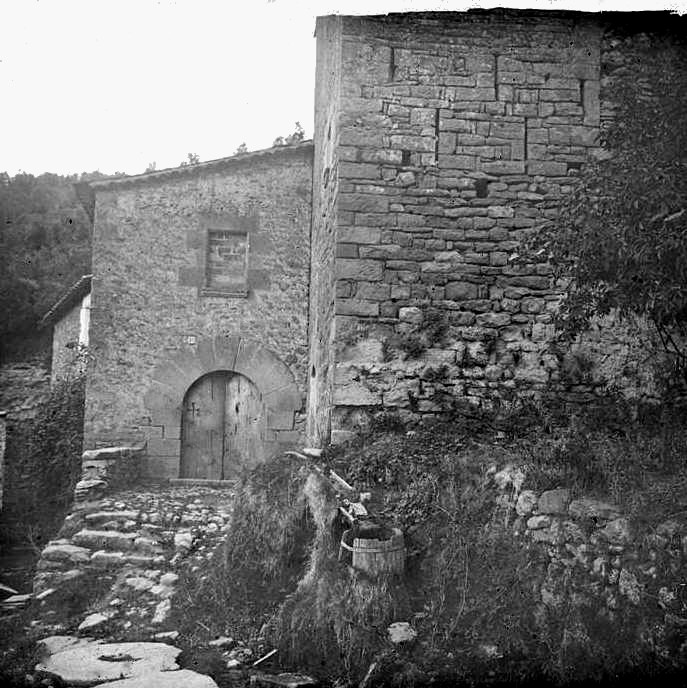
Molí de Llobateres is a medieval fortified mill in the municipality of Sant Quirze Safaja, in the Moianès region of Catalonia. It stands on the right bank of the Tenes river, at the southern edge of the municipal area, near the settlements of les Clotes and les Torres. The mill has been listed as a Cultural Property of National Interest (Bé Cultural d'Interès Nacional) since 1949, making it one of the region's most notable pieces of industrial heritage.
What will you see there?
The oldest part of the structure is a stone tower dating from the 13th century, which gives the mill its fortified appearance and explains why it is also known as molí de la Torre. The rest of the buildings were added later, though the whole complex still follows a medieval layout. Historical records also refer to the mill as molí de Centelles and molí de Fontubal, the latter name coming from the Font Tubal spring that once rose right beside it.
One particularly interesting detail is how the mill was powered: rather than drawing directly on the Tenes river, it originally ran on water from that abundant tributary spring next to the building. Today the same water source is used as an intake point supplying drinking water to the municipalities of Sant Quirze Safaja and Sant Feliu de Codines, a reminder of how centuries-old hydraulic infrastructure can still serve a practical purpose.
How do you get to Molí de Llobateres?
The mill sits along a well-known hiking route of roughly 10 kilometres that starts in the centre of Sant Quirze Safaja. The trail passes the Bauma de l'Espluga rock shelter, skirts the L'Illa campsite, reaches Molí de Llobateres, and continues on to the nearby Molí de Baix. The walk is rated easy, though some stretches are poorly marked, so carrying a map or GPS track is advisable. By car, visitors can reach Sant Quirze Safaja itself, then continue on foot along the Tenes riverbed.
What else is worth seeing nearby?
Following the trail downstream from the mill leads to Salt del Molí, a small waterfall, and then to Gorg Negre, a natural rock pool considered one of the most attractive spots in the Tenes valley. It's a popular summer destination, though swimmers should be careful of the cold water and uneven bottom. Combining the mills, the waterfall, and the pool into one walk makes it possible to take in both the industrial and natural history of this part of Moianès in a single afternoon.
When is the best time to visit?
Spring and autumn are the best seasons for the walk, when water levels in the Tenes stay steady and temperatures are comfortable for several hours of hiking. In summer, an early morning start is recommended, especially for anyone planning to swim at Gorg Negre. In winter, the river often carries more water, adding to the scenery around the mill, though the paths can be more demanding.
Frequently asked questions
Can you go inside the mill? The building is privately owned or subject to heritage-protection restrictions, so visits are generally limited to viewing it from the outside, along the hiking trail.
How long does it take to reach the mill from Sant Quirze Safaja? The stretch to Molí de Llobateres is part of a longer, roughly 10-kilometre route; walking there from the village centre usually takes one to one and a half hours, depending on pace.
Is the route suitable for children? The trail is rated easy, but sections are poorly marked and run alongside the river, so caution is advised with young children, particularly near Salt del Molí and Gorg Negre.
What do the mill's other names mean? Molí de Centelles refers to the area's historical landowners, molí de la Torre points to its distinctive defensive tower, and molí de Fontubal comes from the Font Tubal spring that originally powered its machinery.
Nearby places

Earn badges for the places you visit
Download NextOnTrip, discover new places and check off your trails.