About this place
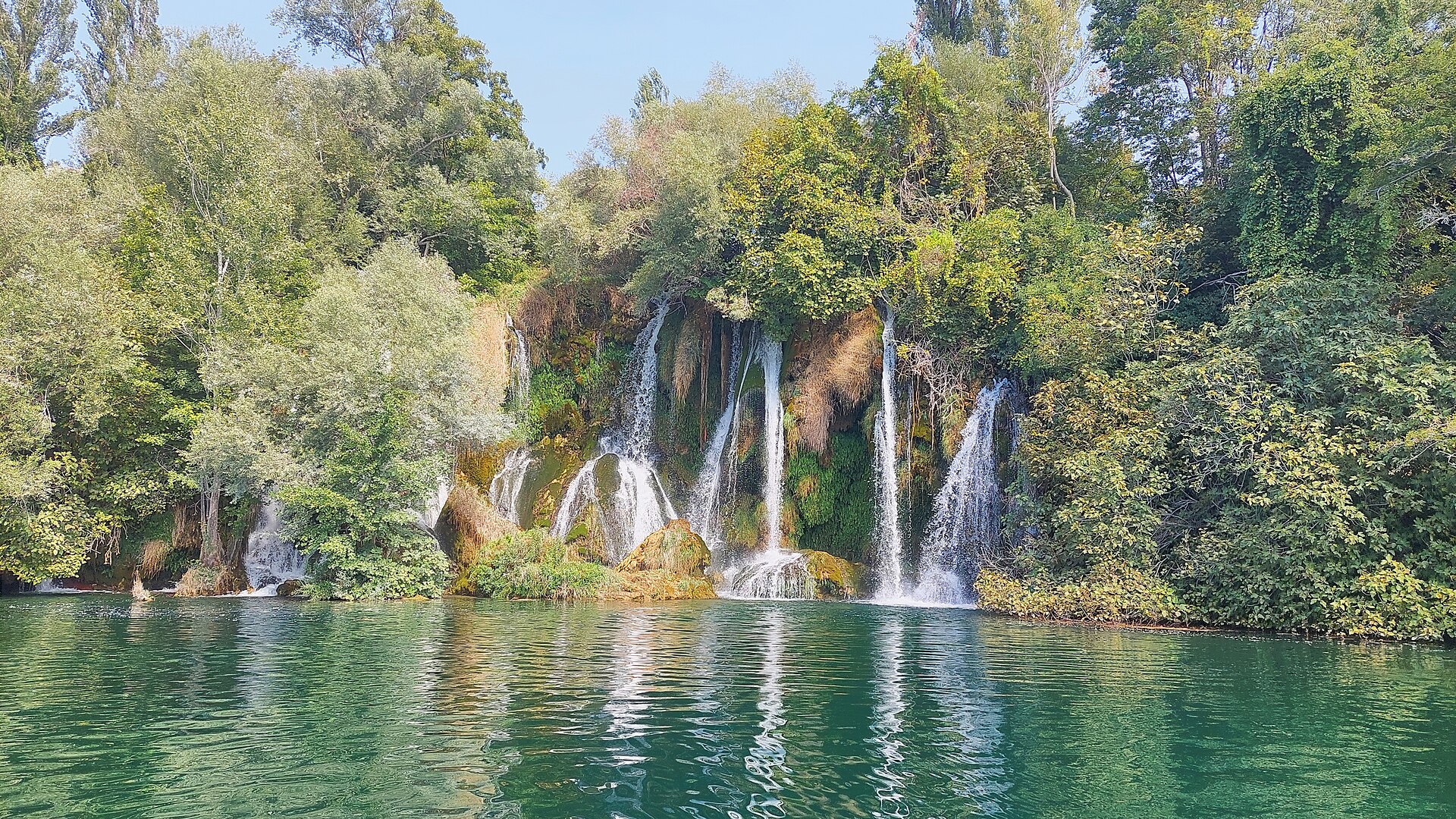
Miljacka is one of the most distinctive waterfalls of Krka National Park, located near the village of Ivoševci in Croatia, roughly 21.5 km downstream from the river's source. It is the fifth waterfall along the Krka's course toward the sea, and a rare spot where nature and early industrial history sit side by side.
How tall is the Miljacka waterfall?
The cascade drops 23.8 meters and stretches 50–60 meters wide. Water tumbles over three larger steps and numerous smaller ones, all formed from tufa (freshwater limestone deposited by the river) — the same geological process responsible for Krka's famous terraced landscape.
Can visitors get close to the waterfall?
Not really. The left bank, right below the falls, is occupied by the buildings of the HE Miljacka hydroelectric plant, which blocks direct access to the riverbed at the base of the waterfall. That said, hiking paths on the northern (western) side of the river offer clear views over the cascade and the surrounding canyon, so the waterfall is still very much visible — just not walkable up close.
What is the power plant next to the falls?
HE Miljacka is the oldest and largest hydroelectric plant on the Krka River. Construction began in 1904, the first generating unit went online in April 1906, and the project was completed in full in 1907. Until 1910, it held the record as the most powerful hydroelectric plant in Europe. The plant uses a water head of 102 meters and has a total installed capacity of 24 MW, making it a landmark of early hydropower engineering in this part of the Balkans.
What is hidden underground here?
Near the waterfall lies Miljacka II, the largest cave within Krka National Park. Its underground passages and springs shelter numerous endemic and protected cave-dwelling species, including the olm (Proteus anguinus) — Europe's only true cave-adapted vertebrate — as well as the long-fingered bat. This makes the Miljacka area one of the more significant biospeleological sites in Croatia.
What else is worth seeing nearby?
Ivoševci itself sits within the national park's territory, close to Burnum, an important archaeological site with the remains of a Roman military camp and settlement dating from the turn of the era. Combining a stop at the waterfall with a short visit to Burnum makes for a fuller picture of the area's layered history.
Miljacka isn't a postcard viewpoint with boardwalks and crowds — it's a rougher, more industrial corner of the park where a century-old power station meets a wild limestone canyon. For visitors interested in both landscape and the history of engineering, it's one of the more unusual stops along the Krka River.
Frequently Asked Questions
Can you walk right up to the Miljacka waterfall? No, direct access to the riverbed beneath the falls is blocked by the HE Miljacka hydroelectric plant. The cascade can be viewed from footpaths on the opposite side of the river.
How high is Miljacka waterfall? It drops 23.8 meters over a width of 50–60 meters, formed by three larger tufa steps and many smaller ones.
What is HE Miljacka? It is the oldest and largest hydroelectric plant on the Krka River, operating since 1906, and was Europe's most powerful hydroelectric plant until 1910.
What else can you see around Ivoševci? Nearby are the Roman archaeological site of Burnum and the Miljacka II cave, home to protected underground species including the olm.
Nearby places

Earn badges for the places you visit
Download NextOnTrip, discover new places and check off your trails.