About this place
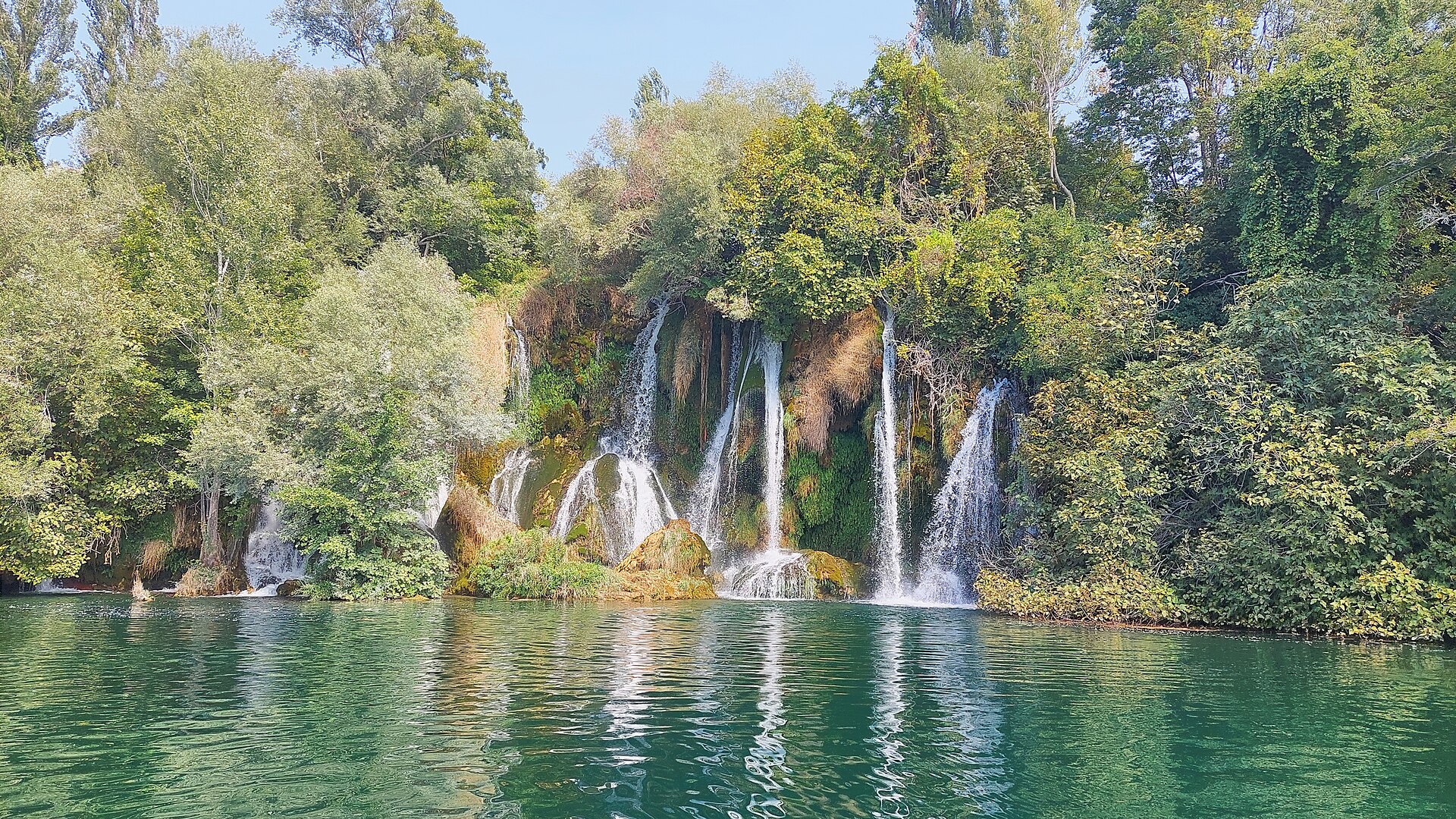
Krčić Waterfall (also called Topoljski buk or Veliki buk) is a modest but geologically significant cascade at the northern edge of the Kninsko Polje basin, right next to the town of Knin in Croatia. This is the spot where the Krčić stream finishes its course and flows into the Krka — meaning the waterfall effectively marks the source of one of Croatia's most famous rivers, the one behind the cascades and lakes of Krka National Park further downstream.
How tall is Krčić Waterfall?
The cascade drops roughly 22 meters over a limestone travertine barrier — the same natural process that, further along the Krka river, built the barriers responsible for the park's famous waterfalls. Here, though, the formation is smaller and far less visited.
Does the waterfall always have water?
This is the key thing to know before visiting: Krčić can run dry for parts of the year. In the late 19th and early 20th centuries, the riverbed was reshaped by engineering works — rock was cleared using explosives, dams were built, a chamber was cut into the travertine barrier, and eventually the small Krčić Hydroelectric Power Plant was constructed, drawing on the stream's flow. As a result, the waterfall's natural water supply was reduced, and today it behaves as an intermittent waterfall. It looks its best in spring and after heavy rain, while in summer — especially during dry spells — the riverbed can be nearly or completely dry. If seeing real water flowing over the falls matters to your trip, aim for early spring (March–May) or autumn after rainfall rather than the height of a Dalmatian summer.
How do you get to Krčić Waterfall?
The waterfall sits just north of central Knin, within the Kninsko Polje, the wide basin where the Krčić meets the Krka. Knin is a well-connected inland town in the Dalmatian hinterland, with road links to Zadar, Split and Šibenik, which makes the waterfall an easy stop for travelers moving between the coast and the interior. Given its small scale, it's worth pairing a visit with a look at Knin itself — including the hilltop Knin Fortress overlooking the town — and, time permitting, a trip to nearby Krka National Park.
What else is there to see nearby?
The area around the waterfall is quiet and largely untouristed, a striking contrast to the crowds at Krka National Park's main cascades. It's a good stop for travelers who want a moment of calm and a look at the literal starting point of one of Dalmatia's most important rivers before it flows into the much larger network of waterfalls and lakes further south.
Frequently Asked Questions
Is Krčić Waterfall part of Krka National Park? No. The waterfall sits outside the park's boundaries, on the Krčić stream, which flows into the Krka right at this point — this is essentially where the Krka river begins.
Why does the waterfall sometimes dry up? Engineering works from the late 19th/early 20th century — excavation, damming, a chamber cut into the travertine barrier, and the later construction of the Krčić Hydroelectric Power Plant — reduced the stream's natural flow, turning it into an intermittent waterfall.
When is the best time to see water flowing? Spring and periods after heavy rainfall give the best chance of a full flow; in summer, particularly during dry spells, the riverbed can be dry or carry very little water.
How tall is Krčić Waterfall? About 22 meters.
Nearby places

Earn badges for the places you visit
Download NextOnTrip, discover new places and check off your trails.