About this place
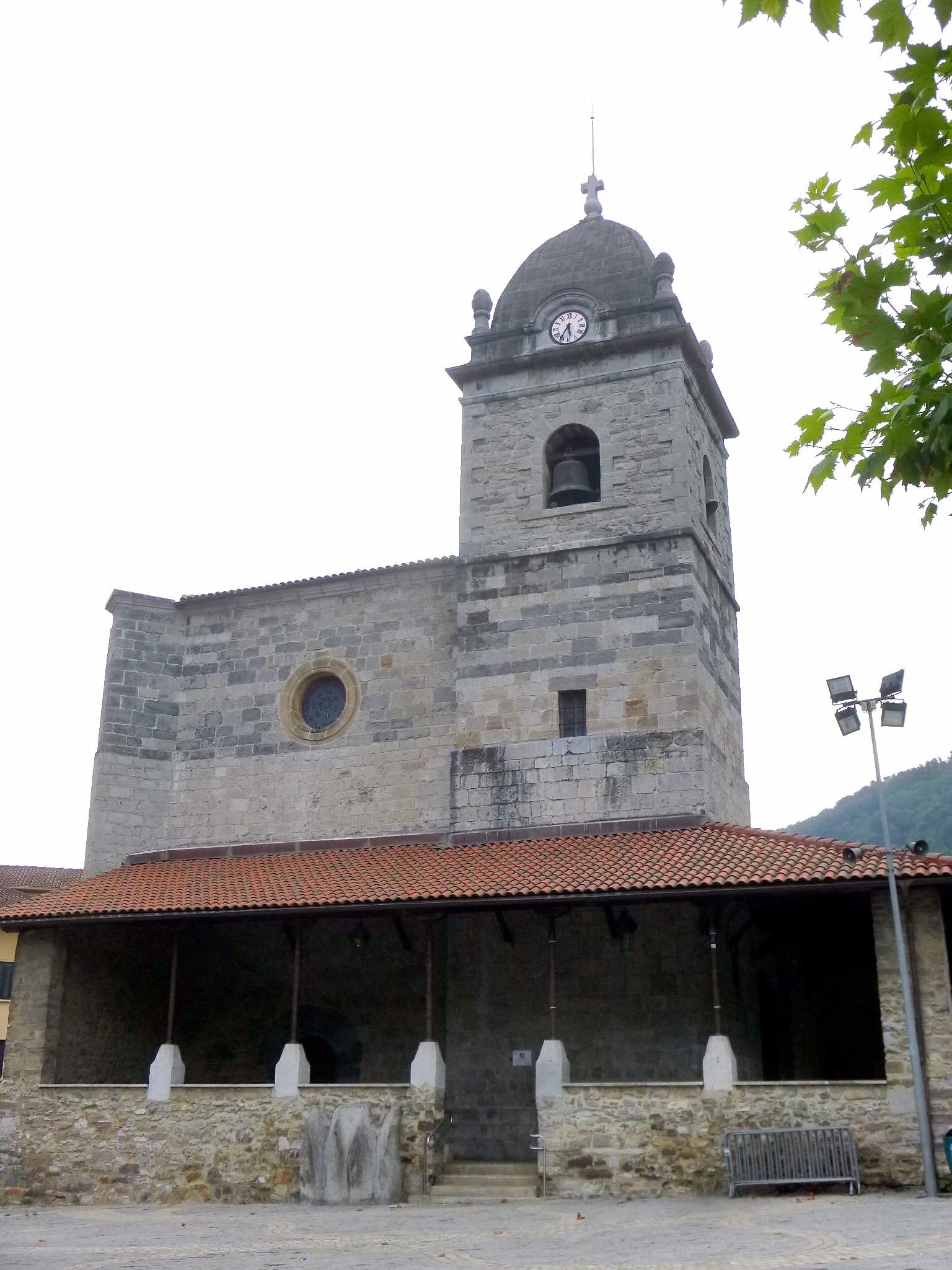
Mikel Goi-aingeru parrokia, the parish church of Saint Michael the Archangel, is a small Gothic church in the town of Irura, in the Basque province of Gipuzkoa, Spain.
What is the history behind this church?
The building we see today grew out of an earlier, more modest place of worship. In the 16th century, the structure was raised in height, giving the nave more vertical space and a taller, airier interior — a common adaptation for rural Basque churches of that era, when growing congregations pushed communities to enlarge medieval buildings without abandoning their original Gothic character. A porch was added to the entrance at a later stage and was itself remodelled in the early 20th century. Around the same period, the bell tower was raised and topped with a Neo-Gothic dome, a detail that still gives the building's silhouette a distinctive profile against the surrounding hills.
What does the architecture look like?
The church follows a single-nave plan, but the nave is divided into two sections of differing height and proportion — a direct legacy of the 16th-century remodelling described above. The chancel ends in a polygonal apse, braced on the outside by substantial buttresses that carry the weight of the vaulting down to the foundations. Window and door openings are cut from carved sandstone finished with moulded surrounds, a detail typical of rural Gothic work in this part of the Basque Country. Visitors enter through a small Gothic-style porch, modest in decoration but consistent in style with the rest of the building.
What can be found inside?
The main altarpiece dates from the 18th century and is the work of Pedro de Goikoetxea, a Baroque piece that sits alongside the earlier Gothic stonework — a pairing found in many Basque parish churches, where the stone shell of the building belongs to the medieval and early modern period while the interior furnishings were added gradually over the following centuries, according to what each generation of the local community could afford.
Why is this church worth a visit?
Mikel Goi-aingeru parrokia has kept its modest, intimate scale throughout its history rather than being expanded on a grand scale, and that restraint is itself read as a sign of the demographic stability of the Irura community across generations. For anyone interested in Basque religious architecture, it offers a compact but legible example of rural Gothic building practice, with clearly readable layers of construction: a medieval core, a 16th-century heightening, and a Neo-Gothic accent added to the tower in the early 20th century. The church also makes a natural stop when exploring the smaller towns of Gipuzkoa, where similar unassuming parish churches form a network of modest but genuinely historic rural architecture.
Frequently Asked Questions
Which saint is the Irura church dedicated to? It is dedicated to Saint Michael the Archangel, known locally as Mikel Goi-aingeru.
What architectural style is the church built in? It is a Gothic building with a single nave split into two sections and a polygonal apse; the bell tower is crowned with a Neo-Gothic dome added during an early 20th-century remodelling.
What is the oldest part of the building? The core of the church dates back to the medieval period, though the nave was raised in height in the 16th century, and the porch and tower were reworked later.
Is there anything notable inside the church? Yes — the 18th-century main altarpiece, created by Pedro de Goikoetxea, is considered a valuable example of Baroque woodcarving in a regional context.
Nearby places

Earn badges for the places you visit
Download NextOnTrip, discover new places and check off your trails.