About this place
Mieres City Council (Ayuntamiento de Mieres) is the historic seat of local government in Mieres, a former mining town in the Caudal river valley in central Asturias, Spain. Standing on Plaza de la Constitución, the building is one of the town's most recognizable landmarks and a good starting point for exploring its compact historic centre.
What will you see at the town hall?
The building was completed in 1862 to a design by Gijón-born architect Lucas María Palacios, in an eclectic architectural style. It has a rectangular floor plan, three storeys plus an attic, and a four-sided ceramic-tiled roof. The main façade faces Calle Ramón y Cajal but is set back from the street line, creating the open space that today forms Plaza de la Constitución; the rear of the building opens onto the town hall gardens.
At street level, the façade is fronted by a portico of five semicircular arches resting on stone pillars. On the upper "noble floor," large balconies are topped with triangular pediments — except for the central balcony, which has a curved pediment bearing the town's coat of arms and rests on an ornamented stone corbel with decorative balusters. A small turret housing a clock and a bell crowns the building and is visible from much of the old town.
Inside, the Salón de Sesiones (council chamber) is decorated with work by Félix Granda Buylla, and a grand wooden staircase runs up in two flights — a single straight run followed by a double one — enclosed by an arcaded, glass-roofed stairwell. The entrance hall is decorated with murals by Inocencio Urbina. The building underwent a general renovation in 1986, giving it the appearance it retains today.
How do you get to Mieres?
Mieres sits in the Caudal river valley in central Asturias, about 20 km south of Oviedo. The town has good rail and road links: a railway line linking León and Gijón has run through Mieres since 1874, making it an easy day trip by train from Oviedo or Gijón. By car, the A-66 motorway connects the Asturian coast with the Castilian plateau and runs close to the town. The city council building sits right in the town centre, within easy walking distance of the train station.
What else is worth seeing nearby?
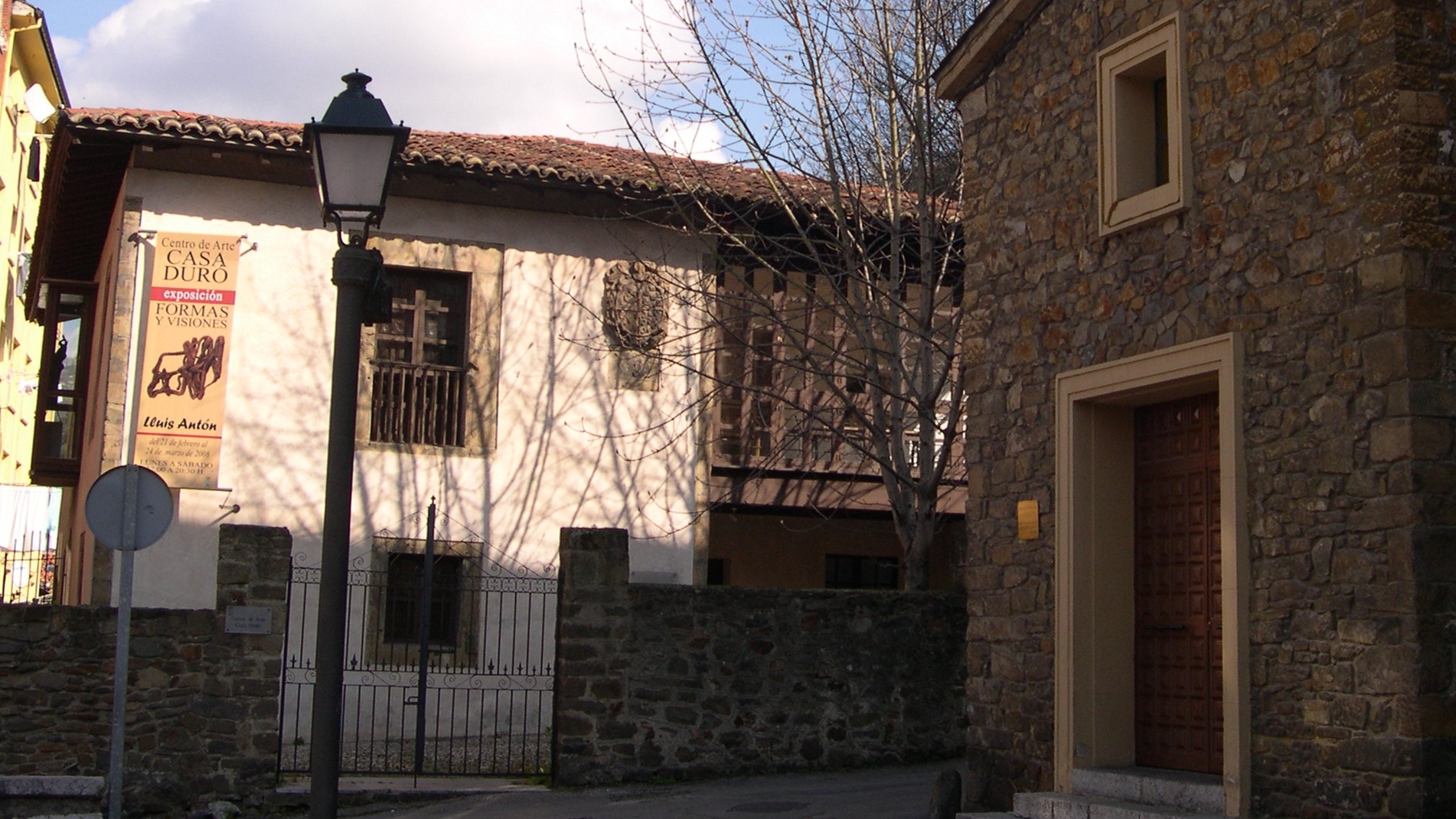
Plaza de la Constitución, where the town hall stands, is a natural base for exploring central Mieres. Nearby historic buildings include Casa Duro, the Carmen chapel and the church of San Juan Bautista. Once one of the industrial backbones of Asturias, Mieres today promotes hiking and cycling tourism through the Caudal valley, alongside industrial heritage tourism — the nearby mining village of Bustiello is one of the best-preserved 19th-century workers' colonies in the region.
When is the best time to visit?
Spring and early autumn are the most comfortable seasons, with mild temperatures in the valley and the surrounding hiking trails at their most accessible. Summer brings more visitors to the town centre, while winter is cooler and damper, typical of inland Asturias.
Frequently asked questions
Can you go inside Mieres City Council? The building is an active municipal office, so access to the interior — including the council chamber and main staircase — depends on office hours and any events open to the public.
Who designed the town hall building? It was designed by architect Lucas María Palacios of Gijón and built in 1862 in an eclectic style.
Are there other attractions near the town hall? Yes — Casa Duro, the Carmen chapel and the church of San Juan Bautista all stand close by, within the historic centre of Mieres.
What's the easiest way to reach Mieres without a car? By train — Mieres lies on the railway line connecting Oviedo with Gijón and León, with regular regional services.
Nearby places

Earn badges for the places you visit
Download NextOnTrip, discover new places and check off your trails.