About this place
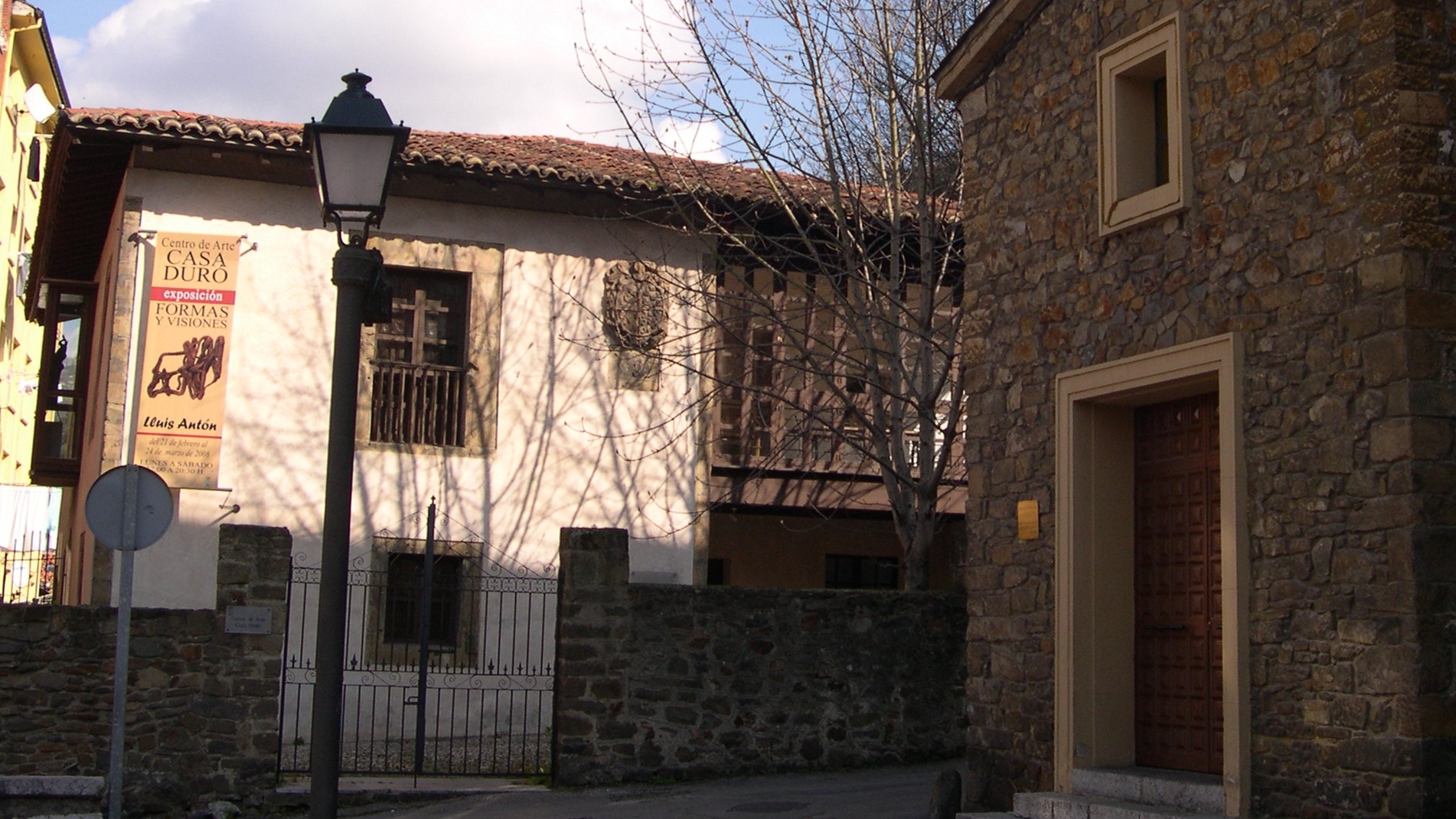
Casa Duró is the oldest civil building in Mieres, a small town in Asturias, northern Spain. It stands on Plaza del Carmen, in the Villa de Arriba neighbourhood, and has long served as a landmark of the town's history.
Where does the name come from and who built it?
The house is also known as Casa de los Álvarez Castañón or Palacio de los Álvarez Castañón, after the family that raised and later rebuilt it. An inscription beneath the coat of arms on the façade records that Fernando Álvarez Castañón Argüelles had the house rebuilt in 1689, with the heraldic shield added in 1700. The structure itself is older still, dating most likely from the 17th century, though its side façades have been reworked several times since.
What does Casa Duró look like?
The building has a square floor plan and a hipped roof with a wide, deeply overhanging eave. Its main façade splits into two clearly different sections: a compact one pierced by two lintelled window openings, and an open one with a ground-floor arcade and a glazed gallery above. The walls are built of rubble masonry, while sandstone ashlar frames the window openings and reinforces the corners. On the upper part of the façade, the carved family crest survives as the building's most recognisable feature.
What role has the building played in the town's history?
Casa Duró went through several major overhauls — during the Baroque period and again in the 19th and 20th centuries — which explains the mix of styles still visible on its façades today. The house also has a darker chapter: during the 1934 Asturian miners' revolution and the Spanish Civil War it was used as a prison. In 1997 it underwent a thorough restoration led by architects Macario González Astorga and Rogelio Ruiz Fernández, which brought back much of its historic appearance.
Given its architectural and historical value, Casa Duró is listed in the Inventory of Architectural Heritage of Asturias, and on 30 March 1995 it was declared a Cultural Property of Interest (Bien de Interés Cultural) in the Monument category — a decision published in the regional official gazette BOPA (issue 90) on 20 April 1995.
Can visitors go inside today?
For years the building housed the Casa Duró Centre for Modern Art (Centro de Arte Moderno / Centro de Arte y Exposiciones), where the town council staged temporary exhibitions; admission was free and the centre opened to the public on weekday and Saturday afternoons. In July 2012 Mieres town hall closed the centre permanently, and the interior has not been open to visitors since. The façade and coat of arms, however, remain fully visible from the street, and the building still stands as a key reference point in the town's historic quarter.
How to get to Casa Duró?
The building sits right in the centre of Mieres, on Plaza del Carmen, within easy walking distance in the Villa de Arriba district. Mieres lies on the rail and road route linking Oviedo with central Asturias, making it a convenient stop for exploring the region's mining heritage. Walking through the old town, including past Casa Duró, typically takes under an hour.
Frequently asked questions
Can you go inside Casa Duró? No — the building has been closed to visitors since July 2012, when the town council shut down the art centre that once operated there. The façade and coat of arms remain visible from outside.
How old is the building? The structure most likely dates from the 17th century; an inscription on the façade records that the house was rebuilt in 1689 and the coat of arms added in 1700.
Why is the building protected? Casa Duró is listed in the Inventory of Architectural Heritage of Asturias and has held the status of Cultural Property of Interest in the Monument category since 1995.
What notable events took place here? During the 1934 miners' revolution and the Spanish Civil War the building served as a prison, and after its 1997 restoration it housed a contemporary art centre for many years.
Nearby places

Earn badges for the places you visit
Download NextOnTrip, discover new places and check off your trails.