About this place
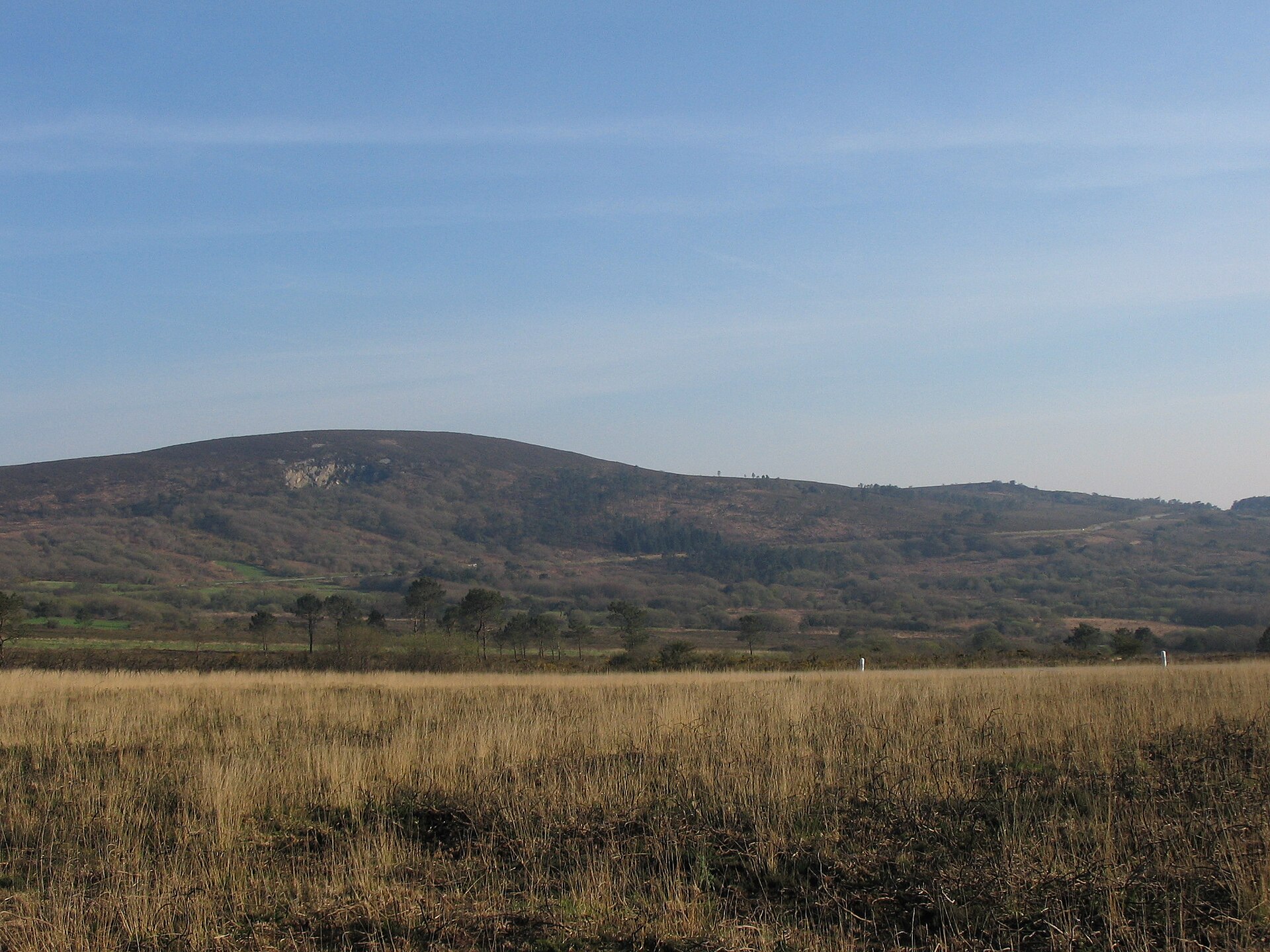
Ménez-Hom is one of Brittany's most recognizable summits, rising above the commune of Dinéault in the Finistère department. Its modest height of 330 meters hardly suggests it, but the view from the top ranks among the finest in the entire region. The hill closes off the Montagnes Noires range and overlooks Douarnenez Bay, forming a natural gateway to the Crozon peninsula.
How do you get to Ménez-Hom?
The easiest approach is from Châteaulin along the D887 toward Crozon. After roughly 11 kilometers you reach the Sainte-Marie-du-Ménez-Hom chapel; 1.5 kilometers further, a road branches off to the right and climbs another 2 kilometers to the parking area just below the summit. From there, the orientation table and viewpoint are only a few minutes' walk away, making the summit accessible even to casual visitors. The massif spans four communes — Plomodiern, Saint-Nic, Dinéault and Trégarvan — so hikers can start from several different sides of the hill.
What will you see at the top?
The short climb rewards visitors with a 360-degree panorama, one of the widest in the region. On a clear day, more than 50 church spires are visible to the naked eye, with sightlines stretching from the Crozon peninsula all the way to the Monts d'Arrée. In a single sweep you can take in the sea, heathland, river valleys and hill ranges — an unusually complete view for such a modest elevation. Just below the peak, an orientation table helps visitors identify what they're looking at, from Douarnenez Bay to the Brest roadstead and the Crozon peninsula itself.
The hill's history runs deep. Prehistoric communities practiced religious rites here, leaving behind megaliths and stone cairns still scattered across the slopes. In 1913, a farmer working land at Kerguilly, in Dinéault, uncovered a small bronze head of a helmeted Gallo-Roman goddess — evidence of how long this place has drawn people to it. During the Second World War, German forces used the summit as an observation post; it was retaken by force by the French Forces of the Interior (FFI) in 1944. A local legend also clings to the hill: it tells of King Marc'h, ruler of Breton Cornouaille, said to have been cursed with a horse's ears.
At the foot of the hill stands the Sainte-Marie-du-Ménez-Hom chapel, set against the bare heathland covering the southern slope. Every year, on the second Sunday of May, the chapel hosts a traditional pardon (religious pilgrimage) that draws visitors from the surrounding communes.
When should you visit, and what is there to do?
Ménez-Hom draws outdoor enthusiasts year-round. The hill and its network of trails are used for walking and horseback riding, mountain biking, and paragliding — strong winds coming off the bay make it one of the region's favorite paragliding launch points. The best time to climb is on a clear day, when the panorama reaches its full extent; foggy mornings, more common in winter, are best avoided. Spring and early summer also bring the heathland into bloom, adding extra color to the views from the slopes.
Frequently asked questions
How long does it take to reach the summit of Ménez-Hom? From the upper car park it only takes a few minutes to reach the viewpoint and orientation table, so the visit itself is short — getting there is the main part of the trip.
Is Ménez-Hom suitable for families with children? Yes. The short stretch from the parking area to the summit is gentle and manageable for most visitors, regardless of fitness level.
What can you see from the top on a clear day? On good visibility days you can spot more than 50 church spires, the Crozon peninsula, Douarnenez Bay, and the Monts d'Arrée range.
Is there anything else worth visiting nearby? Yes — at the foot of the hill sits the Sainte-Marie-du-Ménez-Hom chapel, especially worth a visit during the May pardon.
Nearby places

Earn badges for the places you visit
Download NextOnTrip, discover new places and check off your trails.