- Monuments
- Memorial Sites
Memorial „Oběti světové války“, Bílovice nad Svitavou
About this place
Memorial to the Victims of the World War stands on a small islet in the middle of the Svitava River, inside a park at the center of Bílovice nad Svitavou. The monument takes the shape of a stone pyramid rising from a square base, its four corners decorated with carved ornaments resembling vases or goblets. It is regarded as one of the oldest World War I memorials in Europe, unveiled on 10 October 1915 while the war was still underway.
Who came up with the idea for the memorial?
The initiative came from Rudolf Těsnohlídek, a journalist and writer connected to Bílovice — he is the author of the original story that later became the basis for Leoš Janáček's opera "The Cunning Little Vixen". His original plan was to fund a monument to Jan Hus in the village. Because of wartime politics — the conflict was still ongoing and the Austro-Hungarian authorities were not favorably disposed toward honoring the Hussite reformer — the project was redirected instead toward a memorial for local men who had died in the war. Construction was carried out by the local Sokol organization, a gymnastics and civic association active in many Czech towns at the time.
What does the memorial look like?
The monument consists of a stone pyramid set on a square base. Each of the base's four corners bears a carved decoration shaped like a vase or a goblet. On 28 October 1928 — the tenth anniversary of Czechoslovak independence — a travertine plaque listing the names of 49 fallen residents of Bílovice was added to the monument.
What else stands on the same islet?
The same small river islet also holds a memorial to the victims of World War II and a monument to Dr. Miroslav Tyrš, founder of the Sokol movement. Together, the three monuments form a small memorial site that villagers visit on anniversaries and state commemorations.
Why is it worth a stop?
This memorial is an unusual case of a war monument raised while the war was still being fought, rather than afterward like most similar memorials in the region. Its location on a river islet surrounded by park greenery makes it a quiet stop on a walk through the village center, whether the visitor is drawn by the history or simply looking for a calm spot by the water.
How to get there and what else to see nearby?
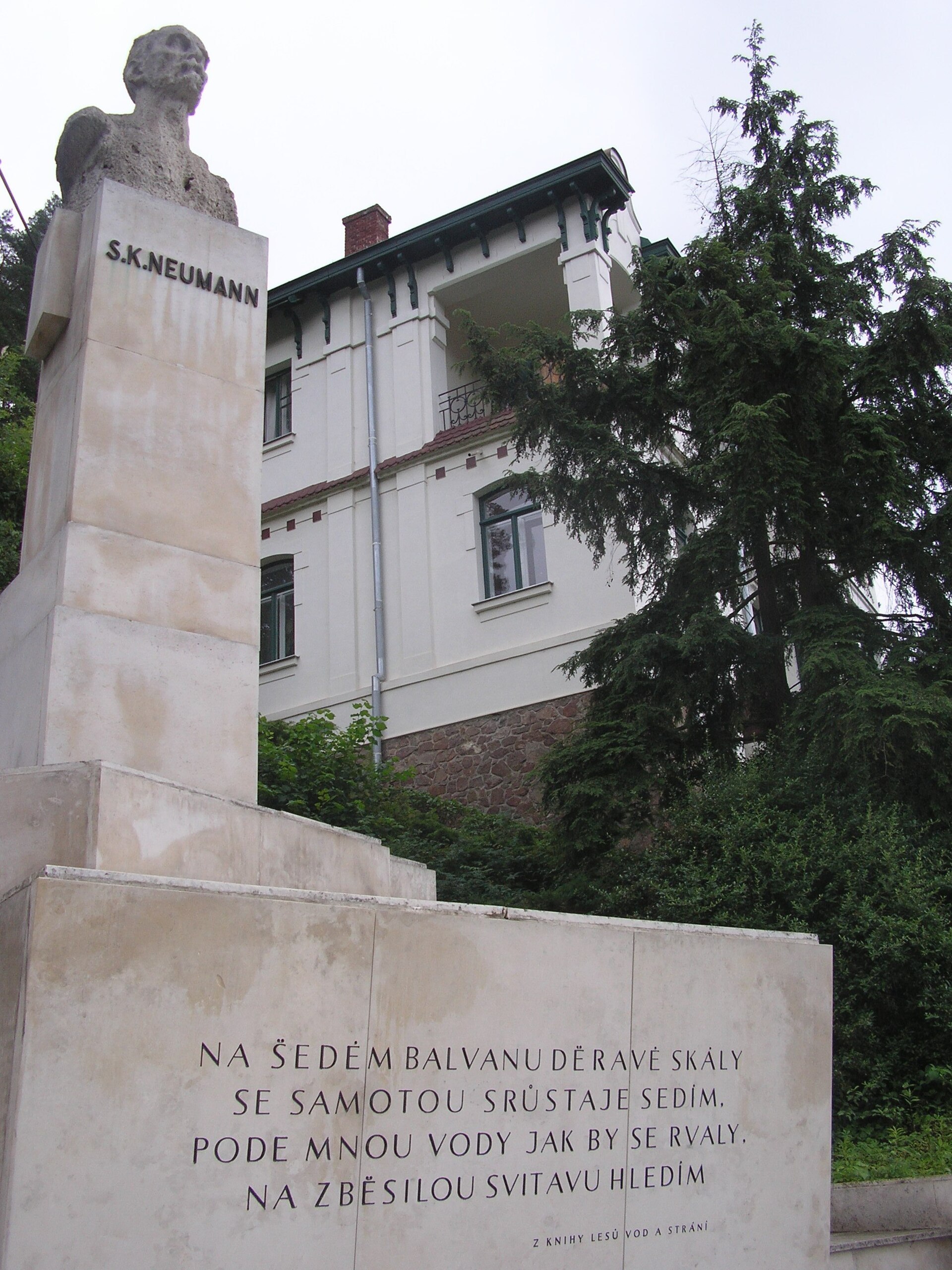
Bílovice nad Svitavou lies a short distance from Brno, along the Svitava river valley, and is well served by both rail and road. On the other side of the village, near the Pastvá louka meadow, stands another memorial — to the poet Stanislav Kostka Neumann — so a single visit to Bílovice can cover two distinct memorial sites.
Frequently Asked Questions
Where exactly does the World War memorial in Bílovice stand? On a small islet in the middle of the Svitava River, inside a park in the center of the village of Bílovice nad Svitavou.
When was the memorial built? It was unveiled on 10 October 1915, while World War I was still being fought, making it one of the oldest memorials of its kind in Europe.
Who initiated its construction? Rudolf Těsnohlídek, a local journalist and writer. The local Sokol organization carried out the construction.
Was the memorial originally meant to honor someone else? Yes — it was originally planned as a monument to Jan Hus, but wartime politics led to the project being redirected toward a memorial for the village's fallen residents.
What else can be found at the same site? The same islet also holds a memorial to the victims of World War II and a monument to Miroslav Tyrš, founder of the Sokol movement.
Nearby places

Earn badges for the places you visit
Download NextOnTrip, discover new places and check off your trails.