About this place
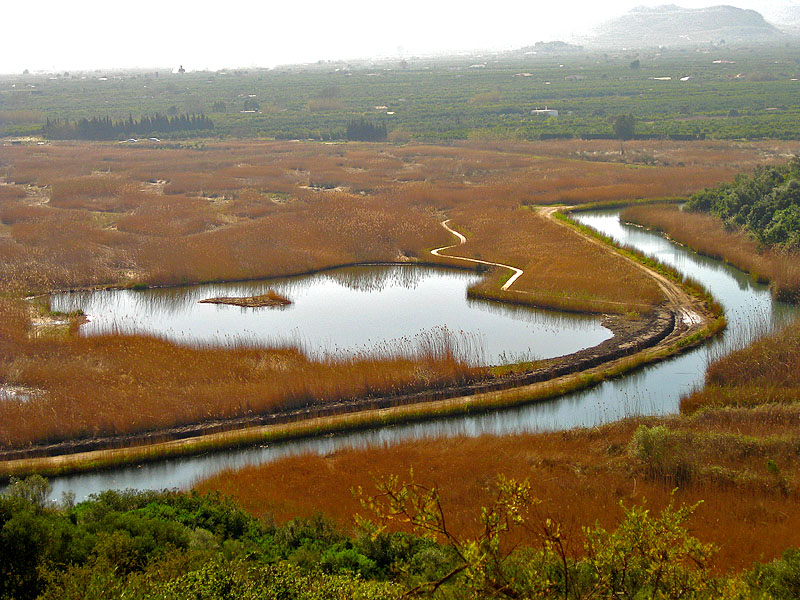
Marjal de Pego-Oliva Natural Park protects a large freshwater wetland straddling the border of the Valencia and Alicante provinces, spread across the municipalities of Pego and Oliva. Covering roughly 1,253 hectares, the reserve sits in a basin ringed by the Mostalla, Migdia and Segària mountains, which together funnel runoff from the surrounding hills into the marshland below. It ranks among the last extensive freshwater marsh systems left on Spain's Mediterranean coast, kept wet year-round by a network of channels, ditches and ponds.
What kind of vegetation grows in the marsh?
Bands of tamarisk, rushes and reed beds line the open water throughout the park. Below the surface, meadows of submerged aquatic plants form the backbone of the ecosystem, while duckweed and white water lilies float across calmer stretches. This layered mix of reed, rush and floating vegetation offers both food and shelter to the wide range of species that depend on the wetland.
Which animals live here?
The park is best known among birdwatchers. Its reed beds and open channels host purple swamphens, purple herons, squacco herons, glossy ibises, greater flamingos, gull-billed terns and whiskered terns, alongside the endangered marbled teal and several reed-dwelling warbler species. Among invertebrates, the endemic freshwater shrimp Dugastella valentina stands out, and the park's canals shelter the samaruc, an endangered freshwater fish found only in the Levante region of Spain. Amphibians and reptiles are represented by the European pond turtle and the viperine water snake, rounding out a dense web of wetland-dependent wildlife.
Why is this wetland protected?
Given its exceptional biodiversity, Marjal de Pego-Oliva is listed under the Ramsar Convention, which recognises wetlands of international importance. The park also carries Special Protection Area status for birds and forms part of the EU's Natura 2000 network, underlining its role as a refuge for species under threat across Europe.
How can visitors explore the park?
Marked trails and observation points run through the marsh, allowing birdwatching without disturbing the wildlife. Walking along the channels reveals both open water and dense stretches of reed vegetation, with early mornings and the spring and autumn migration seasons offering the best chances to spot waterbirds.
Frequently asked questions
Where exactly is Marjal de Pego-Oliva located? On the border between the Valencia and Alicante provinces, across the municipalities of Pego and Oliva, surrounded by the Mostalla, Migdia and Segària mountains.
How large is the park? Around 1,253 hectares of marshland, channels and ponds.
What can visitors see there? Rich wetland birdlife, including endangered species, endemic invertebrates and fish, plus characteristic reed and rush vegetation.
Does the park hold international protection status? Yes, it is listed under the Ramsar Convention and belongs to the Natura 2000 network.
Nearby places

Earn badges for the places you visit
Download NextOnTrip, discover new places and check off your trails.