About this place
Abric de Benirrama I is a rock shelter with prehistoric paintings tucked into the Vall de Gallinera, in the province of Alicante. The site sits at the foot of the Serra de l'Almirant, right above the Gallinera River, with its opening facing southeast.
What will you see?
The shelter's rock wall preserves paintings in two distinct styles: schematic art and Levantine art. This combination makes Benirrama especially valuable to prehistory researchers, since the two painting traditions rarely appear together at a single, small site. The figures depict human and animal forms in the simplified style typical of the rock art of the Mediterranean Basin on the Iberian Peninsula.
It's worth knowing that the site hasn't survived untouched. In May 1993 it suffered an act of vandalism — two large rock slabs were cut from the wall, and five paintings were lost as a result, four of them removed with a grinder. This episode is a stark reminder of how fragile prehistoric rock art can be, and why visitors should treat the site with particular care and respect.
How to get there?
Abric de Benirrama lies along a hiking route through the Vall de Gallinera known as the Ruta d'Art Rupestre, a trail that links several rock-art sites scattered across the valley. Visits are self-guided, with no need to book a tour guide, which makes the shelter easy to reach for travelers exploring the area on foot. Its coordinates are 38.83597, -0.20042 — the most convenient approach is on foot from the nearby village of Benirrama, one of the small hamlets dotted throughout the valley.
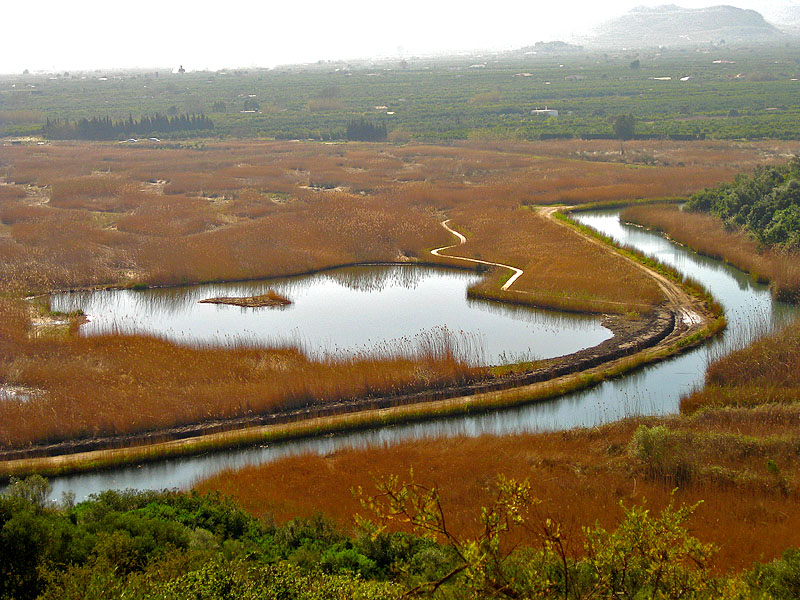
The trail runs through classic Mediterranean scenery — terraced hillsides, olive and almond groves, and rocky mountain slopes — making it easy to pair a visit to this archaeological site with a walk through one of the most scenic valleys in the Marina Alta region.
When to visit?
Spring and autumn are the best times to come, when temperatures in the valley are mild and the hiking trails aren't exposed to the summer heat typical of inland Alicante province. The paintings are easiest to see in good natural light, so morning or early afternoon hours are ideal for photographing and studying the details closely.
Discovery history
The paintings at Benirrama were discovered in 1977 by members of the Centre d'Estudis Contestans, a local association dedicated to researching the archaeological heritage of the Contestania region. Their fieldwork and publications helped document and protect the site. The rock art of the Mediterranean Basin on the Iberian Peninsula, which includes Benirrama, was inscribed on the UNESCO World Heritage List in 1998, underlining the exceptional value of these paintings for understanding European prehistory.
Frequently asked questions
Is visiting Abric de Benirrama free? Yes, the site can be visited independently and free of charge by following the hiking trail through the valley.
Do you need a guide? No, the site is signposted and open for self-guided visits as part of the Ruta d'Art Rupestre trail.
Why are some of the paintings damaged? In 1993 the site was vandalized — two rock slabs bearing five paintings were stolen, permanently diminishing the collection.
Is Benirrama part of a larger UNESCO heritage listing? Yes, it belongs to the rock art of the Mediterranean Basin on the Iberian Peninsula, inscribed on the UNESCO World Heritage List in 1998.
Nearby places

Earn badges for the places you visit
Download NextOnTrip, discover new places and check off your trails.