About this place
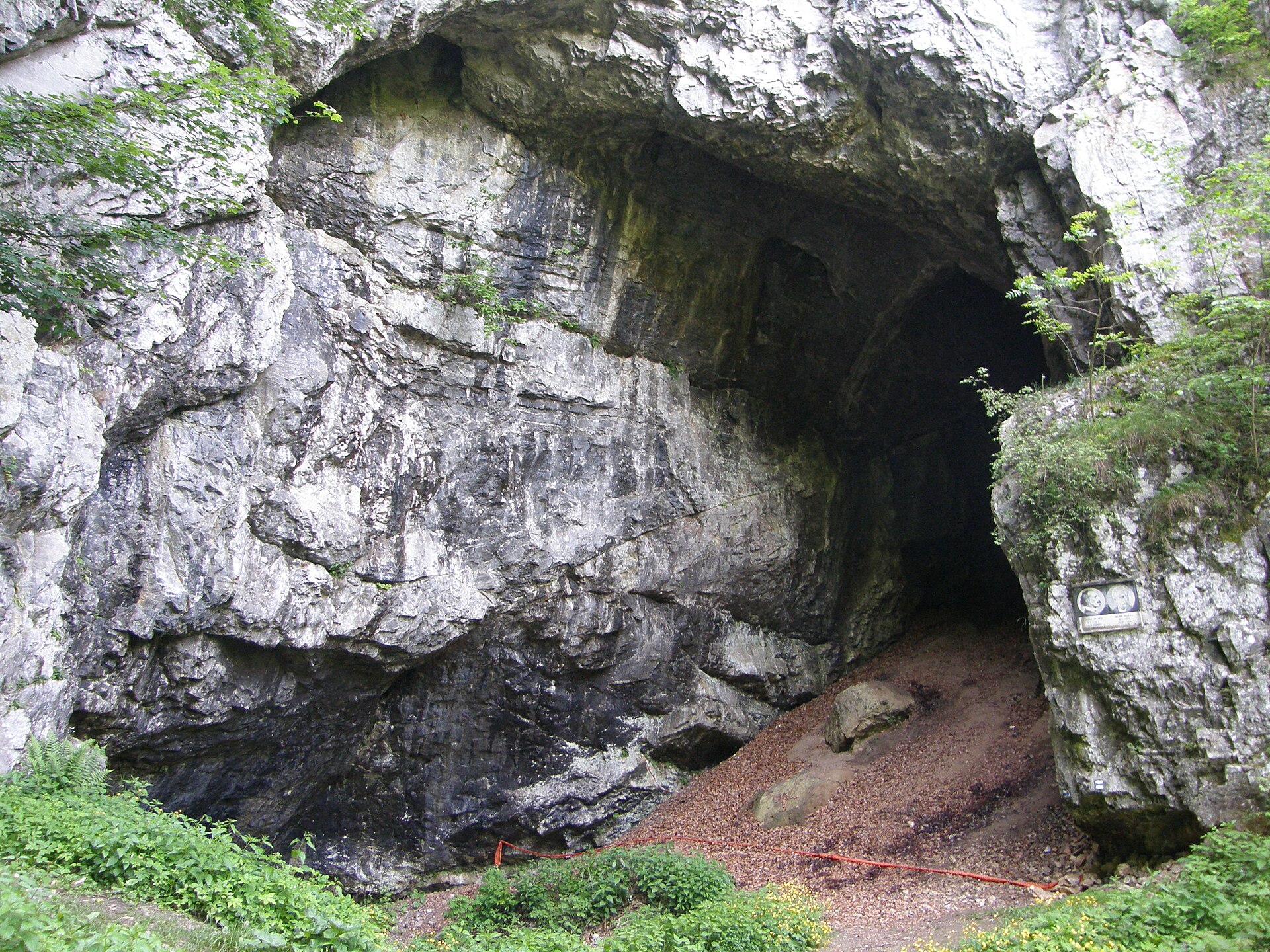
Mariánská jeskyně (Marian Cave) is a karst cave in the left slope of the Křtinka valley, in the municipality of Březina, right in the heart of the Moravian Karst. It lies between the Drátenická and Nová Drátenická caves, at an elevation of just under 400 metres above sea level, and forms part of the dense cave network protected within the Moravian Karst Protected Landscape Area.
How and when was the cave formed and discovered?
The cave developed in Vilémovice limestone belonging to the Macocha Formation, and its passages branch out into a partly labyrinthine layout. It was discovered on 27 September 1901 during road-construction works. That same night, Karel Absolon — one of the most important researchers of the Moravian Karst — reached the Hall of Witches deep inside. A few days later, on 5 and 6 October 1901, Florian Koudelka carried out further exploration. The first map of the cave was completed by Hermann Bock on 9 August 1902.
How large is the cave?
Mariánská jeskyně is about 180 metres long, with a total depth (unflooded sections) of around 30 metres. Its upper part contains a vertical shaft roughly 11 metres deep, known as the Upper Abyss. Deeper inside lies the Dragon's Mouth (Dračí jícen), estimated at 27.5 metres deep. The lowest reachable levels, at an elevation of about 352.7 metres above sea level, are crossed by the underground Křtinka stream, which is still active today.
What can visitors see inside?
One of the cave's defining features is the Lichtenstein Chamber, opened to visitors in 1908 after a new passage was broken through. This partial opening to the public is also the point at which, according to nature-conservation records, the cave's speleothem decoration suffered significant damage. Further in, the lower sections hold the Hall of Witches (Síň čarodějnic), the spot the very first explorers reached on the night the cave was discovered.
Do bats live in the cave?
Yes — Mariánská jeskyně serves as a winter hibernation site for bats. Around 30 individuals are recorded there in total, the most numerous species being the lesser horseshoe bat (Rhinolophus hipposideros). Because of this role, the cave is subject to special nature protection measures.
Where exactly is it located, and how is it protected?
The cave lies within the municipality of Březina, inside the "U Výpustku" nature reserve and the Moravian Karst Protected Landscape Area. Its position in the slope of the Křtinka valley, close to other karst caves in the region, places it within a network of more than a thousand caves and gorges found across this landscape.
Frequently asked questions
Is Mariánská jeskyně open to the public? The cave is publicly accessible, though it remains under nature-conservation supervision because of its sensitive speleothem decoration and its role as a bat roost.
When was the cave discovered? On 27 September 1901, during road-construction works in the Křtinka valley.
How long is the cave? Mariánská jeskyně is about 180 metres long, with roughly 30 metres of total depth.
Does water flow through the cave? Yes, the underground Křtinka stream runs through the lowest sections, at an elevation of around 352.7 metres above sea level.
What wildlife can be found there? The cave is a winter hibernation site for bats, mainly the lesser horseshoe bat, with around 30 individuals recorded in total.
Nearby places

Earn badges for the places you visit
Download NextOnTrip, discover new places and check off your trails.