About this place
Klostermann Spring is a maintained forest spring in the Moravian Karst, tucked in the woods between the villages of Rudice and Habrůvka at an elevation of roughly 525 metres above sea level. The spring emerges exactly where groundwater surfaces at the geological contact between Devonian limestone and Culm sandstone from the Drahany Highlands – a boundary typical of the wider Moravian Karst region. Its name honours Karel Klostermann, a writer usually associated with the Šumava region, even though the spring itself lies hundreds of kilometres away.
Why does a spring in the Moravian Karst carry the name of a Šumava writer?
The spring structure was built in 1938 to a design by Professor Josef Opletal, as a tribute to Karel Klostermann (1848–1923). Its façade holds a memorial plaque of black Swedish granite, commissioned back in 1929, bearing the writer's portrait, his autograph, and a list of the titles of his works describing the forest landscape of Šumava and the life of its people. Opletal based the portrait on photographs and a diary containing Klostermann's autograph, supplied by the writer's daughter, Ríša Císařová, who lived in Plzeň. The structure was restored during the 1980s and remains in good condition today.
What happens to the water flowing out of the spring?
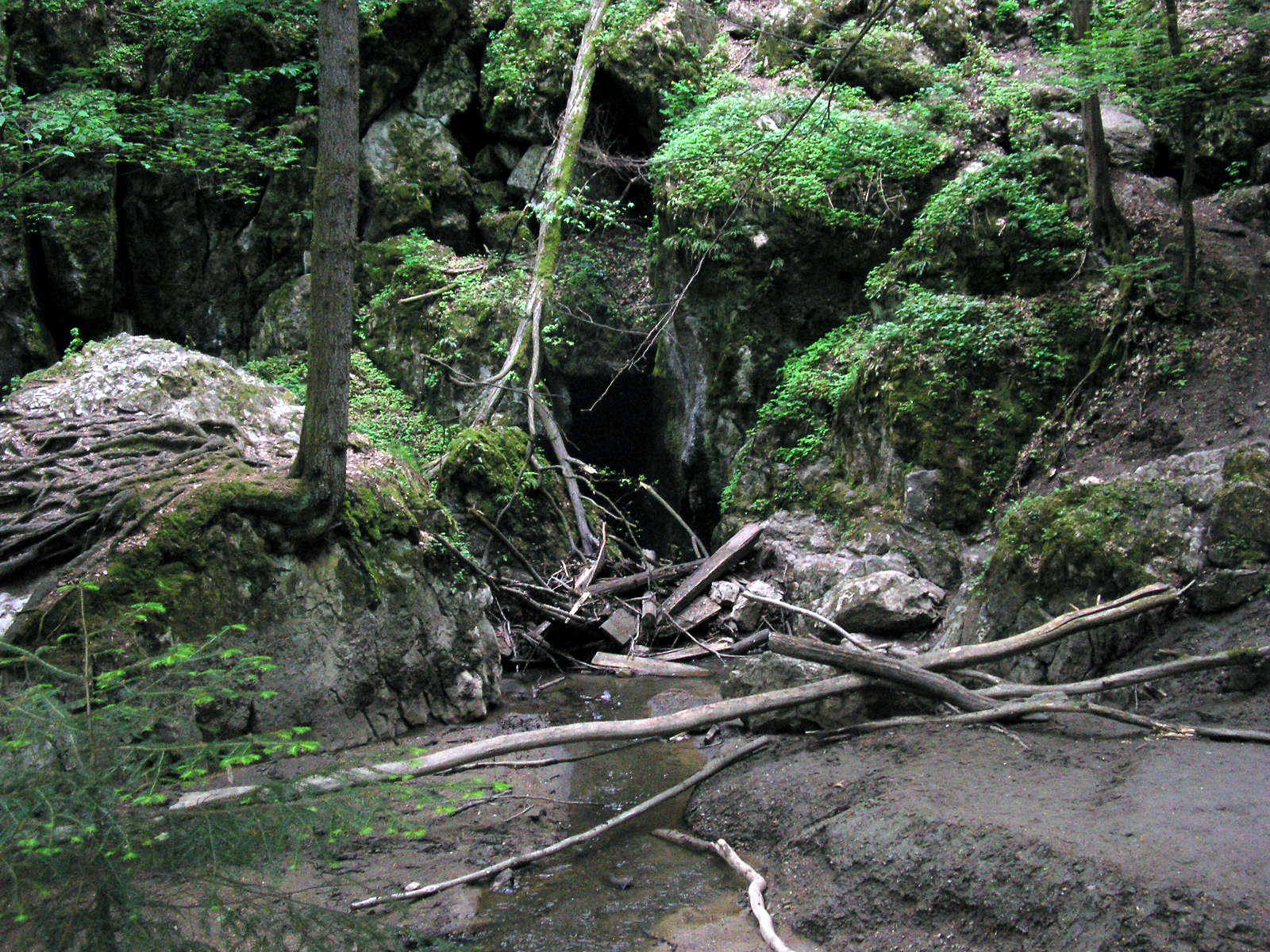
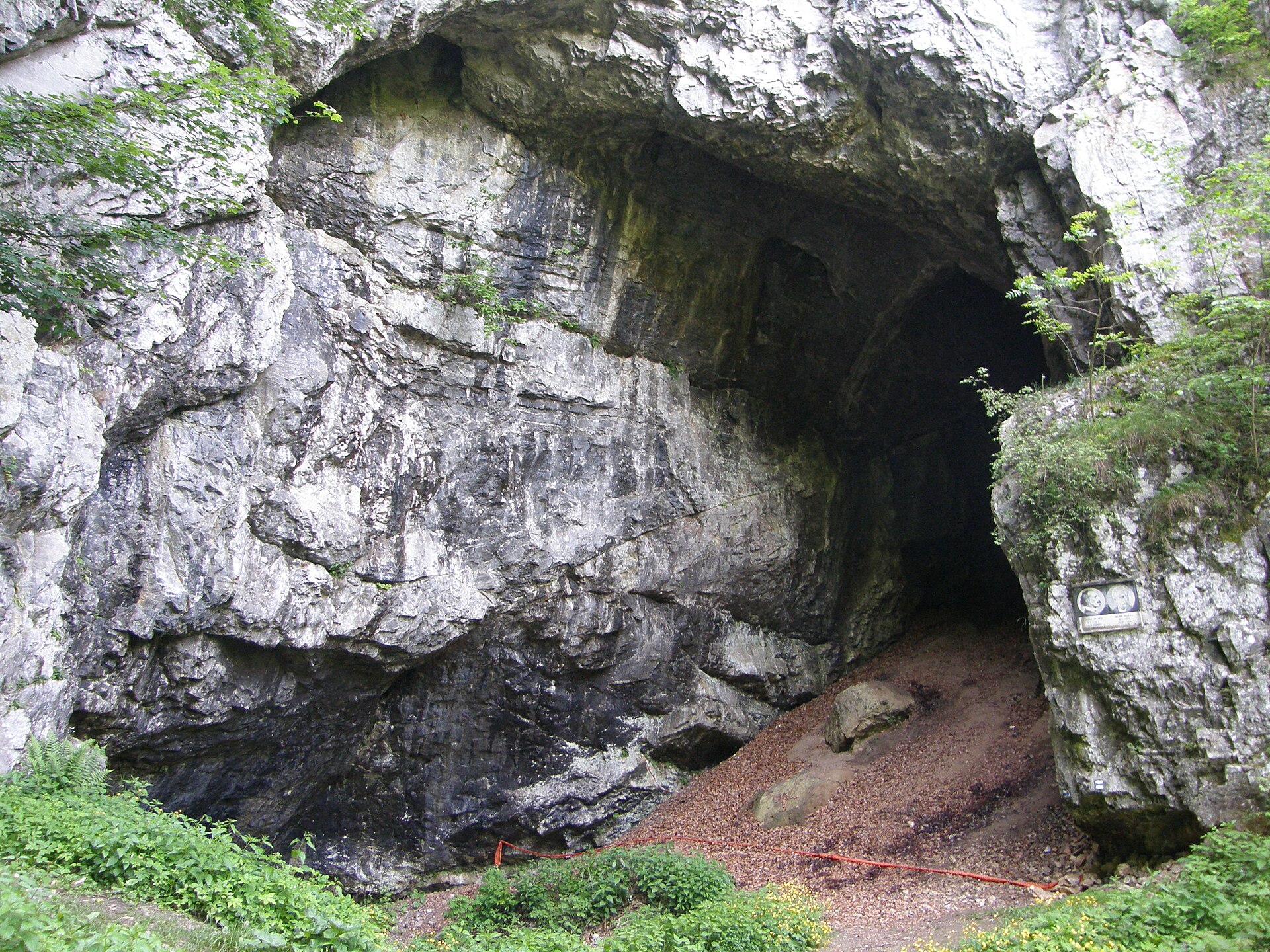
A short stream leaves the spring and, after about 120 metres, disappears into one of the best-developed classic karst sinkholes on the Rudice plateau. The sinkhole also contains a small cave passage that ends after a few metres in a rockfall of rubble. This pattern – a surface stream vanishing underground – is a textbook feature of limestone karst and illustrates how the underground drainage system works in this part of the Moravian Karst. The spring itself is considered highly productive, and small aquatic organisms live in the pool that forms below its outlet.
How do you get to Klostermann Spring?
The spring sits along a green-marked hiking trail running from Křtiny to Rudice, with a short marked branch leading directly to it. The route passes through the Habrůvka forest district, near local forest tree nurseries, on the Rudice plateau – right in the heart of the Moravian Karst, an area known for its caves, gorges, and karst phenomena. The site can also be reached by bicycle, though the forest access road makes it a destination that takes a bit of effort.
What should visitors know before heading there?
Klostermann Spring is a stop for hikers and cyclists exploring the trails of the Moravian Karst, combining a historical monument to a significant figure in Czech literature with a striking natural phenomenon – a vanishing stream and karst sinkhole. There is no built-up tourist infrastructure here; the appeal lies in pairing a quiet forest setting with a genuine trace of regional history.
Frequently asked questions
Where exactly is Klostermann Spring located?
It lies in the forests of the Habrůvka forest district, between the villages of Rudice and Habrůvka, on the Rudice plateau in the Moravian Karst, at an elevation of about 525 metres.
Why is the spring named after Karel Klostermann?
The spring was built in 1938 as a memorial to the writer Karel Klostermann (1848–1923), known for his depictions of Šumava's forests and people – even though the spring itself stands in an entirely different region of the Czech Republic, the Moravian Karst.
Who designed the spring and its memorial plaque?
Professor Josef Opletal designed the structure, while the black Swedish granite memorial plaque, bearing the writer's portrait and autograph, was commissioned in 1929, before the spring itself was completed in 1938.
What happens to the stream that flows from the spring?
After roughly 120 metres, the stream disappears into a classic karst sinkhole on the Rudice plateau, one of the best-developed examples in the region, which also contains a small cave passage ending in a rockfall.
How do you reach the spring on foot?
A green-marked trail connects Křtiny and Rudice, with a short branch leading directly to the spring; the route is also accessible by bicycle, though it runs along forest roads.
Nearby places

Earn badges for the places you visit
Download NextOnTrip, discover new places and check off your trails.