About this place
The Mahamud Pillory is a stone jurisdictional column standing in the main square of this small village in the province of Burgos, in Spain's Castile and León region.
Where does the pillory stand and what does it represent?
The column rises on the Plaza Mayor in Mahamud, right next to the parish church, at the heart of a village that today counts around a hundred residents. Mahamud belongs to the Arlanza district and lies roughly 40 km southwest of the city of Burgos. The rollo dates from the first half of the 16th century and belongs to a type of monument raised in towns that had received the villazgo privilege from the Crown — the right to hold their own jurisdiction and administer justice in the king's name. The column itself was a visible marker of that status: the taller and more elaborate the shaft, the higher the settlement's legal standing.
What purpose did the pillory serve historically?
Beyond its role as a jurisdictional emblem, the rollo also functioned as a picota, a site where punishments were carried out and condemned individuals were exposed to public view, a use that became especially notable during the era of the Spanish Inquisition. Justice held at this spot also demonstrated the authority of the Bishop of Burgos, under whose influence the area fell. Today the column is topped with a figure of Christ, which shifted its original secular, judicial purpose toward a religious one.
What else is worth seeing near the pillory?
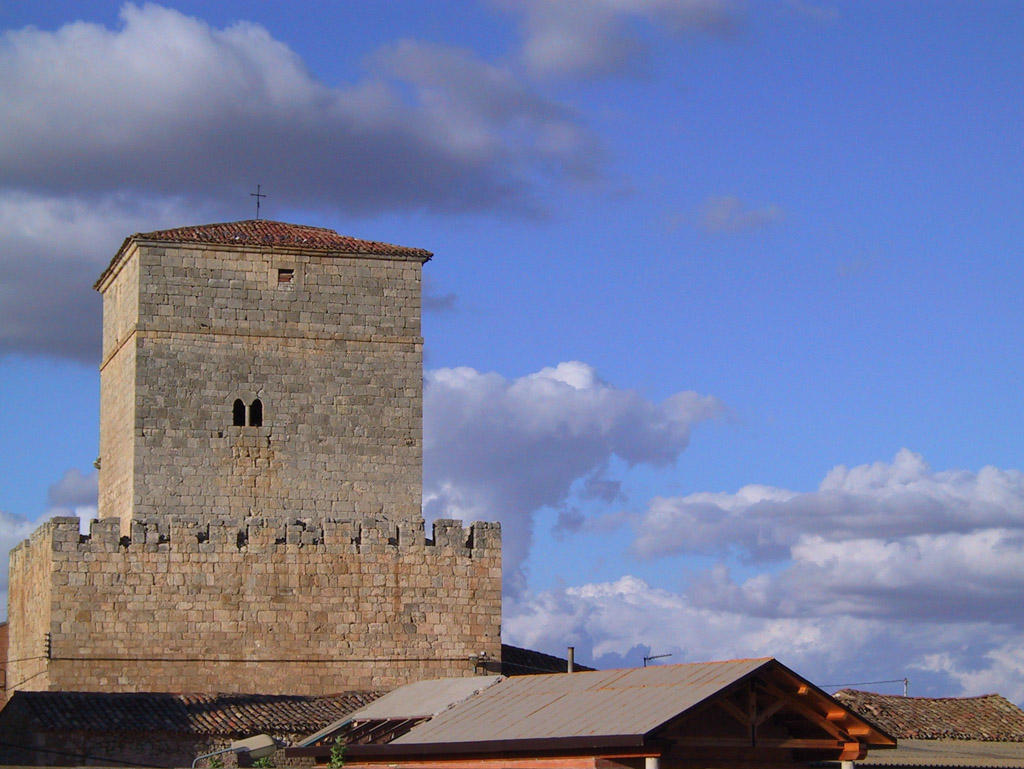
Standing directly beside the rollo is the parish church of San Miguel Arcángel, built in stages between the 13th and 18th centuries, blending Romanesque, Gothic, Renaissance and Baroque elements. The church has three naves and a transept, and its Baroque facade was designed by José Cortés del Valle in 1772. Inside, visitors can find a Romanesque baptismal font, a main altarpiece created by Domingo de Amberes in the 16th century, and a retable of Saint John the Baptist in Plateresque style, attributed to the Valmaseda school.
What history lies behind the name Mahamud?
The village name has Arabic roots and is linked to Mozarabic settlement in the early Middle Ages. The first written reference to the village, then recorded as "Mahomat," dates from 1050. Mahamud earned a place in Castilian history in 1507, when Cardinal Francisco Jiménez de Cisneros was solemnly presented with his cardinal's cap right here, in a ceremony presided over by King Ferdinand the Catholic himself. In memory of that event, residents of Mahamud are still nicknamed "gorretes," roughly "the cap people."
Frequently Asked Questions
What century does the Mahamud pillory date from? The column was erected in the first half of the 16th century as a symbol of the villazgo privilege granted to the settlement by the Crown.
How does a rollo jurisdiccional differ from an ordinary pillory? The rollo is above all a legal symbol, marking a settlement's own judicial jurisdiction. Serving as a picota, a site of public punishment, was only one of its uses, particularly prominent during the Inquisition period.
What sits on top of the column today? A figure of Christ now crowns the column, giving the monument a religious dimension in place of its original secular, judicial function.
Where does the village name Mahamud come from? The name has Arabic origins tied to Mozarabic settlement, and the earliest written record, from 1050, lists it as "Mahomat."
Nearby places

Earn badges for the places you visit
Download NextOnTrip, discover new places and check off your trails.