About this place
Lusarreta is a small settlement in the Arce valley (Basque: Artzibar), in northern Navarre, tucked against the foothills of the Spanish Pyrenees. Surrounded by green hills and woodland, it keeps the unhurried rhythm of a Basque-Navarrese hamlet, far from the region's busier tourist trails.
Where does the name come from?
Lusarreta's name is Basque in origin, built from three elements: lur (land), zahar (old), and the place-marking suffix -eta. Together they roughly translate to "old land" or "place of old land" — a construction typical of the toponymy found throughout the Artzibar valley, where neighbouring hamlets share similar naming patterns.
What is there to see?
The earliest records of Lusarreta date back to the 12th century, making it one of the older settlements in the Arce valley. Until 1990 it existed as an independent municipality; since then it has been administratively absorbed into the municipality of Arce as one of its constituent places.
The village's focal point is the church of San Esteban (Saint Stephen), a Gothic building with a Baroque altarpiece. The church is not routinely open to visitors, but it still holds its original furnishings, religious imagery and bells — quiet traces of a community that was once considerably larger.
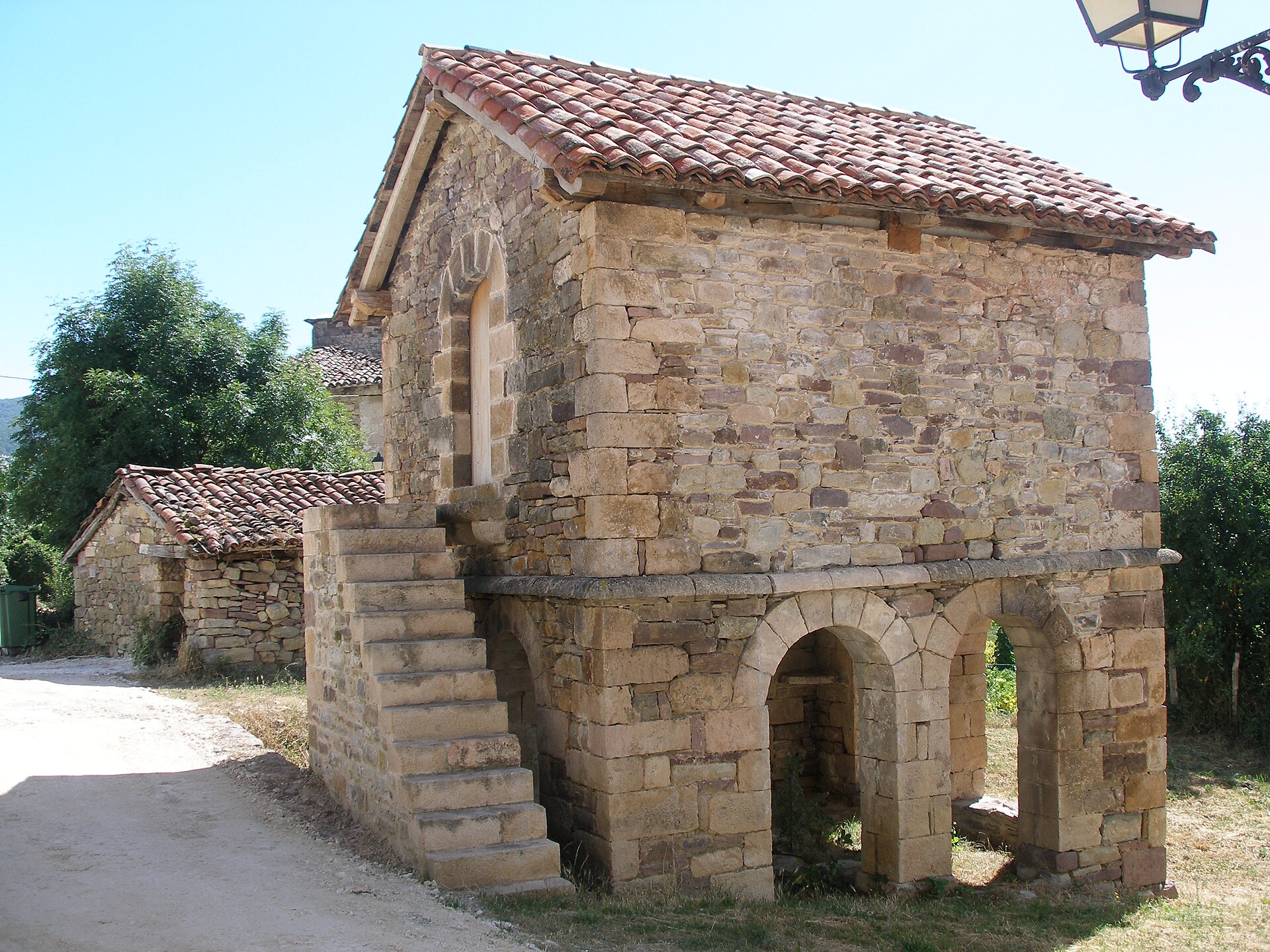
The other notable landmark is the granary (hórreo) belonging to the Gardorena house. This wooden agricultural structure caught the attention of ethnographer Fermín Leizaola back in 1973, and in 1993 it was formally declared a site of cultural heritage interest — one of the better-preserved examples of traditional rural granary architecture in the area.
Lusarreta also serves as a starting point for walkers: a trail from the village leads to the Lezestali cave, a popular destination for hikers exploring the Arce valley.
How do you get there?
Lusarreta sits within the municipality of Arce, in the province of Navarre, reached via local roads that wind through the Artzibar valley. A car is the most practical way in — the nearest major city is Pamplona (Iruña), from where roads lead up toward the Pyrenees. Allow extra time for the drive, since the route runs through mountainous, winding terrain.
When is the best time to visit?
Spring and early autumn are the best seasons, offering comfortable temperatures for walking and the valley's greenery at its most vivid. Summers can turn hot, while mountain roads may be affected by weather conditions in winter.
Why visit?
Lusarreta suits travellers looking for an authentic, uncommercialised side of Navarre — no crowds, but a history reaching back to the Middle Ages, a heritage church, and a granary recognised as a cultural asset. It's a stop for anyone curious about daily life in the small, depopulating villages scattered across the Basque-Navarrese Pyrenees.
Frequently asked questions
Does anyone still live in Lusarreta? Yes, though very few people. The village has undergone significant depopulation: between 1850 and 1950 it had around 50 inhabitants, while today only a handful remain registered there.
Can visitors go inside the San Esteban church? The church is not routinely open, though it still preserves its original furnishings and bells. It's worth checking local sources in advance for possible access.
What is the hórreo in Lusarreta? It's a historic granary belonging to the Gardorena house, declared a site of cultural heritage interest in 1993 — a fine example of traditional Basque-Navarrese rural architecture.
Are there hiking trails nearby? Yes, a walking trail from the village leads to the Lezestali cave, a popular route for those exploring the Arce valley.
Nearby places

Earn badges for the places you visit
Download NextOnTrip, discover new places and check off your trails.