About this place
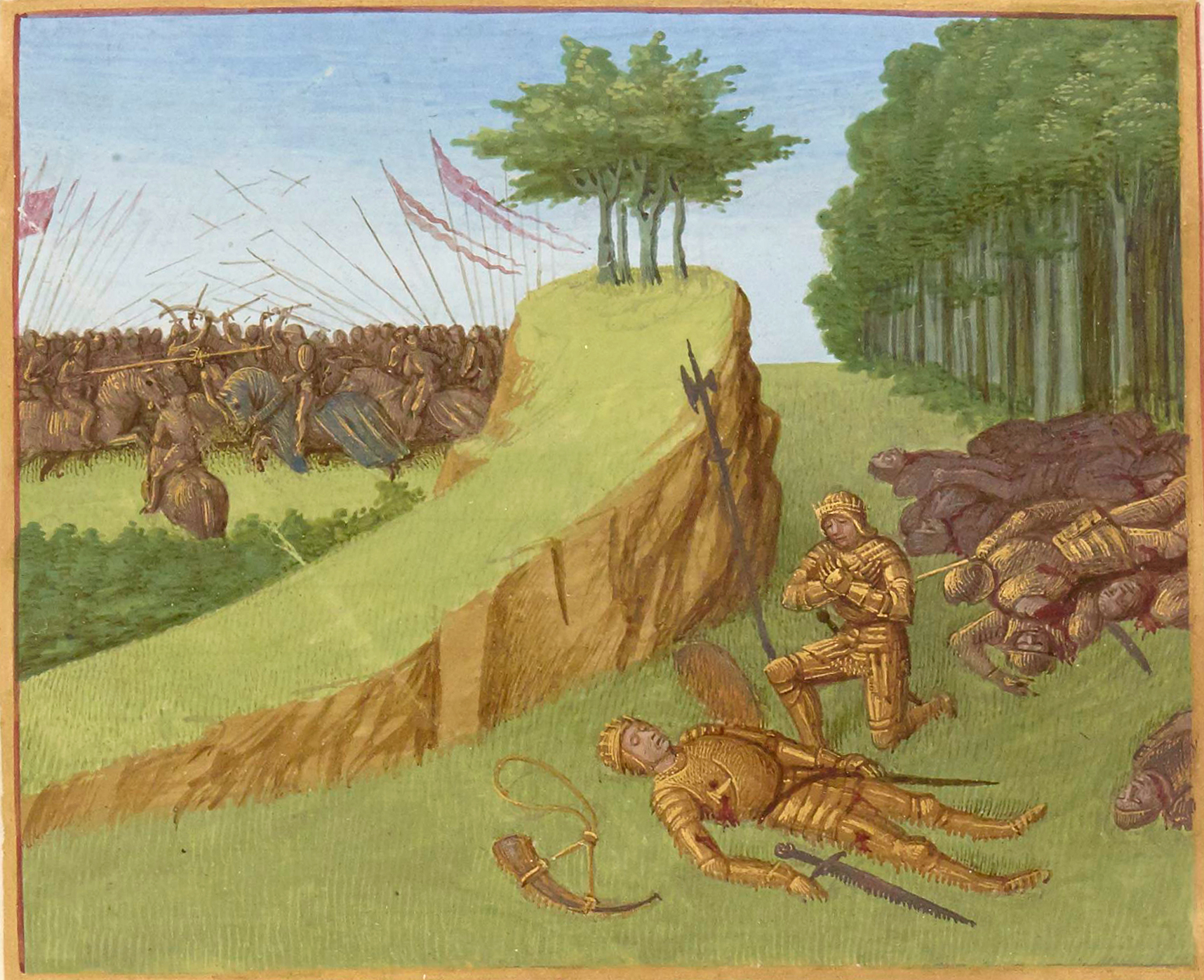
The Battle of Roncevaux Pass took place on 15 August 778 in the mountain pass of Roncevaux, on the Spanish side of the Pyrenees, right next to what is today the border town of Luzaide/Valcarlos in Navarre. It is one of the most storied historical sites along the Camino Francés — the legend of Count Roland, who died here with Charlemagne's rearguard, has echoed through Europe for over a thousand years.
What happened here?
Charlemagne was withdrawing his army through the Pyrenees after a campaign on the Iberian Peninsula. As his rearguard crossed the narrow, hard-to-defend pass, it was ambushed by Basque highlanders who knew the terrain intimately and used the high ground to their advantage. The clash ended in disaster for the Franks — nearly the entire rearguard was wiped out, including its commander, Count Roland. Historical sources describe the event only briefly, yet a few centuries later it became the seed of one of the great works of medieval literature, the "Song of Roland," which expanded the skirmish into a sweeping tale of chivalric heroism, complete with treachery and a climactic battle against Saracen forces.
Why does this place matter to pilgrims and travelers?
For centuries, Roncevaux Pass has served as a gathering point on the road to Santiago de Compostela — it lies on one of the main branches of the Camino Francés, the route that crosses into the Iberian Peninsula from the French side of the Pyrenees. Pilgrims and hikers walking this stretch today follow the same mountain paths that Charlemagne's troops once crossed. The very name Roncevaux (Spanish: Roncesvalles, Basque: Orreaga) has become shorthand in European culture for heroic defeat.
What will you see in the area?
The landscape remains rugged and mountainous — dense beech forests, steep slopes and narrow valleys that make it easy to understand why this terrain favored an ambush against a retreating army. On the Navarrese side, a short distance from the border, stands the monastery and collegiate church of Roncesvalles, a major pilgrim waypoint with centuries of tradition in sheltering travelers. Luzaide/Valcarlos, closer to the French border, has kept the feel of a traditional Basque mountain village, with stone houses and a pastoral rhythm of life.
How do you get there?
The pass sits on the route connecting Saint-Jean-Pied-de-Port in France with Roncesvalles in Spain, one of the busiest stretches of the Camino Francés. It can be walked, as thousands of pilgrims do each year, or reached by car along the local border road. Allow plenty of time — the terrain is mountainous and calls for sturdy footwear and proper preparation, especially outside the summer season.
Frequently Asked Questions
Are there any physical remains of the battle at Roncevaux? No — after more than 1,200 years, no visible material traces of the clash survive on site. The site's value today is mainly historical and symbolic, amplified by its literary legend.
How does the historical battle differ from the "Song of Roland"? Historical sources describe a brief, localized Basque attack on a retreating army's rearguard. The medieval epic poem expanded this considerably, adding betrayal, miracles and a full-scale battle against Saracen forces, turning Roland into a legendary figure.
Are Roncevaux and Roncesvalles the same place? Yes — they are the French and Spanish names for the same border pass area. Luzaide/Valcarlos lies closer to the French border, while Roncesvalles is a few kilometers further, on the Navarrese side.
Is the pass worth visiting if you're not walking the Camino? Yes — it is a site of significant scenic and historical value in its own right, accessible by car as well, with striking views over the Pyrenean slopes.
Nearby places

Earn badges for the places you visit
Download NextOnTrip, discover new places and check off your trails.