About this place
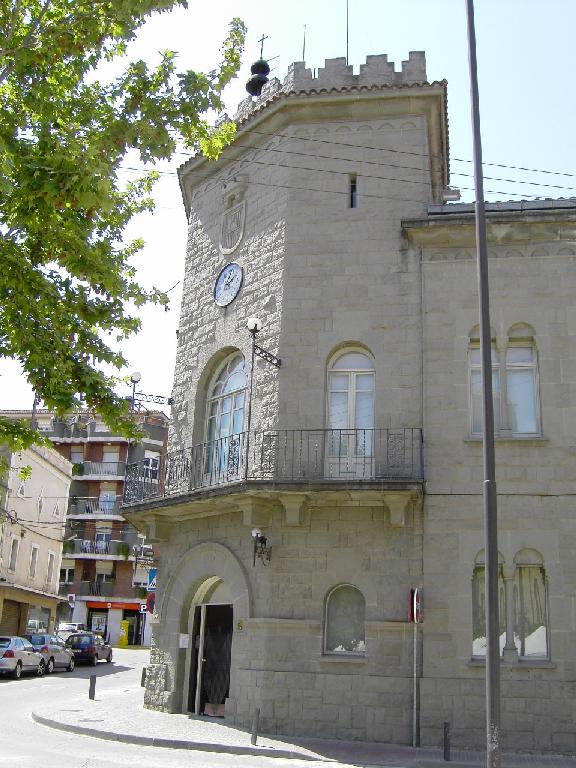
Lliçà d'Amunt City Council (Ajuntament de Lliçà d'Amunt) is the seat of local government in Lliçà d'Amunt, a town in the Vallès Oriental region of Catalonia, roughly 30 km north of Barcelona. Housed at Carrer Anselm Clavé 73, the town hall is a practical starting point for visitors — it's where you can pick up local maps, information on walking routes and the current calendar of municipal events.
Why stop in Lliçà d'Amunt?
The municipality has a longer history than its modern, fast-growing appearance suggests. Written records mention Lliçà d'Amunt as early as 987, while an even earlier reference to the neighbouring settlement of Lliçà de Vall in 946 points to habitation in the area before that date. Archaeologists have found the remains of Roman villas at Ca l'Amell Gros and Santa Justa, along with a Roman pottery kiln at Ca l'Amell Gros — evidence that the land was already in use in antiquity. The town's own name is thought to have Roman roots, deriving from the patrician name Lucius.
The parish church of Sant Julià de Lliçà d'Amunt is documented as far back as 1014, making it one of the oldest religious buildings in the area. The wider municipality still holds a large number of traditional Catalan masies (rural farmhouses), and the local cultural heritage register lists 155 protected elements — from buildings to movable heritage items — including two churches and three hermitages scattered across the surrounding hills.
How do you get to Lliçà d'Amunt?
The town sits less than half an hour's drive from Barcelona, along the road corridor linking the Catalan capital with the Vallès Oriental region. The town hall itself is centrally located at Anselm Clavé 73 (postal code 08186), an easy walk from the main streets of the town. It's worth combining a visit with a stop in neighbouring Vallès Oriental municipalities, which share a similar mix of rural and suburban landscape and connecting walking and cycling routes.
What is there to see nearby?
Beyond the town hall building itself, Lliçà d'Amunt is defined by the contrast between rapid urban growth and its rural heritage. It is one of the fastest-growing municipalities in Vallès Oriental — the population rose from 2,600 in 1981 to 10,000 in 2000, and had passed 15,000 by 2017. Despite this pace of growth, the local economy still leans on agriculture, small-scale industry and tourism, with wine and olive oil production remaining part of the local tradition. Visitors can pair a walk through the town's older, rural quarters with a look at its newer residential areas and the farms that still produce wine and olive oil.
When is the best time to visit?
Spring and autumn are the most comfortable seasons to explore Lliçà d'Amunt, with mild temperatures across Vallès Oriental and good visibility over the countryside around the hermitages and farmhouses. In summer, it's best to avoid the middle of the day, when inland Catalonia can get quite hot.
Frequently asked questions
Can you visit Lliçà d'Amunt City Council as a tourist site? It's primarily an administrative building, but it works well as a first stop for local information and as the starting point for a route around the town's heritage sites.
What historic sites are worth seeing in Lliçà d'Amunt? The parish church of Sant Julià, documented since 1014, the hermitages in the surrounding hills, and the many traditional masies spread across the municipality.
How far is Lliçà d'Amunt from Barcelona? The town lies about 30 km north of Barcelona, in the Vallès Oriental region, usually less than a 30-minute drive by car.
Does Lliçà d'Amunt produce local wine or olive oil? Yes, agriculture — including wine and olive oil production — remains part of the local economy alongside small industry and tourism.
Nearby places

Earn badges for the places you visit
Download NextOnTrip, discover new places and check off your trails.