About this place
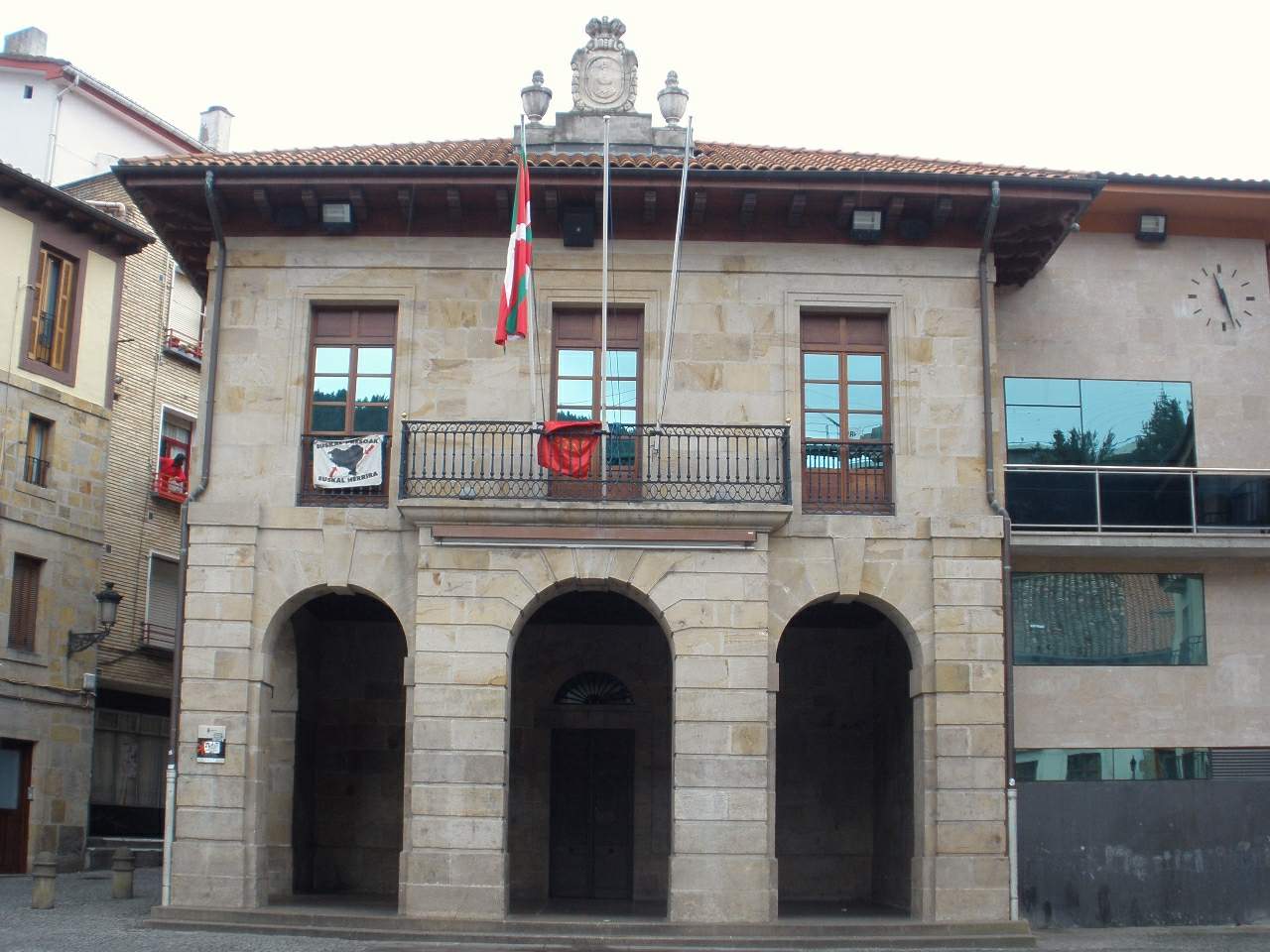
Leintz-Gatzaga town hall anchors the centre of Gipuzkoa's smallest municipality, a Basque village of only a little over a hundred residents whose entire story has revolved around one resource for seven centuries: salt.
Why did an entire town grow up around salt?
The place name itself gives it away — "gatz" is Basque for salt. The settlement took shape around a natural brine spring at the foot of the Alto Deba hills, and in 1331 King Alfonso XI of Castile granted it town status under the name Salinas de Leniz, formally recognising the residents' right to work the brine. From that point on, boiling and refining salt became the community's main livelihood for the following six centuries. The saltworks kept running without interruption until 1975, when falling sea-salt prices and rising production costs finally forced its closure. What remains of that industrial past can be seen today in the nearby museum dedicated to the town's salt-making history.
What does the town hall's facade actually tell you?
The building itself dates to the 18th century and was rebuilt in later years. Carved into its facade is the municipal coat of arms, showing Dorleta castle flanked by two "dorlas" — copper vessels once used to boil brine down into crystallised salt. That single image sums up the town rather neatly: local government and the salt trade have been bound together here for centuries. The town hall also sits along the old Camino Real, the royal road that once connected inland Castile with the Basque coast and carried the region's salt to wider markets.
Is Leintz-Gatzaga worth a stop on a Basque road trip?
The village sits in the Alto Deba area, right on the border between Gipuzkoa and Álava, surrounded by fairly untamed hill country. For anyone passing through this part of the Basque Country, the town hall and the small square in front of it make a natural place to pause — walking the centre takes barely fifteen minutes, yet it's enough to see how a tiny community built its whole identity around a single natural resource. Just nearby, the local salt museum walks visitors through the production process and displays the tools and vessels once used in the trade.
Frequently Asked Questions
What did the people of Leintz-Gatzaga do for a living? From the town's founding in 1331 until the saltworks closed in 1975, extracting and processing brine into salt was the community's primary occupation.
Where does the town's name come from? It combines the Basque word "gatz" (salt) with Leintz, the name of the surrounding administrative area.
What does the coat of arms on the town hall represent? Dorleta castle alongside two dorlas, the copper vessels used to evaporate brine — a direct reference to the town's centuries-long salt industry.
Is Leintz-Gatzaga a large municipality? No — it's the smallest municipality in the province of Gipuzkoa. Its small population means the town hall and the square beside it effectively make up the whole village centre.
Nearby places

Earn badges for the places you visit
Download NextOnTrip, discover new places and check off your trails.