About this place
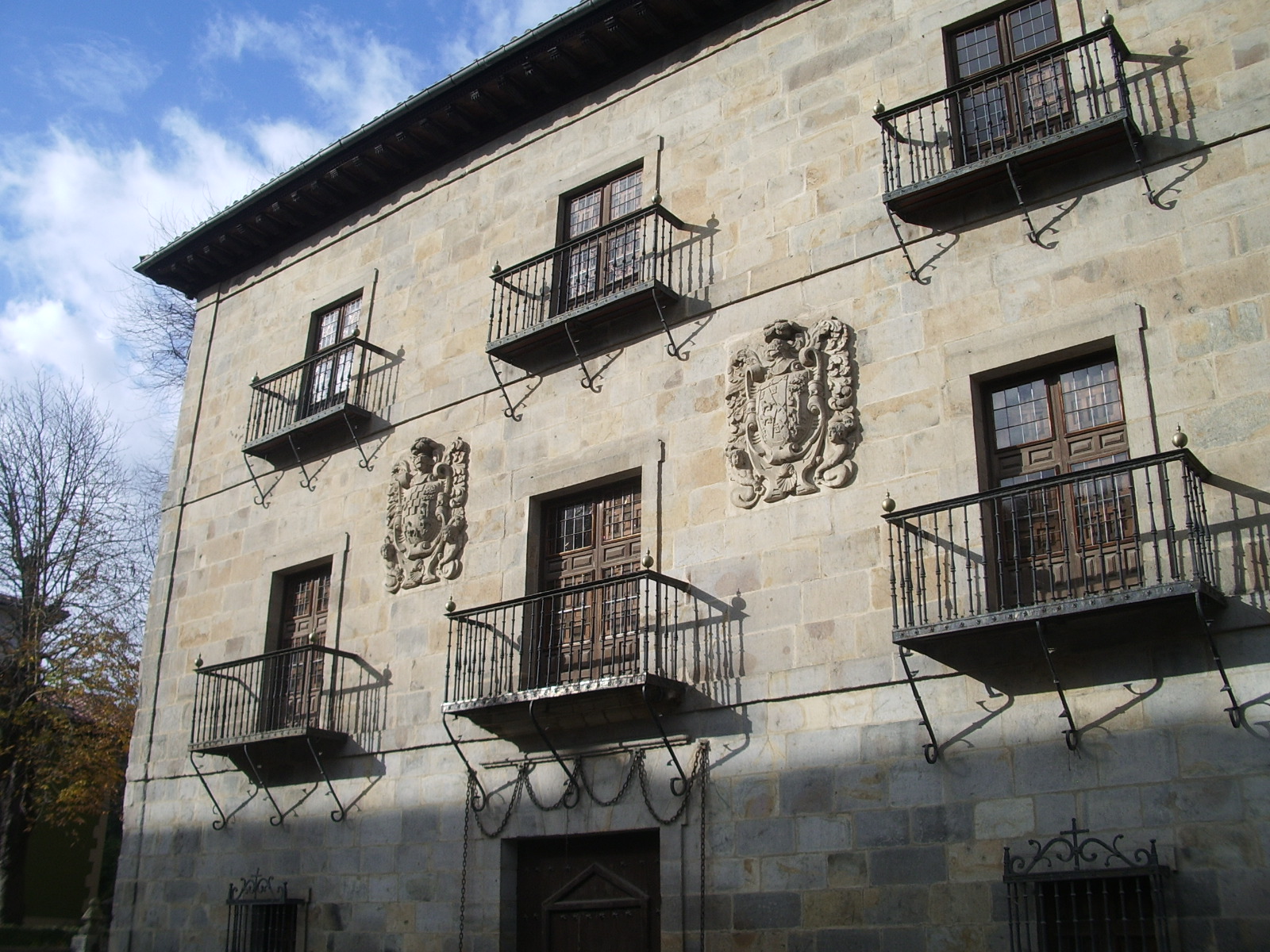
Monterrón Palace (Monterron jauregia in Basque) is a 17th-century mansion standing at the entrance to the Zarugalde district of Arrasate/Mondragón, in Spain's Basque Country. It counts among the finest examples of civil baroque architecture in the area and stands as a lasting mark of the region's old landed nobility.
Who built the palace, and why?
The palace was commissioned by Captain Mateo de Aranguren, an "indiano" who made his fortune in the Americas and returned home determined to raise a residence that matched his new standing. He built it for himself and his wife, María de Andicano, sister of the first Count of Monterrón. Two stone coats of arms still adorn the facade — one for the Andicano-Zelaa family, the other for the Aranguren-Unzueta line — marking the union of both houses.
What can you see there?
The building follows strict classical baroque lines: a square floor plan, a four-sided sloping roof, and a layout of a ground floor plus two upper storeys. The main facade is built of dressed ashlar stone, giving it the sober, monumental look typical of Basque palatial architecture of the period. In front of the entrance, metal chains still hang across the ground — not decoration, but a historic marker of the privilege of immunity, confirming the palace's status as a Royal Palace granted by King Philip V. Today the building sits inside a public green space, the Monterrón Park, a favourite spot for locals out for a walk.
What is its history?
Over the centuries the palace welcomed a string of notable guests: King Philip V, Queen Isabella II together with her mother María Cristina, the kings of Tuscany, the statesman Cánovas del Castillo, and, during the dictatorship years, General Francisco Franco. On 17 January 1964 it was declared a historic-artistic monument. Its fate changed for good in 1983, when, after lengthy negotiations, the Mondragón municipal council purchased both the palace and its park from the Countess of Monterrón for 45 million pesetas (roughly €270,000). Since then it has belonged to the town and its residents.
What happens inside the palace today?
The historic building now houses Musika Etxea, Arrasate/Mondragón's municipal music school. It is a fitting compromise between heritage protection and everyday use: music still drifts from its windows, though these days it comes from students practising rather than court receptions.
How to get there and when to visit?
The palace sits in an easily reachable part of town, right where the Zarugalde district begins, surrounded by its park — a short walk of a few minutes from the centre of Arrasate/Mondragón. Daytime visits work best, when natural light picks out the stone facade and the carved coats of arms, and the park invites a longer stop on a bench or a stroll among the trees. Since the interior now functions as a music school, access inside is limited to its educational use, so it is worth checking locally for park opening hours or any public cultural events held there.
Frequently asked questions
What is Monterrón Palace? A 17th-century baroque palace in Arrasate/Mondragón, built for Captain Mateo de Aranguren, decorated with the coats of arms of two noble families and set within a municipal park.
Can visitors go inside? The building now houses the Musika Etxea music school, so interior access is tied to that institution's use — the surrounding park, however, is freely open to the public.
Why are there chains in front of the entrance? They are a historic symbol of the privilege of immunity and the Royal Palace status granted to the building by King Philip V.
Since when has the palace belonged to the town? Since 1983, when the Mondragón council bought the palace and its park from the Countess of Monterrón.
Nearby places

Earn badges for the places you visit
Download NextOnTrip, discover new places and check off your trails.