About this place
Lapa dos Esteios is a historic garden on the left bank of the Mondego river, south of central Coimbra, beside the road towards Lajes. It was laid out in the 17th century by the Sá Pessoa family and still combines greenery, sculpture and river views into a single composition. The site lies at roughly 40.191 N, 8.426 W.
What is Lapa dos Esteios?
It is a former quinta, a country estate with a garden, also known as Quinta das Canas. Its heart is a landscaped garden in the manner of a palace park. The Portuguese government classified Lapa dos Esteios on 2 March 2011 as a site of public interest.
What does the garden look like?
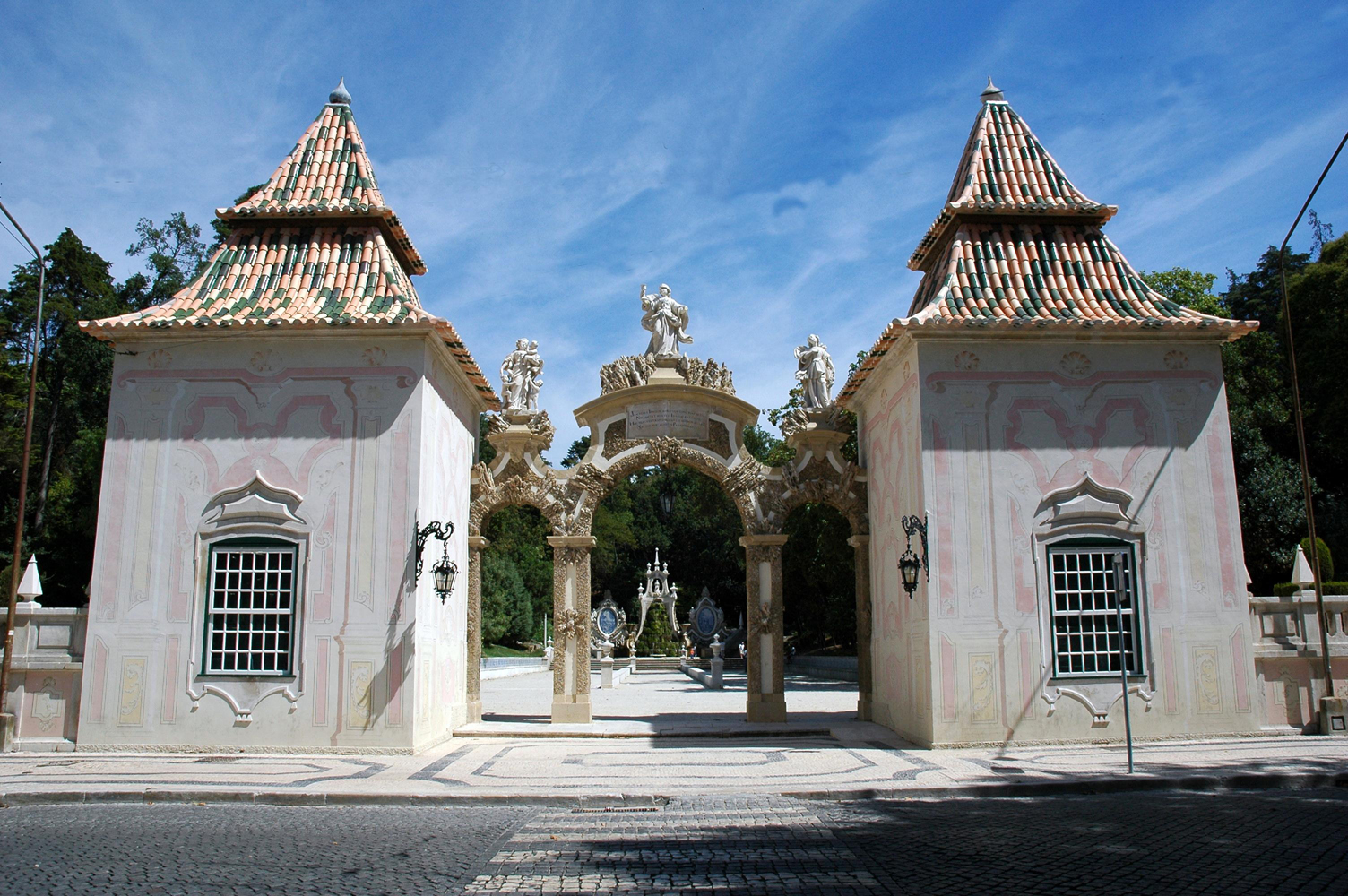
The entrance is through an imposing gate. Beyond it lies the garden and then a grove of plane trees, where the Spring Fountain (Fonte da Primavera) stands, dated to the 17th century. Among the trees are groups of statues. Some face away from the city and evoke themes such as the Fortress, Diogenes and Asia. Others, scattered between the trees, symbolise Faith, Hope, Charity and Death. A walk here feels like an allegorical journey rather than an ordinary stroll through a park.
Why are the views so valued?
The elevated position above the Mondego offers a distinctive landscape of river and city. Lapa dos Esteios is described as a vantage point from which Coimbra looks different from the way it does from the university hill on the opposite bank.
Who lived here?
In 1860 the estate was bought by Dom José Maria de Vasconcelos Azevedo Silva e Carvajal. King Luís I granted him the title of Viscount of Lapa dos Esteios (27 April 1865) and later Count (20 June 1870). His wife, dona Maria Isabel de Melo Freire de Bulhões, turned the garden into a meeting place for intellectuals during the Romantic period. Since 1979 the property has been owned and used by the National Republican Guard (GNR).
Frequently asked questions
Where is Lapa dos Esteios? On the left bank of the Mondego, south of Coimbra, on the road to Lajes.
Which century is the garden from? The 17th, when the Sá Pessoa family created it. The Spring Fountain dates from the same period.
Is the site protected? Yes. Since 2 March 2011 it has held public-interest status.
What is worth seeing? The entrance gate, the plane-tree grove, the Spring Fountain, the allegorical statues and the panorama of river and city.
Is it worth a stop while visiting Coimbra? Yes, if you enjoy historic gardens, sculpture and views over the Mondego. Because the property is used by the GNR, check with the local tourist office before your visit to learn how access works.
Tips for visitors
The garden lies outside the tight city centre, so plan a separate leg of your route on the left side of the river. Combining the visit with a walk along the Mondego works well. Bring a camera: the statues among the plane trees and the view over the city are among the most photogenic scenes in the area.
Nearby places

Earn badges for the places you visit
Download NextOnTrip, discover new places and check off your trails.