About this place
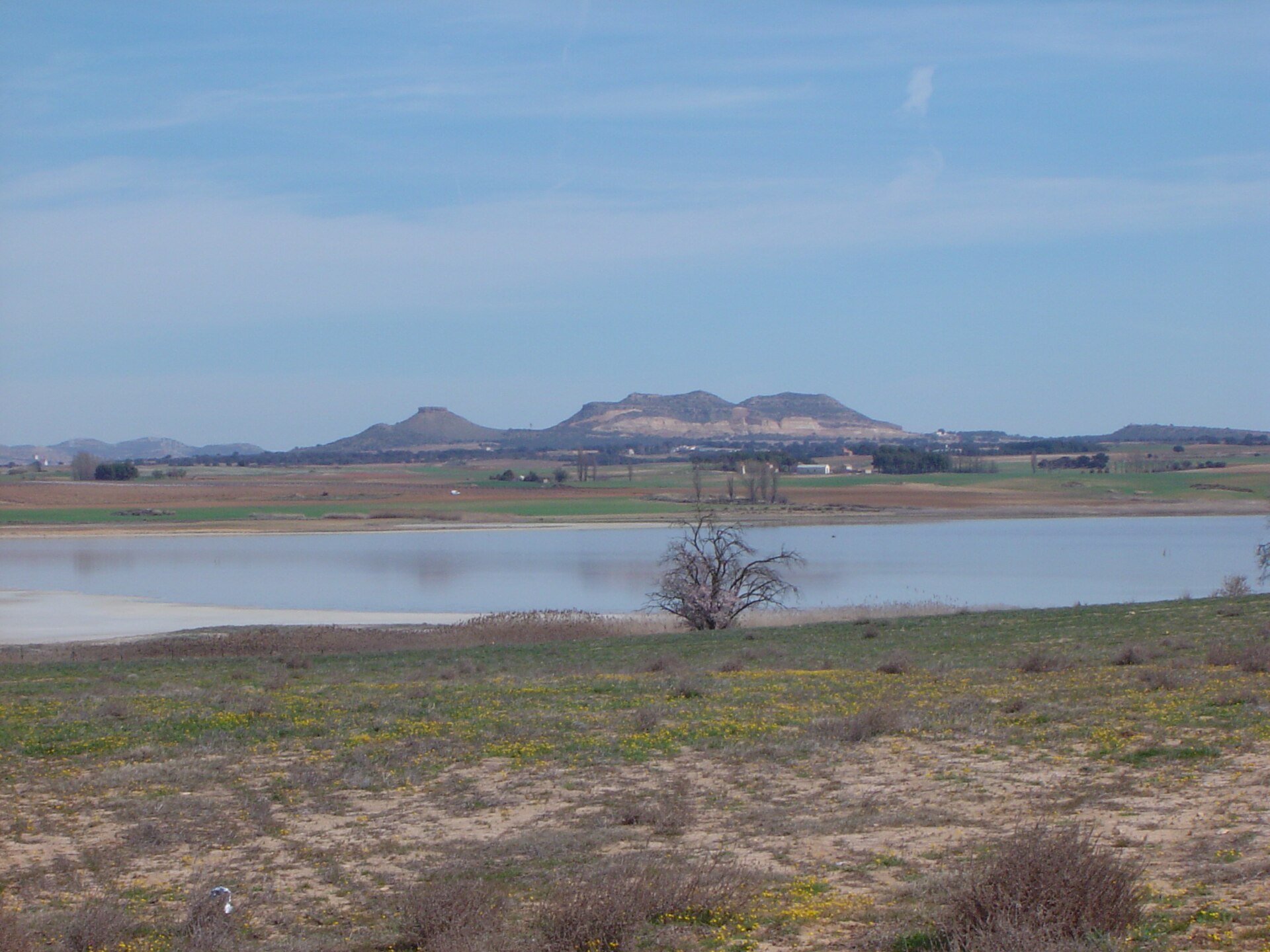
Laguna de Hoya Elvira is a small saline lagoon in the municipality of Corral-Rubio, in the eastern part of Albacete province, Castilla-La Mancha. It forms part of the Corral Rubio-La Higuera lagoon complex, an inland system of closed depressions known locally as "hoyas," sitting at an altitude of roughly 850-900 meters amid a gently rolling agricultural landscape dominated by dryland farming.
Where exactly is it?
The lagoon sits among the cropland typical of eastern Albacete, close to the village of Corral-Rubio. This area is one of several neighboring endorheic complexes - alongside Pétrola and Salobrejo - that together form a mosaic of eighteen depressions, ponds, terraces and lagoons, each with its own ecological character. The whole area carries formal nature-protection status: it lies within a Special Conservation Area (ZEC) and a Special Protection Area for Birds (ZEPA), reflecting the ecological importance of the wider lagoon complex.
What will you see there?
Lagoons in this complex change dramatically with the seasons. They are endorheic basins - fed only by rainfall and groundwater, with no outlet - and in dry months many shrink or dry out completely, leaving pale salt crusts on the exposed lakebed. When water levels are higher, the water can become strongly saline to hypersaline, favoring specialized plant communities. Across the complex, halophile species such as Lamprothamnium papulosum (a salt-tolerant stonewort) and Ruppia species dominate these waters, adapted to sharp swings in salinity and water depth.
The surrounding landscape is classic agro-steppe: open, flat farmland interspersed with patches of natural steppe vegetation. Habitats of this kind across the wider Pétrola-Corral Rubio complex are an important refuge for both steppe and wetland birds - great bustards and little bustards, sandgrouse, plovers and stints are recorded in the area, while the more consistently flooded lagoons of the complex also attract black-winged stilts, shovelers, harriers and, at times, flamingos. The essential character of the place - open water ringed by dry steppe - gives it a stark, quiet quality that contrasts with the region's more developed tourist lagoons.
How do you get there?
Corral-Rubio lies in eastern Albacete, close to the borders with Murcia and Valencia, along routes connecting inland Castilla-La Mancha with the Mediterranean coast. Local roads and footpaths lead to the lagoons of the complex, well used by nature lovers and birdwatchers who visit the wider steppe region of southeastern Albacete.
When should you visit?
Early spring and autumn are the best times to visit, when water levels tend to be higher and bird activity - both migratory and breeding steppe species - peaks. In summer the lagoons can be dry or nearly dry, which is itself an interesting sight geologically but limits birdwatching opportunities. Winter brings a stark, quiet landscape with very few visitors.
Frequently Asked Questions
Is Laguna de Hoya Elvira a saltwater lagoon? Lagoons in this complex range from saline to hypersaline depending on the season and water level - they are typical endorheic basins with no outlet to the sea.
Does the lagoon dry up in summer? Yes, like most lagoons of this type in the region, water levels can drop sharply or the lagoon can dry out completely during the dry months.
What birds can be seen in the area? The wider Corral Rubio-La Higuera lagoon complex is an important refuge for steppe birds (great bustards, little bustards) and wetland birds (black-winged stilts, shovelers, and flamingos in some of the lagoons).
Is the area protected? Yes, the site lies within a Special Conservation Area (ZEC) and a Special Protection Area for Birds (ZEPA) due to the unique ecological value of the lagoon complex.
Nearby places

Earn badges for the places you visit
Download NextOnTrip, discover new places and check off your trails.