About this place
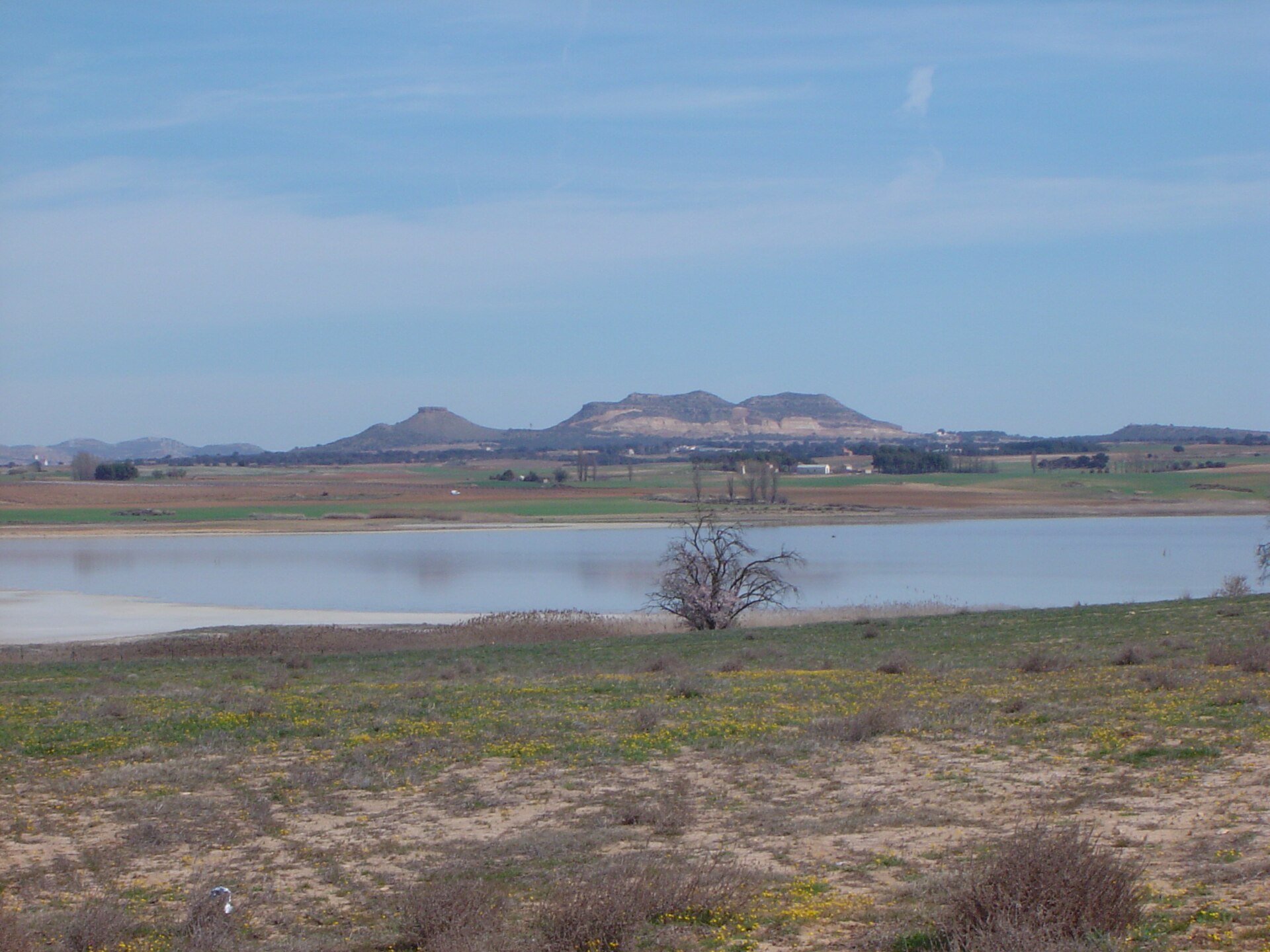
Laguna de Alboraj is a small karst lagoon in the municipality of Tobarra, in the province of Albacete, within the Castilla-La Mancha region of Spain. The wetland covers roughly 11 hectares and forms part of the Natura 2000 network, within the Special Area of Conservation covering the saladares of Cordovilla and Agramón together with Laguna de Alboraj.
What should visitors know about Laguna de Alboraj?
How did this lagoon form?
The lagoon has a karstic origin: water collects in a depression created as groundwater dissolved the underlying limestone and gypsum bedrock over thousands of years. This kind of endorheic basin is common across parts of Castilla-La Mancha, where soluble rock formations shape shallow, seasonally variable wetlands.
Why is the site protected?
The lagoon was declared a microreserve under Decree 182/2000 of 19 December. Protection covers both the water body and the surrounding saladares (salt-affected grasslands) typical of Mediterranean endorheic wetlands. The site also forms part of the Natura 2000 network, within the broader Special Area of Conservation covering the saladares of Cordovilla and Agramón alongside Laguna de Alboraj.
What plant and animal life lives here?
Vegetation around the lagoon includes halophilic species adapted to saline soils, among them Helianthemum polygonoides, a plant considered threatened. Fauna recorded at the site includes the Spanish pond turtle (Mauremys leprosa) and birds such as the nightjar, short-toed snake eagle, sparrowhawk, and reed warbler, all typical of Mediterranean wetland habitats.
What has happened to the lagoon's water level in recent years?
Research into the lagoon's recent history points to a marked decline in ecological condition. Water levels have dropped by around three metres, while salinity has roughly tripled. Reeds and tamarisk have spread across the exposed, drying shoreline. The main driver behind these changes is the lowering of the water table caused by groundwater extraction for agricultural irrigation in the surrounding area.
Is the lagoon studied by researchers?
Yes. Because of its distinctive ecological profile and the visible hydrological changes it has undergone, Laguna de Alboraj has been the subject of academic study on the evolution of karst lagoons in Mediterranean settings and on how water management affects such fragile ecosystems. Published studies compare historical records with the lagoon's present condition.
What else is worth seeing nearby?
The neighbouring saladares of Cordovilla and Agramón share the same protected area as the lagoon, making it possible to combine a visit to the microreserve with a look at the broader landscape of salt steppe and wetland habitat typical of inland Albacete province.
Frequently Asked Questions
Where is Laguna de Alboraj located? It lies in the municipality of Tobarra, in the province of Albacete, in the Castilla-La Mancha region of southeastern Spain.
What protection status does the site have? It is a designated microreserve (Decree 182/2000) and part of the Natura 2000 network, within the Special Area of Conservation covering the saladares of Cordovilla and Agramón together with Laguna de Alboraj.
What wildlife can be seen around the lagoon? Visitors may spot the Spanish pond turtle and birds including the nightjar, short-toed snake eagle, sparrowhawk, and reed warbler.
Has the lagoon always looked the way it does today? No. In recent decades the water level has dropped significantly and salinity has increased, mainly due to groundwater extraction for irrigation in the surrounding region.
Nearby places

Earn badges for the places you visit
Download NextOnTrip, discover new places and check off your trails.