About this place
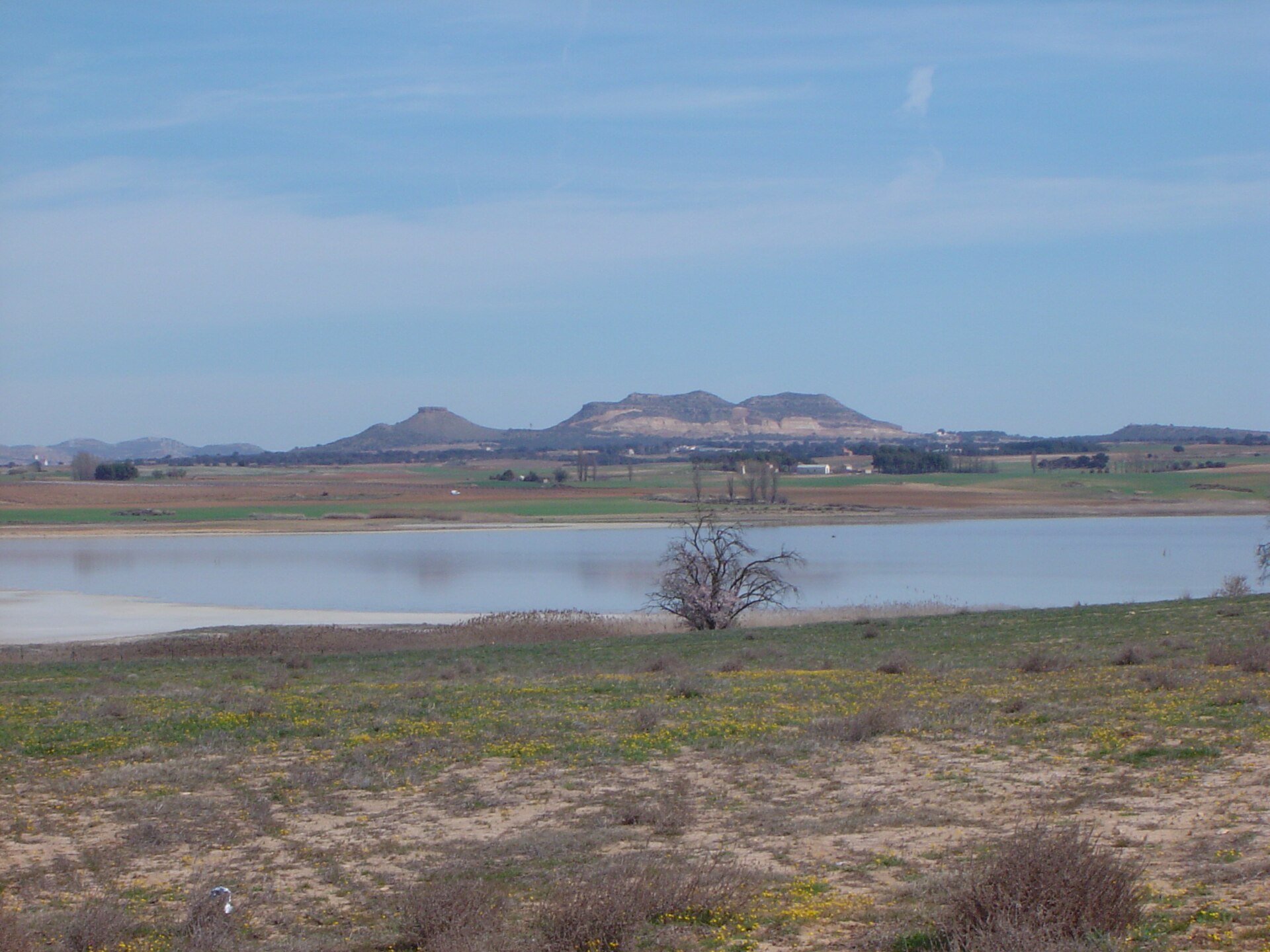
Laguna de Mojón Blanco is a seasonal hypersaline lake located in the municipality of Corral-Rubio, right on the border with neighboring La Higuera, in the province of Albacete (Castilla-La Mancha). It forms part of the so-called Corral-Rubio – La Higuera lagoon complex, a cluster of small saline lakes scattered across the flat, steppe-like plain of La Mancha.
What makes this lagoon stand out?
The lagoon's biggest draw is its unusual look. As water levels drop, the lakebed gets covered in a white crust of magnesium sulfate crystals that gleams almost like salt under the sun. The cracked, pale surface set against the flat Manchego horizon has drawn comparisons to much larger Andean salt flats — a comparison that should be taken with a grain of salt itself, since Mojón Blanco is a local-scale lake, not a vast desert basin. Together with the nearby Hoya Rasa lagoon, it's classified as a perennial lake, meaning it typically holds at least some water year-round, even though its level swings dramatically with the seasons.
What wildlife lives around the lagoon?
During wetter periods, especially in spring, the water surface fills with birdlife. Visitors can spot flamingos, coots, mallards, and stilts — species typical of the inland saline wetlands of Castilla-La Mancha. The water's high salinity limits which organisms can survive in it, but that very trait creates a niche that draws birds feeding on the small crustaceans and salt-tolerant invertebrates that thrive there.
Is the lagoon easy to reach?
The lagoon sits just a few minutes from the center of Corral-Rubio, surrounded by open farmland, which makes it easy to reach by car with a short walk to the shoreline. It's not a heavily developed tourist site with visitor infrastructure — it's mostly visited by landscape photographers, birdwatchers, and hikers following local walking routes through the area's chain of lagoons.
What should you know before visiting?
The lagoon's appearance changes a lot depending on the season and rainfall. After a dry summer, the bed can be fully exposed and covered in a white salt crust; after rainy months, the basin fills with water and attracts birds. It's worth timing a visit to what you want to see: the "salt flat" look is at its best in drier months, while birdwatching is better after rain.
Frequently Asked Questions
Where exactly is Laguna de Mojón Blanco located? In the municipality of Corral-Rubio, province of Albacete, in the Castilla-La Mancha region, right on the border with the municipality of La Higuera, as part of a local lagoon complex.
Can you swim in the lagoon? Locals have traditionally used the mineral-rich sediment from the lakebed for mud baths because of its high magnesium salt content, but it isn't a formally managed swimming spot — visitors should be careful and respectful of the ecosystem.
What birds can be seen here? During wet seasons, flamingos, coots, mallards, and stilts are the most commonly reported species, though the mix shifts depending on water levels.
Does the lagoon dry up completely? No — it's a seasonally variable lake, but classified as perennial, meaning it usually retains at least part of its water year-round despite strong seasonal swings.
Nearby places

Earn badges for the places you visit
Download NextOnTrip, discover new places and check off your trails.