About this place
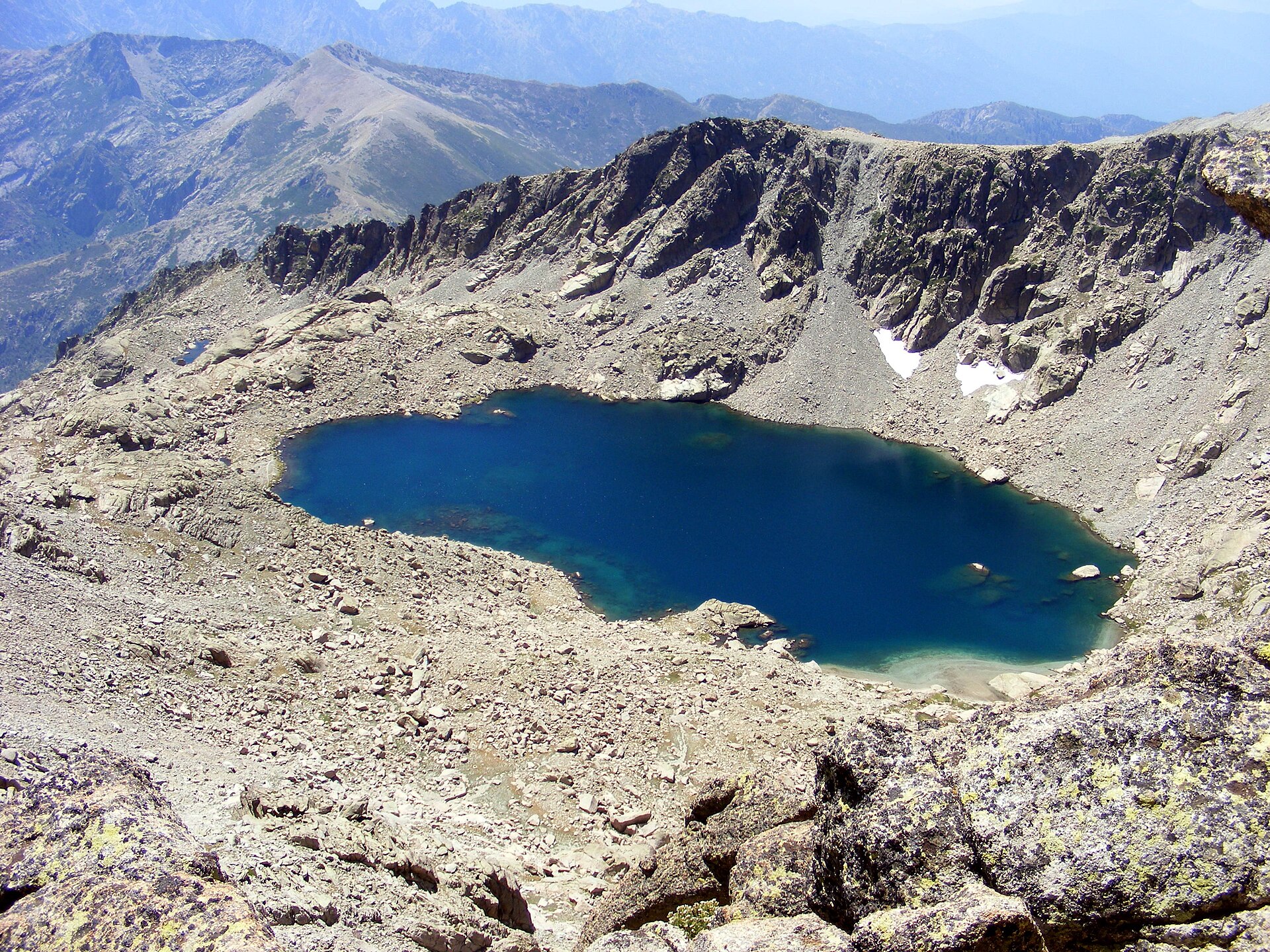
Lac de Nino is a mountain lake in Haute-Corse sitting at 1,743 metres above sea level, in the range of peaks surrounding Corte. It is not the island's largest body of water, but it ranks among Corsica's bigger natural freshwater lakes, and it sits noticeably lower than many other alpine lakes on the island. Its glacial origin is still visible today in the smooth, rounded terrain around it and the shallow basin the water now fills.
Where exactly is the lake, and how do you get there?
The lake lies deep in the mountains within the commune of Albertacce, in the range stretching between the Col de Vergio and the Niolo valley, not far from Corte and Lake Calacuccia. No road reaches the shore itself — the only way in is on foot, which is very much part of the experience. The classic starting point is the old forest house at Poppaghia, just off the D84 road linking the Col de Vergio with Calacuccia and Albertacce. From there the round trip covers roughly 10 kilometres with about 720-730 metres of elevation gain, taking most hikers somewhere between 5 and 7 hours depending on pace and trail conditions. The first stretch runs through forest; the second, steeper section climbs above the tree line onto the open highland plateau where the lake sits.
What are the pozzines everyone talks about?
The lake is ringed by pozzines — wide, boggy alpine meadows that formed where smaller glacial lakes once stood before gradually filling in with sediment and vegetation, leaving behind only scattered pools and thin channels of open water. In summer these meadows turn a deep, saturated green, crossed everywhere by small streams, and the effect is unlike almost anywhere else on the island. It's this combination of high plateau, soft wetland grass, and surrounding granite peaks that gives the site its distinctive look.
Why are there horses and cows just wandering around?
One of the most talked-about sights at Nino is the free-roaming livestock — horses, cows, and occasionally pigs — grazing loose across the pozzines with no shepherd in sight. The animals spend the whole summer here, finding both food and water in the wetland grass, and their presence is entirely unsupervised. It gives the plateau an unusually wild, half-tamed character even though it lies right at the geographic heart of Corsica.
Why do hikers on the GR20 rate this section so highly?
Lac de Nino sits directly on the GR20, one of Europe's toughest long-distance trails, which runs the length of Corsica's mountain spine. The stretch passing the lake, just before the Manganu refuge, is often singled out as one of the most scenic parts of the entire route, largely because of the sharp contrast between the rocky high country and the lush, waterlogged pozzines below.
Frequently asked questions
Can you swim in Lac de Nino? The lake is a popular stop in summer, but it functions mainly as a viewpoint and rest area along the trail rather than a swimming spot — the water tends to be shallow and cold, and the surrounding ground is marshy.
Is the hike suitable for children or beginners? Given the distance, the elevation gain, and long stretches without shade, this is not a casual family walk; it requires reasonable fitness, though experienced hikers do bring children along without major issues.
When is the best time to visit? Summer is the best window, when the pozzines are fully green and the trail has dried out. Earlier in the season the ground can be extremely waterlogged, and snow covers the area in winter.
Are the grazing animals dangerous? The horses and cows on the pozzines are used to hikers passing through and generally keep their distance, but visitors are advised not to approach or feed them.
Nearby places

Earn badges for the places you visit
Download NextOnTrip, discover new places and check off your trails.