About this place
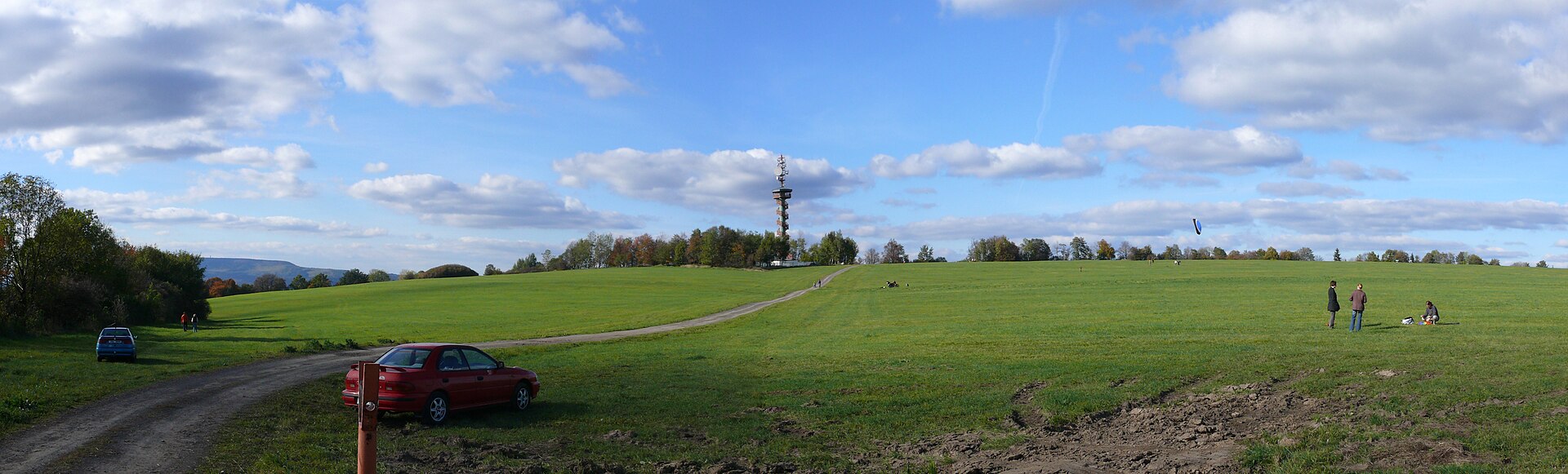
Kvádrberk is a table-shaped sandstone hill on the right bank of the Elbe, right at the northern edge of Děčín, also known locally as Stoličná hora. At just under 290 metres above sea level it isn't a mountain by any dramatic measure, but its flat, plateau-like top sits directly above the city, which is exactly why it delivers one of the best panoramas of Děčín and the Elbe valley in the whole region.
What will you see at the top?
The plateau's main feature is the former Emperor's Viewpoint (Císařská vyhlídka), laid out in 1879 to mark the silver wedding anniversary of Emperor Franz Joseph I and Empress Elisabeth of Bavaria — better known as Sisi. An obelisk was raised on the viewing terrace to commemorate the occasion, and the area around it was landscaped with a promenade and benches; an excursion restaurant was added later to serve visitors making the trip up. The whole site has recently gone through a thorough renovation aimed at bringing back its original 19th-century look.
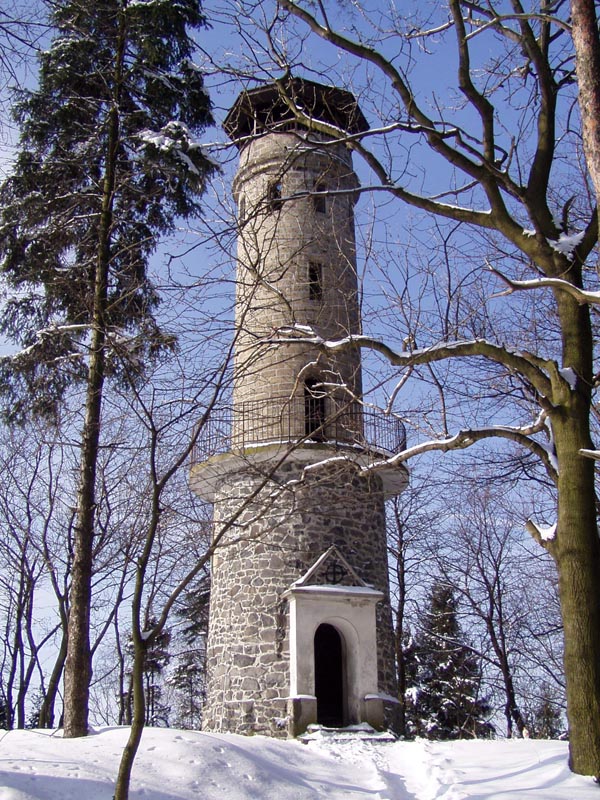
Beyond the Emperor's Viewpoint, the hill has two more lookout points worth combining into one walk: the Sněžnická viewpoint and the Labská stráž pavilion, built between 1888 and 1890. Together the three spots give slightly different angles on the river and the town below, and a marked trail links them.
How do you get to Kvádrberk?
The hill lies essentially within Děčín itself, on the Elbe's right bank, so reaching it from the city centre is usually a walk of some fifteen to twenty-five minutes depending on which access path you take. The whole area is managed by the city as a forest park (lesopark), with signposted paths that are easy to follow without any special hiking gear. Locals also use Kvádrberk as a running spot, and there's a network of marked jogging trails across the hill.
What should you know about its nature and history?
A newly built educational trail winds across Kvádrberk, with information panels covering both the hill's history and its plant life — more than 20 tree species grow here, which makes it a rewarding stop for nature-minded visitors and not just for the view. The hill's western flank drops down toward the Elbe just where the river enters the narrow, steep-sided valley it has cut through the Elbe Sandstone Mountains, so the viewpoints here also work as a good introduction to the landscape that continues into Bohemian Switzerland further downstream. Historically, the promenade, obelisk, and pavilions recall the era when Děčín — then known as Tetschen — was a popular excursion destination for the Austro-Hungarian middle classes.
When is the best time to visit?
Kvádrberk can be visited year-round, but clear days offer the sharpest views over the Elbe valley, especially in spring and autumn when the air tends to be cleaner than in summer. With more than 20 tree species on the hill, autumn adds a burst of colour to the walk, while on a crisp winter day the views over the town and river can be especially striking.
Frequently asked questions
Is the climb up Kvádrberk difficult? No — despite being a table-shaped hill, the paths leading to the top are gentle and well maintained as part of the city forest park, so the walk suits most visitors, including families.
Is Stoličná hora a different place from Kvádrberk? No, it's the same hill — Stoličná hora is an older, more literary name referring to its flat, table-like shape, while Kvádrberk is the name generally used locally today.
Is there anywhere to eat on top? An excursion restaurant historically operated near the Emperor's Viewpoint; it's worth checking current opening details before you go, since availability of food and drink on site can vary.
How long should you plan for a visit? Walking up to the main viewpoint and back takes under an hour, but if you add the Sněžnická viewpoint, the Labská stráž pavilion, and the educational trail, it's worth setting aside about 1.5 to 2 hours.
Nearby places

Earn badges for the places you visit
Download NextOnTrip, discover new places and check off your trails.