About this place
Kasteel van Schalkhoven is a small but strikingly picturesque castle in Belgian Flanders, tucked between the villages of Schalkhoven and Sint-Huibrechts-Hern, within the municipality of Hoeselt in Limburg province. It's a rare kind of site — one that has remained privately held by the same family lineage since the 19th century while still carrying centuries of regional history in its walls.
When was the castle built?
The manor house was built in 1588 by Rijkaard van Elderen. Despite its name, the estate was never formally part of the Schalkhoven lordship — it always stood as an independent residence. Its layout follows the pattern typical of Flemish fortified manors: a compact main residence flanked by small turrets, with a U-shaped farm complex arranged behind it.
How did ownership change over the centuries?
The story of Kasteel van Schalkhoven is really a story of Limburg's landed families passing the estate from one to the next. After the Van Elderen family, the property went to the Vaes family in 1607, then to Van Eyll from 1665, and to the De Heusch family during the 18th century. In 1776, Alard de Heusch sold the estate to Jean Barthels, who left a lasting mark on the castle through renovation work. Barthels died without children, leaving the property to his niece Lambertine Barthels, who married Nicolas François Joseph du Vivier in 1799. From 1836 onward, ownership passed to the De Borman family — most notably Baron Camille Théodore de Borman, a regional historian and author who chaired the Limburg provincial council for over fifty years. His descendants still own Schalkhoven today.
What changed in its architecture and grounds?
Around 1770, the castle underwent a major renovation in classical style, giving it the more refined, understated look of a country residence rather than its original late-16th-century defensive character. The surroundings evolved with the tastes of each era too: a formal French garden was laid out in the 18th century, and in the 19th century a landscape park was created to the north of the castle, reflecting the period's shift toward naturalistic garden design.
What can visitors see on site?
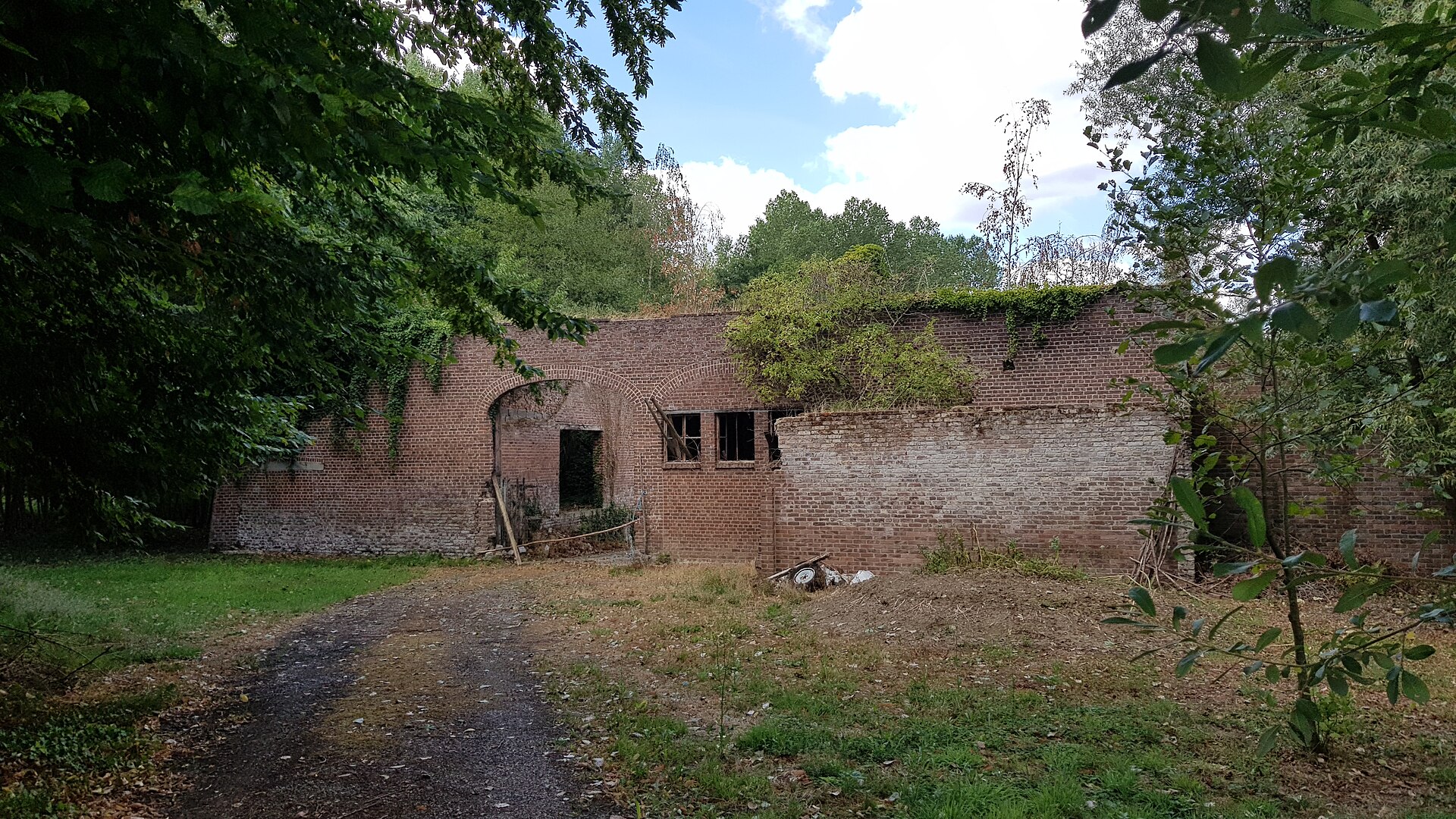
What draws visitors here is the overall harmony of the architectural and landscape ensemble: the castle building itself with its distinctive turrets, the horseshoe-shaped farm buildings alongside it, and the surviving park. It's a rewarding stop for anyone interested in the history of the local nobility, as well as for walkers and cyclists passing through — the area around Hoeselt and Bilzen is one of the popular touring regions of Flemish Limburg, and the castle serves as a recognizable landmark along local routes.
Can the castle be visited inside?
Kasteel van Schalkhoven remains the private property of the De Borman family, so the interior is not open to the public. Visitors can, however, admire the building and its surrounding park from the outside while walking or cycling along local roads. Given its historical value, the estate is listed in the regional heritage inventory (Onroerend Erfgoed).
Why is it worth a visit?
Kasteel van Schalkhoven shows how a small, privately owned residence can reflect over four centuries of shifting architectural fashions and the fortunes of successive noble families in the region. For travelers exploring Flemish Limburg, it makes for a quiet, less obvious stop — free of crowds, but full of the authentic atmosphere of a centuries-old country estate.
Nearby places

Earn badges for the places you visit
Download NextOnTrip, discover new places and check off your trails.