About this place
Krkonoše National Park (Krkonošský národní park) is the oldest national park in the Czech Republic, covering the Czech side of the Giant Mountains along the border with Poland. The park was established in 1963, and the village of Strážné sits right at its heart, on routes leading up toward the main ridge. Since 1992, the Krkonoše massif has been part of the UNESCO World Network of Biosphere Reserves under the Man and Biosphere Programme.
How big is the park and what makes it distinctive?
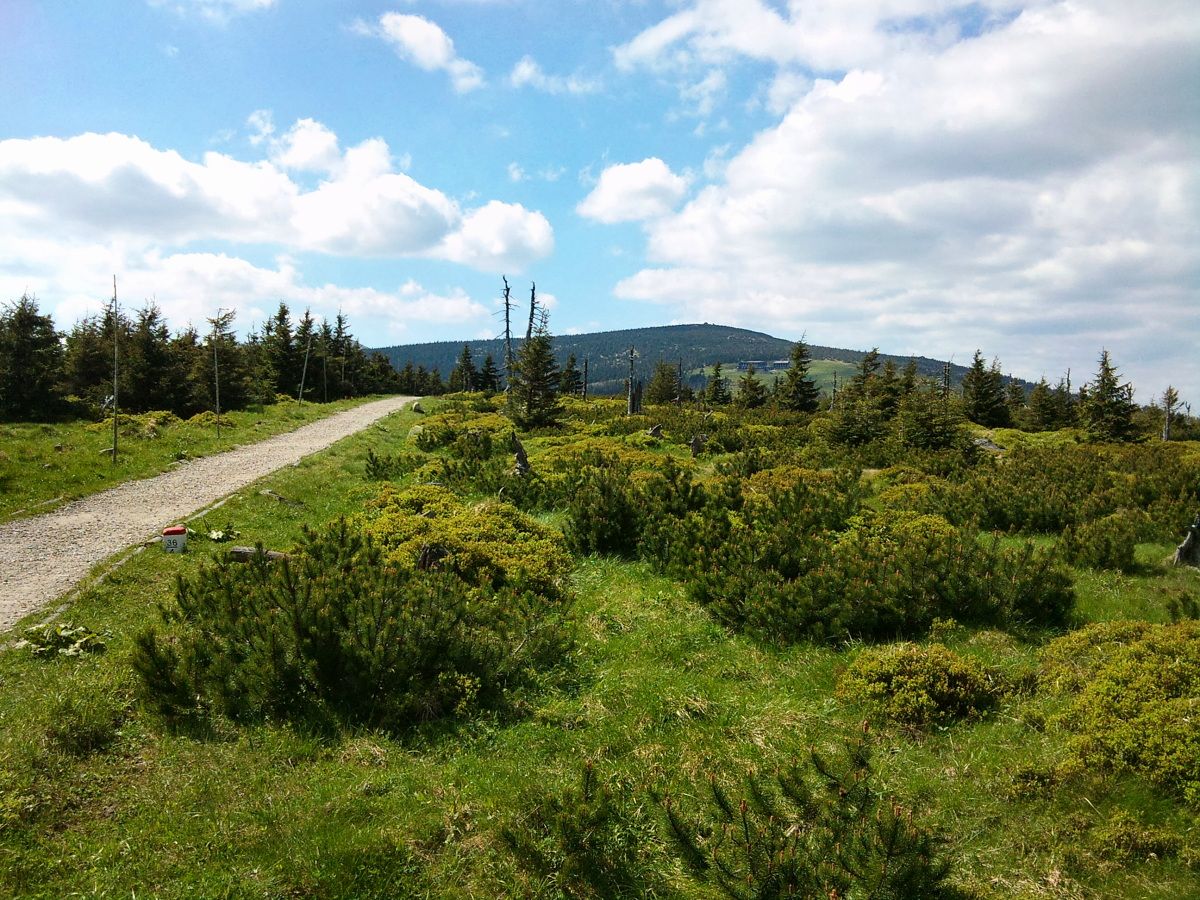
The park's present-day area covers almost 370 km², making it one of the larger protected areas in the region. The Giant Mountains are the highest mountains in the Czech Republic, topped by Sněžka at 1,603 metres above sea level. The park stretches across the Liberec and Hradec Králové regions. Its landscape is a mosaic of montane spruce and mixed forests, tall-herb subalpine meadows, dwarf pine stands, Nardus grasslands, sub-arctic peat bogs and lichen tundra — an unusually varied combination of habitats for Central Europe.
What species live here?
Because of its distinctive montane setting, the park harbours a number of rare and endemic plants found only in this mountain range, including Sorbus sudetica, Campanula bohemica, Viola lutea subsp. sudetica and Pedicularis sudetica. This unique flora, together with the landscape itself, was the main reason the area gained protected status as early as the 1950s, when the first nature reserves — Kotelní jámy, Pančavská louka and Labský důl — were declared.
What is there to know about the Strážné area?
The area around Strážné includes the natural monuments Lom Strážné, Slunečná stráň and Sklenářovické údolí. Rock and ice climbing are generally banned across the national park, with a handful of designated exceptions — Hnědé skály and Hranostají skály right in Strážné, along with Lubošské skály near Harrachov and Emin kámen near Přední Labská. Compliance with nature protection rules is monitored by the Stráž přírody, rangers in distinctive green uniforms who inform visitors, maintain trails and on-site facilities, and can issue fines for breaches of the rules.
How many people visit the park each year?
On the Czech side alone, the park receives around 6 million visitors a year, making it one of the most visited natural areas in the country. Tourist infrastructure operates year-round — hiking and climbing in the permitted zones dominate in summer, while winter brings a shift toward winter sports.
Frequently asked questions
When was Krkonoše National Park established? It was founded in 1963, becoming the first national park on the territory of what is now the Czech Republic.
How large is the park's territory? Its current area is almost 370 km², spread across the Liberec and Hradec Králové regions.
What is the highest peak within the park? Sněžka, at 1,603 metres, which is also the highest point in the entire Czech Republic.
Can you go climbing near Strážné? Yes, but only in designated spots — Hnědé skály and Hranostají skály are among the few locations in the park where rock and ice climbing are allowed.
What does the UNESCO Biosphere Reserve status mean? Since 1992, the Krkonoše mountains have belonged to the UNESCO World Network of Biosphere Reserves under the Man and Biosphere Programme, reflecting the region's exceptional natural value.
How many people visit the Czech side of the mountains each year? Roughly 6 million visitors a year, placing it among the most-visited protected areas in the Czech Republic.
Nearby places

Earn badges for the places you visit
Download NextOnTrip, discover new places and check off your trails.