About this place
The Jewish cemetery in Veselí nad Moravou stands as one of the few remaining physical traces of a Jewish community that shaped local life in this southeastern Moravian town for more than a century. The burial ground lies on Masarykova street, near the local elementary school, roughly 500 meters south of the town's chateau — tucked away from the main streets in a quiet, secluded spot.
When was the cemetery established?
The cemetery was founded in 1784, during the era of Josephine reforms that allowed Jewish communities across the Habsburg monarchy to establish burial grounds outside town centers. The oldest surviving tombstones date from the late 18th century, making this one of the older Jewish cemeteries in the Moravia region.
How large is the cemetery site?
The grounds cover an area of approximately 1,536 square meters. Several hundred gravestones have survived here — stone matzevot made of marble, granite and sandstone, in a variety of shapes typical of different periods. The inscriptions are multilingual, appearing in Hebrew, German and Czech, reflecting the gradual cultural and linguistic shifts within the local Jewish community over the decades.
What happened to the local Jewish community?
The independent Jewish community of Veselí nad Moravou formally ceased to exist under legislation passed in 1890. From that point until the German occupation in March 1939, the cemetery was maintained by the Jewish community of nearby Uherský Ostroh. Following the Nazi occupation of Czechoslovakia and the deportations of the Holocaust, the local Jewish population was almost entirely destroyed, and the cemetery was left largely untended for years.
Is there a Holocaust memorial on site?
Yes. The cemetery grounds include a memorial dedicated to the victims of the Holocaust — members of the local Jewish community who perished during the Second World War. It stands as one of the few tangible reminders of the tragedy that befell the region's Jewish residents.
Who takes care of the cemetery today?
The site is currently owned by the Jewish community of Brno, which funds regular maintenance and upkeep. As a result, although no longer used for active burials, the cemetery remains in good condition and is preserved as a historical record of the community that once lived here.
What does the cemetery look like today?
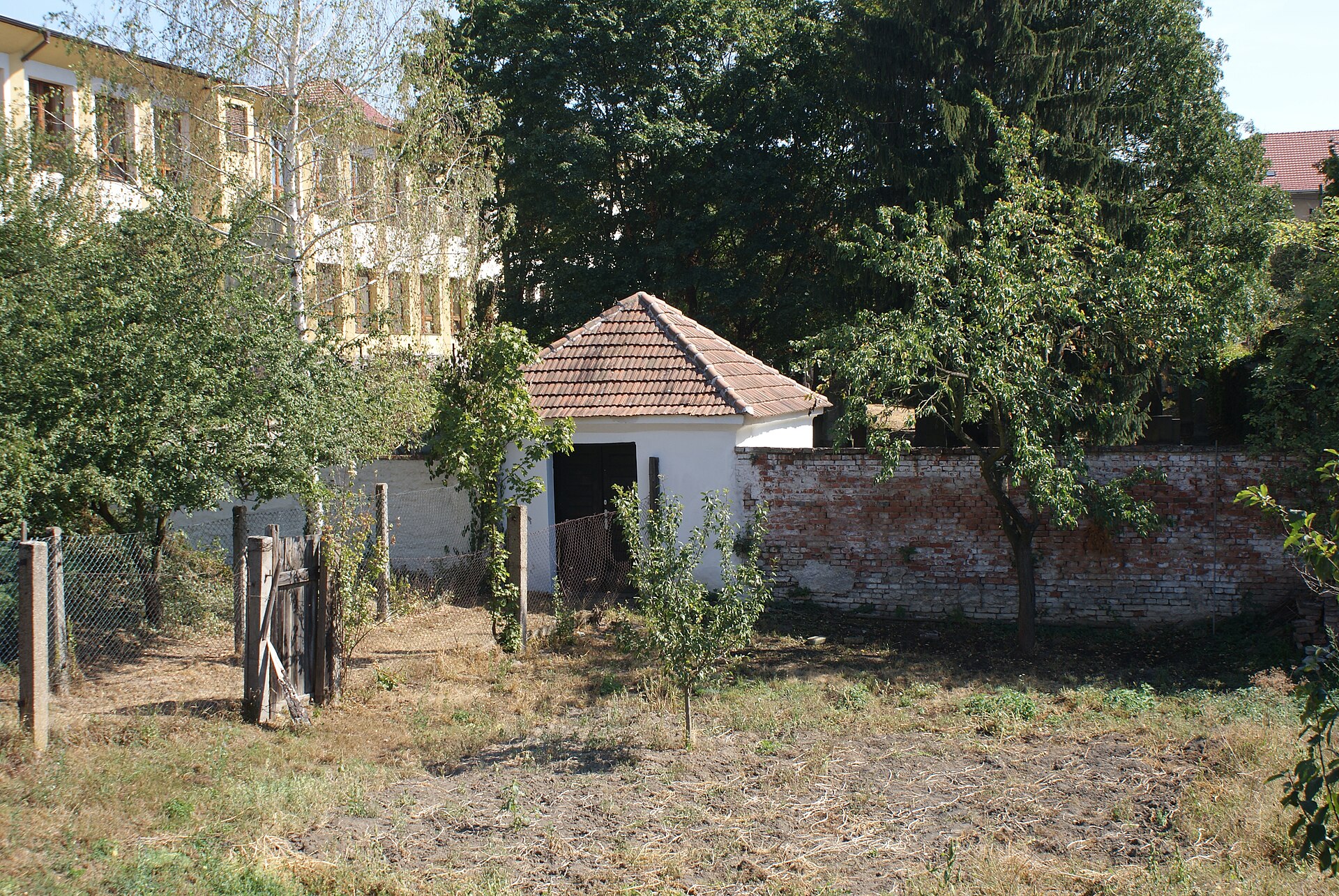
The grounds are enclosed by a continuous masonry wall with a locking gate that opens directly onto a public road. There are no information panels or tourist signage — this is a modest, quiet place, visited mainly by those interested in the history of the local Jewish community and by genealogists tracing family roots. A small building near the entrance, once used as a mortuary, still shields the interior of the cemetery from the noise of the adjacent road.
Frequently Asked Questions
Can visitors enter the cemetery? The grounds are fenced and gated, so access can be limited — it is worth checking current opening arrangements with local authorities or the Jewish community of Brno beforehand.
How many gravestones have survived? The cemetery holds somewhere between one hundred and several hundred matzevot, dating from the late 18th century through the 20th century.
Was this the only Jewish cemetery in the area? Yes, it was the sole burial ground serving the Jewish community of Veselí nad Moravou — no neighboring towns or villages used this cemetery.
Nearby places

Earn badges for the places you visit
Download NextOnTrip, discover new places and check off your trails.