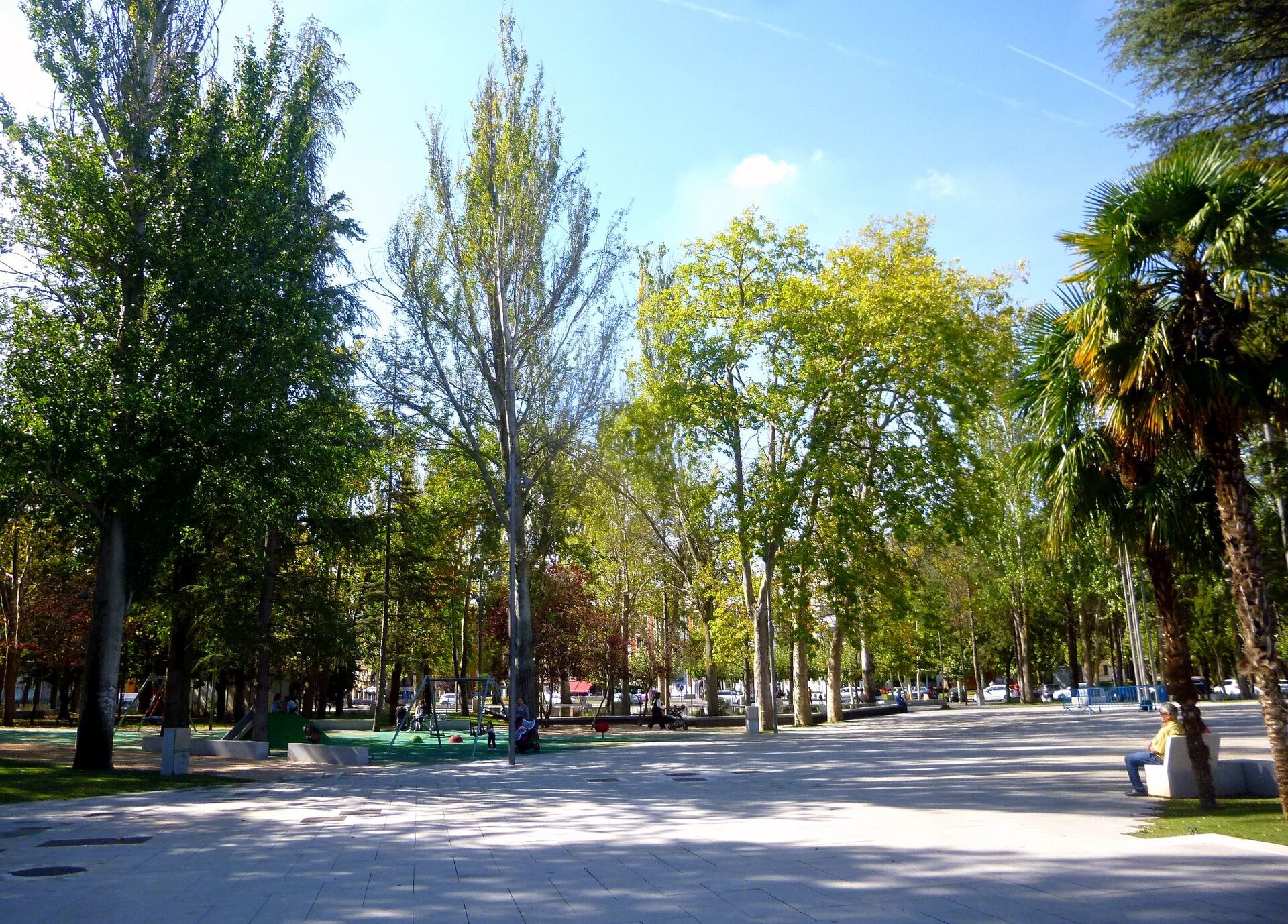
About this place
Jardinillos de la Estación is a municipal park in Palencia, in the Castile and León region of northern Spain, positioned right next to the city's railway station. It is usually the first patch of greenery travellers see on arrival, and for locals it works as an everyday spot for walking, resting, or cutting through toward the historic centre.
Why was this park created?
The park was inaugurated in 1875, at the same time as the North railway line station next to it. The idea was straightforward: give the city a proper, welcoming entrance for anyone arriving by train, rather than a bare stretch of tracks and pavement. In 1925 a distinctive dovecote, designed by architect Fernando Unamuno Lizarraga, was added and remains one of the park's recognisable features. A major redevelopment in the early 1980s brought the park to its current size of 26,130 square metres.
What is there to see inside the park?
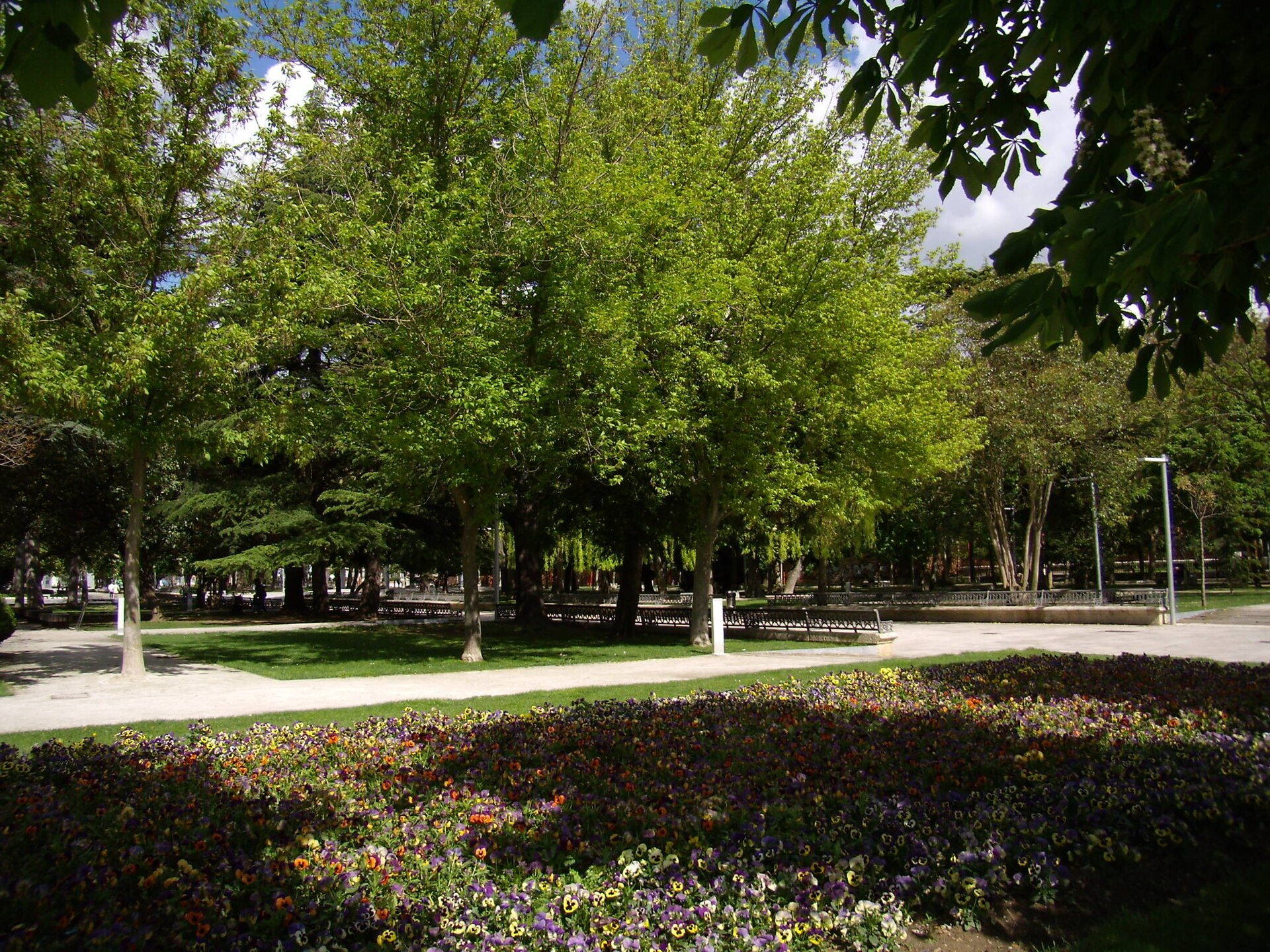
Beyond its role as green cover, the park mixes ornamental gardens with functional public space. Visitors will find a small open-air amphitheatre used for minor outdoor gatherings, an artificial waterfall, and a canal running through the grounds. The park also borders the smaller Parque de San Pablo, so the two effectively form one continuous green stretch at this entrance to the city.
What kind of trees and plants grow here?
The planting is mature and varied: holm oaks, acacias, cedars, plane trees, cypresses, chestnut trees, ornamental red-leafed plums (a Pissard variety), and walnut trees all grow within the park. This mix means the appearance shifts noticeably with the seasons — dense shade in summer, strong colour changes in autumn.
Is it a good stop for families with children?
Yes. There is a recreational skating rink for children along with swings, and a marked botanical route runs through the park so visitors can identify individual tree species as they walk. It is a practical way to combine a stroll with a bit of nature education, without needing a guide or extra planning.
How has the park changed in recent years?
Under a municipal action plan covering 2015–2019, the area around the station and the start of Calle Mayor underwent a 2.3-million-euro redevelopment, funded in part by European EDUSI funds together with the regional government of Castile and León. The goal was a more accessible, better-organised public space at this gateway point into the city. The works were not free of controversy: in February 2020, 73 trees were felled during the renovation, which triggered protests from residents in nearby neighbourhoods over the scale of the clearing in such a long-established park.
Frequently asked questions
Where exactly is the park located? Directly beside Palencia's railway station, postal code 34005, on the side facing the city centre.
Is there an entrance fee? No, it is a fully public municipal park with open access and no fixed opening hours typical of enclosed sites.
How long does a visit take? Walking the main paths and the botanical route usually takes around 20 to 30 minutes, though the park also works well for a longer rest under the trees.
Is it suitable for children? Yes — the skating rink, swings, and generous, safe green space make it a convenient stop for families, especially right after arriving by train.
Can it be combined with another nearby stop? Its border with Parque de San Pablo makes it easy to extend the walk through another stretch of greenery before continuing toward Calle Mayor and the old town.
Nearby places

Earn badges for the places you visit
Download NextOnTrip, discover new places and check off your trails.