About this place
The Immaculata Statue in Milotice
The Immaculata is a stone statue standing in Milotice, Czech Republic, depicting the Virgin Mary in the iconographic type that gives the sculpture its name. It can be found at coordinates 48.956615, 17.1406475, making it easy to locate while exploring the village.
What does "Immaculata" mean as an iconographic type?
Immaculata refers to a way of depicting Mary that took shape in the 17th century and became especially popular during the Baroque and Rococo periods. In this type, Mary is shown without the infant Jesus, as a young woman dressed in a white gown and a blue cloak. She stands against a background of sky, on a crescent moon entwined with a serpent — a symbol referencing the triumph over evil. The composition is completed by a luminous mandorla, an almond-shaped halo of light surrounding the figure, and a crown of stars above her head.
This type of representation was especially common in freestanding Baroque sculpture — precisely the kind of statue placed in town squares, at crossroads, or in front of churches throughout Central Europe. The Milotice statue fits squarely into this tradition: it is an independent sculpture rather than part of a larger architectural composition, which was typical of this kind of devotional work.
Where does this iconography come from?
The image of the Immaculata is directly linked to the doctrine of the Immaculate Conception — the belief that Mary was free from original sin from the moment of her own conception. It is one of the four Marian dogmas of the Catholic Church. Although medieval theologians debated the question for centuries, it was only formally defined as a dogma in 1854, by Pope Pius IX, in the papal bull Ineffabilis Deus. Earlier, between 1545 and 1563, the Council of Trent had already affirmed, though not yet at the level of dogma, Mary's freedom from personal sin.
It is worth noting the distinction here: the dogma itself concerns freedom from original sin, while the Council of Trent's declaration addressed freedom from personal sin — two related but separate theological questions that together laid the groundwork for the Marian devotion that continued developing over the following centuries.
Why is the statue worth seeing in Milotice?
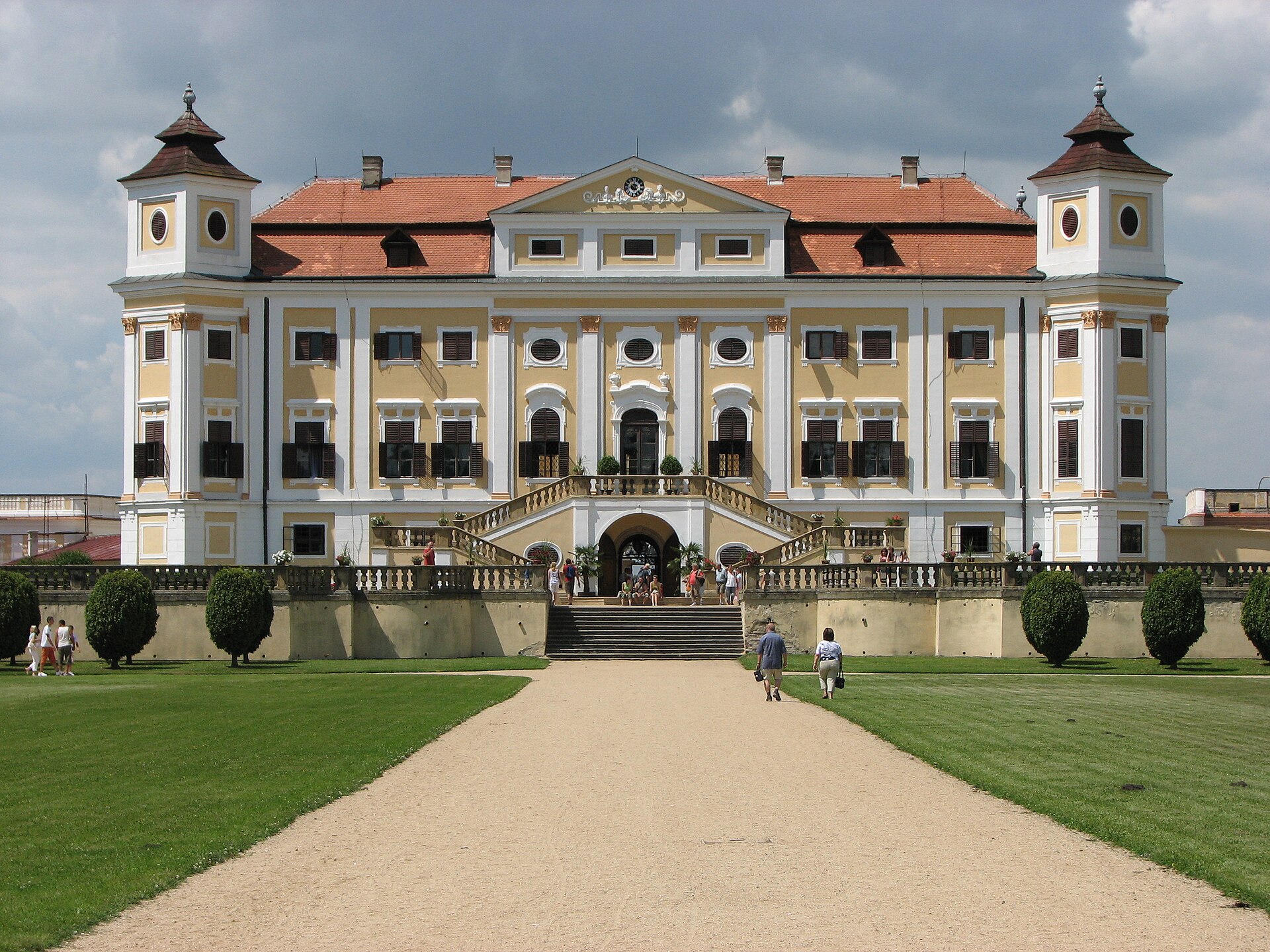
Milotice, a small village in the Czech Republic, is best known for its Baroque chateau, but small-scale sacred monuments such as roadside and square statues of saints are just as important a part of the local cultural landscape. The Immaculata fits within the tradition of erecting such sculptures as an expression of popular piety and gratitude for protection — a practice common across the Moravian region from the Baroque era well into the 19th century.
For anyone interested in the history of sacred art, the statue is a good example of a typical Marian iconography nearly four centuries old, still present in the public space of small Central European towns today. For a casual passer-by without specialist knowledge, it is simply a quiet, modest point of interest on a walking route — a white, slender figure set against the sky, recognisable by the distinctive serpent beneath her feet and the crown of stars above her head.
Frequently asked questions
What does the Immaculata statue depict? The Virgin Mary without the infant Jesus, wearing a white gown and a blue cloak, standing on a crescent moon entwined with a serpent, surrounded by a luminous mandorla and a crown of stars.
When did this type of depiction emerge? It took shape in the 17th century and was especially popular during the Baroque and Rococo periods.
How does the Immaculata differ from other depictions of Mary? Mainly by the absence of the infant Jesus and by specific symbolism — the crescent moon with a serpent, the mandorla, and the stars — referencing the doctrine of the Immaculate Conception.
Where exactly is the statue located? In Milotice, Czech Republic, at coordinates 48.956615, 17.1406475.
Nearby places

Earn badges for the places you visit
Download NextOnTrip, discover new places and check off your trails.