About this place
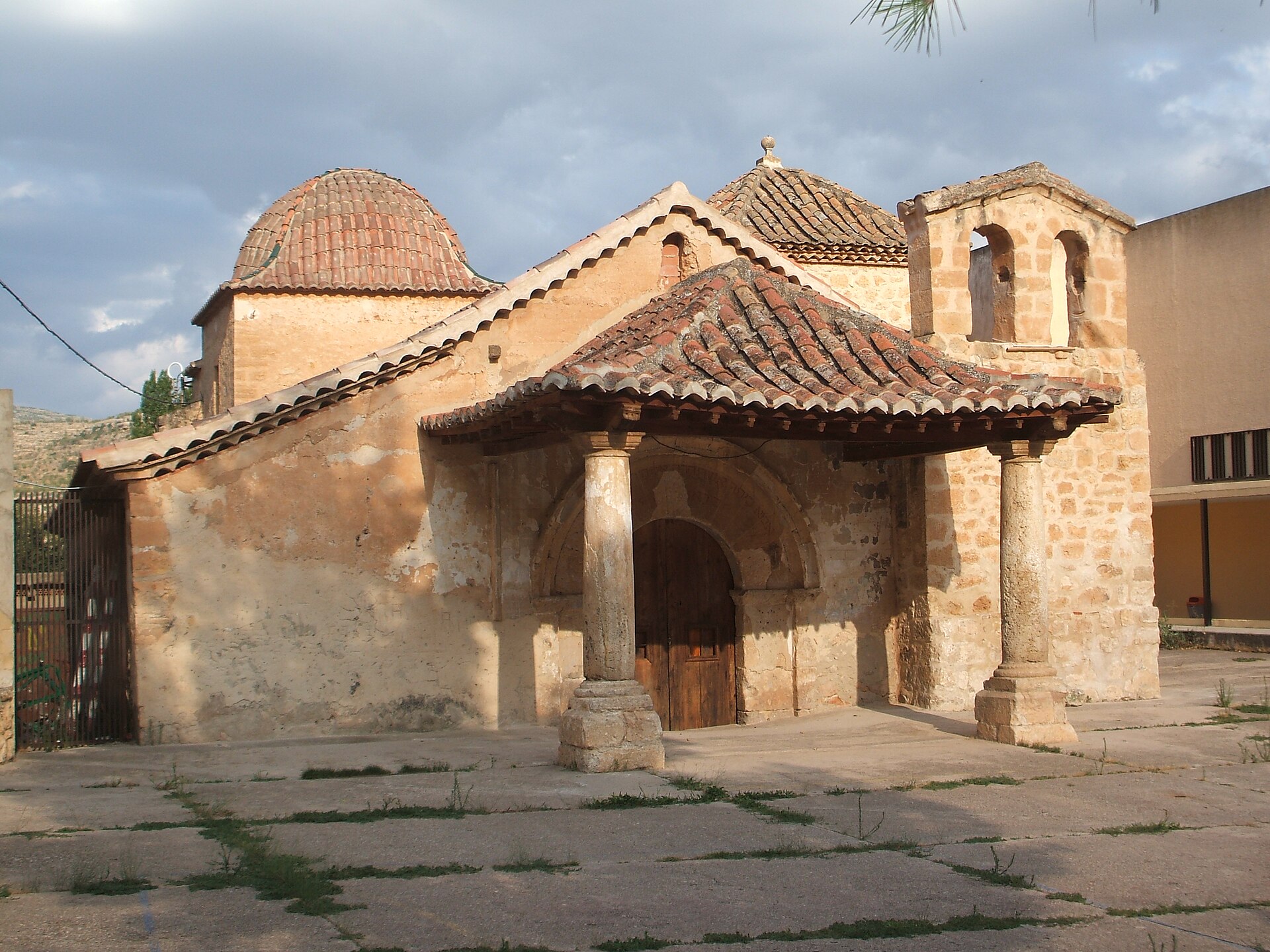
Iglesia de Santa Elena is a small parish church in Pedro Izquierdo de Moya, a tiny hamlet belonging to the municipality of Moya, in the province of Cuenca, Castilla-La Mancha, Spain. The building stands at the western edge of the settlement, on the CUV-5008 road that links Pedro Izquierdo with Santo Domingo de Moya, right next to the old path leading to the village cemetery.
Where exactly is it located?
Pedro Izquierdo de Moya is one of several scattered hamlets that make up the historic municipality of Moya, on the eastern side of Cuenca province. The setting is typical of inland Castilla-La Mancha: quiet, rural, and sparsely populated. The church is a free-standing structure, clearly visible against the surrounding fields and low hills, and acts as a landmark for anyone travelling along the road.
What does the building look like?
The church has a rectangular floor plan and follows the traditional orientation, with the chancel facing east and the entrance facing west. The nave is divided into two sections, and a small two-opening bell tower rises above the main façade. The single entrance is set within a round (semicircular) arch. The walls are built of plain rubble masonry, plastered, with squared ashlar stone reinforcing the corners — a construction method common to rural religious buildings in this part of Spain. Both sections of the church are covered by a gabled roof finished with traditional Spanish clay tiles.
When was it built?
Available sources date the church to the 16th century, most likely to its middle or later decades, with subsequent alterations carried out over the following centuries. This pattern of gradual modification is typical of small village churches that have remained in continuous use for generations.
Why does its location matter?
The church sits along the route of the Camino de la Vera Cruz, a historic pilgrimage path connecting Puente la Reina in Navarre with Caravaca de la Cruz in Murcia. The route passes through the Rincón de Ademuz area and the lands of Moya, with Pedro Izquierdo marking one of the stops along the way. For travellers following this path, the church serves as a natural waypoint and a fixed point in the surrounding landscape.
Is it worth a stop?
Iglesia de Santa Elena is not a monumental landmark — it is a modest rural parish church, administratively part of the Diocese of Cuenca. Its interest lies in its authenticity: it is a representative example of the small-scale religious architecture found across the hamlets of Castilla-La Mancha, preserved in a largely unaltered, functional form. It is worth a brief stop for anyone passing through the Moya area or following the Camino de la Vera Cruz who wants to see what a small rural church in this region actually looked like.
Frequently asked questions
Where is Iglesia de Santa Elena located? In Pedro Izquierdo de Moya, a hamlet of the municipality of Moya, in Cuenca province (Castilla-La Mancha), on the CUV-5008 road at the western edge of the settlement.
How old is the church? The oldest part of the building is dated to the 16th century, with later modifications added over subsequent periods.
What architectural style does it follow? It is a simple structure with a rectangular plan, a nave divided into two sections, a bell tower with two openings, and a round-arched entrance portal; the walls are rubble masonry with ashlar corners, and the roof is gabled and tiled.
Is the church connected to any pilgrimage route? Yes — it lies on the Camino de la Vera Cruz, which connects Puente la Reina in Navarre with Caravaca de la Cruz in Murcia, passing through the Rincón de Ademuz area and the lands of Moya.
Nearby places

Earn badges for the places you visit
Download NextOnTrip, discover new places and check off your trails.