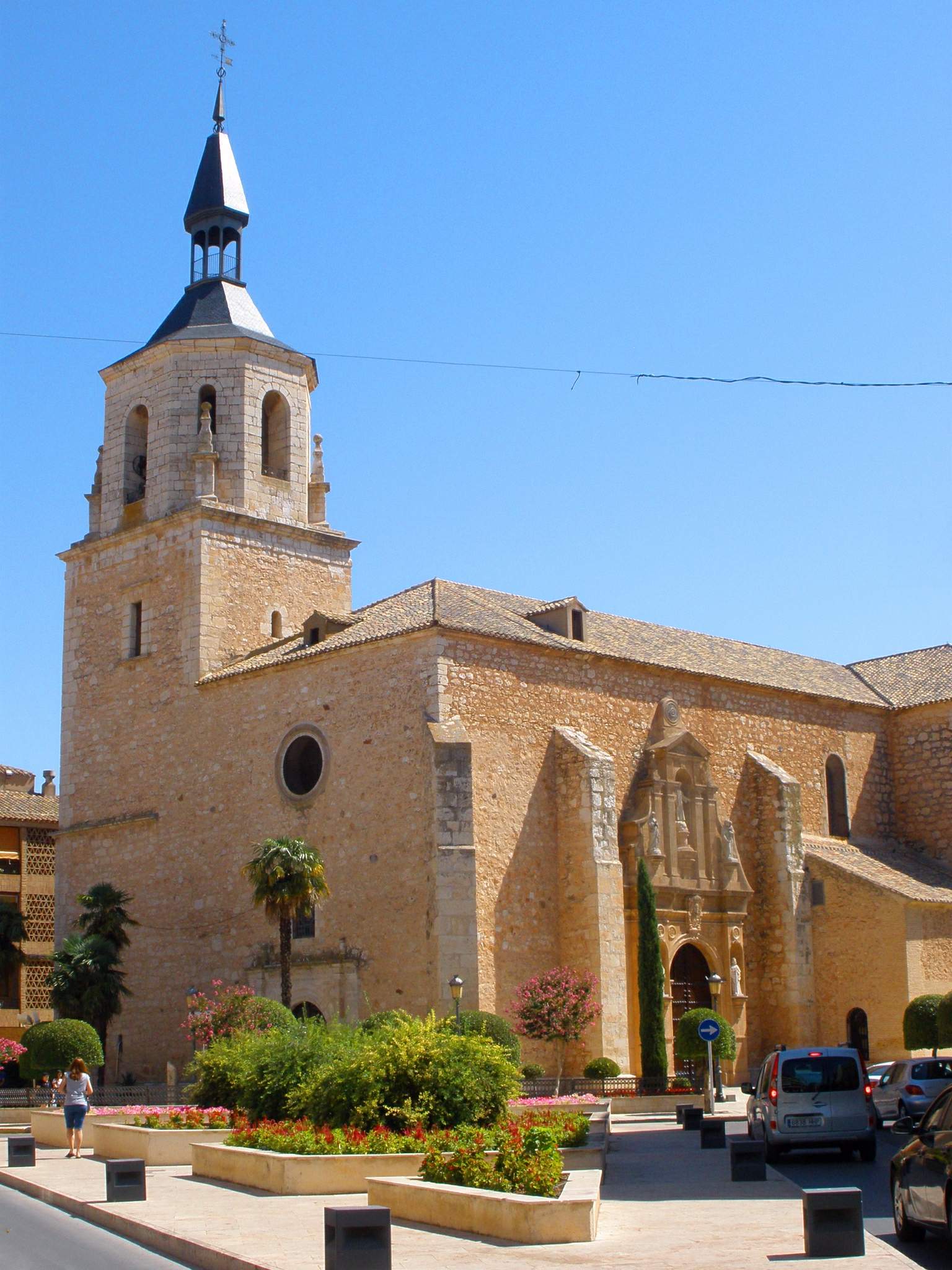
About this place
The Church of San Pedro Apóstol stands in the heart of Daimiel, a town in the province of Ciudad Real, in Spain's Castilla-La Mancha region.
How did the church come to be built?
Construction began shortly after 1542, the year Emperor Charles I granted, from Valladolid on 10 February, permission to raise a second parish church in Daimiel. Progress was slow: by 1563 the building was already functioning as a parish - the earliest surviving baptismal records date from that year - yet in 1576 half of the nave and the tower were still unfinished. The interior has changed considerably over the centuries. The original main altarpiece, carved in the ornate Churrigueresque style, was destroyed during the Spanish Civil War in 1936. Its replacement, created by sculptor Alfredo Lerga, was installed in 1948, the same year bishop Emeterio Echevarría Barrena consecrated the finished building.
What should you look for inside and out?
The church follows a Latin-cross floor plan built in the Doric order. Its vaults are brick, the transverse arches are cut stone, and the floor is laid with ceramic tiles. The vaulting consists of simple rib patterns, with star-shaped motifs appearing over the crossing and the apse.
The most distinctive feature outside is the bell tower, divided into three stages by string courses. The lowest stage holds a round-arched window framed in rusticated stone; the second stage repeats a similar window but with a flat lintel instead of an arch. The top stage, built entirely of ashlar masonry, is octagonal in plan, capped with a spire, and marked at its corners by four small stone pyramids topped with balls.
How do you get there?
Daimiel sits roughly 30 km north of Ciudad Real, along the route linking that city with Manzanares and Madrid. Drivers can reach it via the A-43 motorway or the N-430 national road, while regional buses run from Ciudad Real. Since the church anchors the historic centre of town, it is an easy walk from anywhere in Daimiel once you arrive.
When is the best time to visit?
Spring and autumn bring milder temperatures than La Mancha's scorching summers, making them the most comfortable seasons for exploring the town on foot. Visiting around the town's patronal feast or other local religious celebrations often means catching the church at its liveliest, sometimes decorated for the occasion. Early morning visits are quieter and let the stonework of the tower catch the low sunlight to best effect.
Frequently asked questions
When was the Church of San Pedro Apóstol built? Building work started after Emperor Charles I authorised a new parish church in 1542, though construction dragged on for decades - as late as 1576 half the church and its tower remained unfinished.
Has the original furnishing survived? Not entirely. The first altarpiece, in the Churrigueresque style, was destroyed in 1936 during the Civil War. The current one, by Alfredo Lerga, was installed in 1948.
What architectural style does the building represent? It blends Renaissance and Baroque elements typical of religious architecture in Castilla-La Mancha: a Latin-cross plan, Doric order, and a tall stone tower built in distinct stages.
Can visitors climb the tower? The tower is best appreciated from outside, from the square in front of the church; its three stages and octagonal, pyramid-topped summit are most visible from the streets of Daimiel's old town.
Nearby places

Earn badges for the places you visit
Download NextOnTrip, discover new places and check off your trails.