About this place
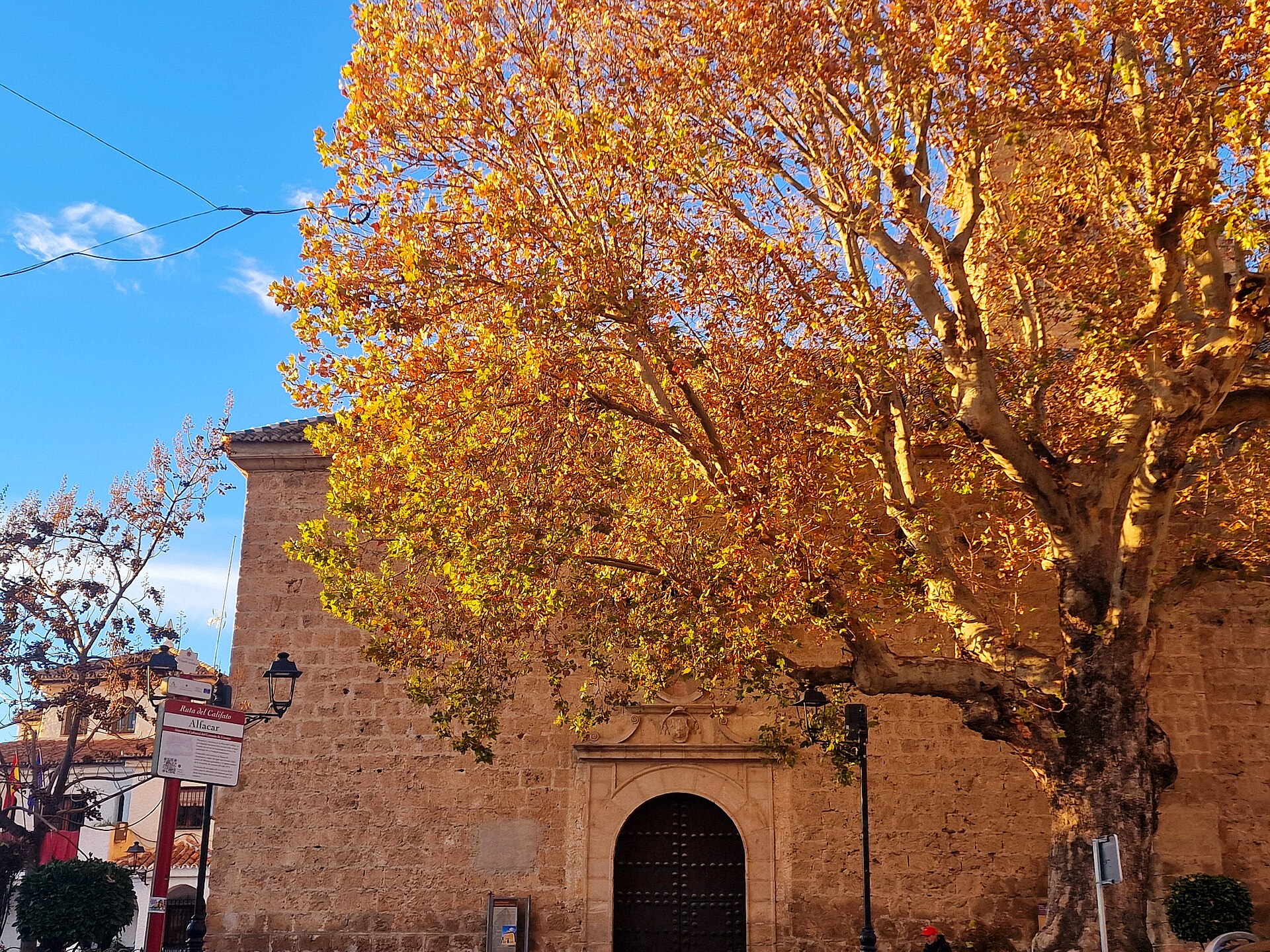
Iglesia de San Pedro Apóstol is the 16th-century parish church of Píñar, a small town in the province of Granada, in the Guadix and El Marquesado district, roughly 35 minutes' drive from the Andalusian capital. The church stands on Plaza de las Palomas and remains the active religious heart of the town, belonging to the Archdiocese of Granada.
What is there to see inside?
The building's main architectural treasure is its Mudéjar-style interior — a fusion of Christian church architecture with techniques and motifs drawn from Muslim craftsmen, a hallmark of Andalusia in the centuries following the Reconquest. The church has a single nave, and its most valuable feature is a Mudéjar coffered wooden ceiling (artesonado), widely regarded as a detail of considerable artistic worth. Ceilings of this kind, built from geometrically arranged and often carved beams and panels, were typical of carpentry workshops working across Andalusia's cultural borderlands in the 1500s.
Because the church's layout is a simple single nave, the ceiling naturally draws the eye. It is worth stepping inside and looking up first, tracing the coffered pattern before turning attention to the altar and liturgical furnishings.
How do you get to Píñar?
Píñar sits in the northeastern part of Granada province, in a landscape known for limestone outcrops and caves. The easiest way to arrive is by car — the drive from Granada city takes around 35 minutes through the Guadix and El Marquesado district. The church itself stands right in the town centre, on Plaza de las Palomas, so once you reach Píñar it is an easy walk from anywhere in the old town.
When should you visit, and when can you go inside?
The church operates as a working parish, so access to the interior is tied mainly to Mass times. In winter, services are held on Wednesdays at 18:00 and Sundays at 10:15. In summer, the Wednesday Mass moves to 20:00 while the Sunday service stays at 10:15. These are the most reliable windows for seeing the inside of the church without arranging a visit with the parish in advance.
As for weather, spring and autumn are the most comfortable seasons to visit this part of Granada province — summers can get very hot, while winter brings noticeably cooler temperatures to the higher parts of the district.
What else is worth seeing nearby?
Píñar is best known for the Cueva de las Ventanas, the only cave in the whole of Granada province equipped for public visits and accessible to people with reduced mobility. The cave was used by humans from the Upper Palaeolithic through the Bronze Age as a place of worship and shelter, and today it holds the status of both a Bien de Interés Cultural and a Natural Monument of Andalusia. A small interpretation centre in the basement of the town hall provides further background.
The second landmark is the Castillo de Píñar, a Nazarí-period fortress (13th–15th centuries) perched on a limestone crag more than 1,100 metres above sea level. The oval enclosure covers roughly 3,000 square metres and counts eleven towers — nine square and two semicircular. Pairing the church visit with a short walk through the historic centre and up toward the castle viewpoint makes for a well-rounded stop in Píñar.
Frequently asked questions
Can you visit the Iglesia de San Pedro Apóstol in Píñar at any time? No — it is an active parish church, so the interior is generally open during Mass times: Wednesdays (18:00 in winter, 20:00 in summer) and Sundays at 10:15.
What is the most striking feature inside? The Mudéjar coffered wooden ceiling (artesonado) above the single nave, considered the church's most valuable architectural detail.
How far is Píñar from Granada city? About a 35-minute drive.
Is there anything else to see in Píñar besides the church? Yes — the Cueva de las Ventanas, the only show cave in Granada province, and a medieval Nazarí castle with eleven towers overlooking the town.
Nearby places

Earn badges for the places you visit
Download NextOnTrip, discover new places and check off your trails.