About this place
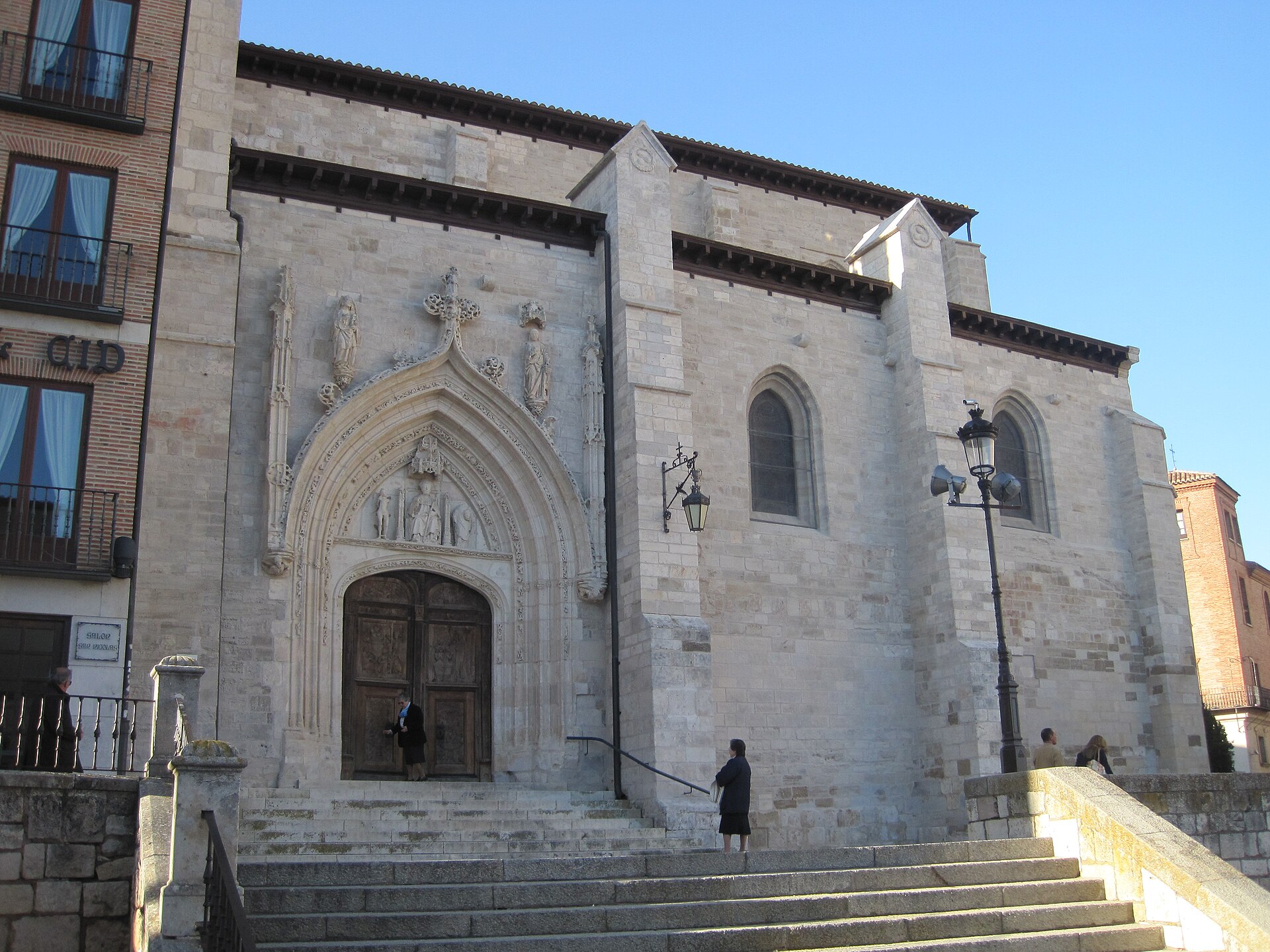
Iglesia de Nuestra Señora del Pilar is a modest parish church in Burgos with an unusually specific industrial backstory, standing across from Plaza Virgen del Pilar in the neighborhood locals still call "de la SESA." It's also the last church pilgrims pass on the Camino de Santiago as they leave the city behind.
Where does this church come from?
The building owes its existence to Burgos's industrial history rather than to a bishop or a noble patron. In 1942, the Sociedad Española de Seda Artificial (SESA) — previously operating as Alday y Compañía — set up an artificial silk factory in the city. For its workforce, the company built an entire company neighborhood: housing blocks, a school, a company store (economato), a health dispensary, and this church. The building was inaugurated on 19 March 1947, originally dedicated to Saint Joseph (San José), and for decades operated as a chapel dependent on the parish of San Antonio Abad.
Only in 2002, when it was finally established as an independent parish, did the archdiocese rededicate it to Nuestra Señora del Pilar — a name that then spread to the surrounding district as well.
What will you see inside?
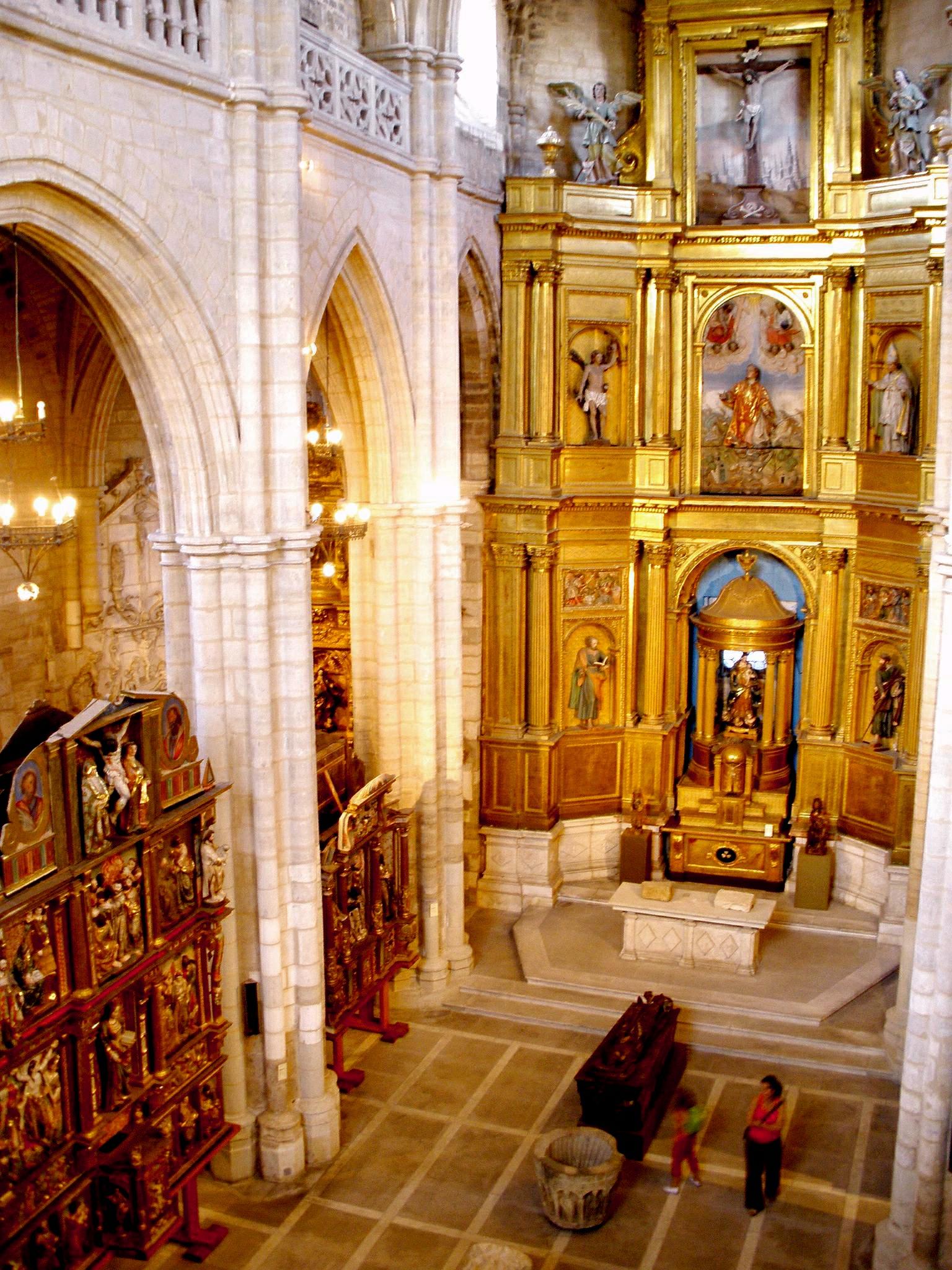
The building is a modest example of neo-Byzantine style, typical of mid-20th-century religious architecture built for working-class communities. Three features, all the work of recognized craftsmen of the period, stand out inside:
- Stained-glass windows by the Maumejean brothers, a Franco-Spanish workshop responsible for glasswork in numerous Spanish churches and cathedrals.
- Metalwork and liturgical silverware signed by Maese Calvo.
- Sculptures and devotional images carved by Joaquín Lucarini, including the image of the church's patroness.
This isn't a first-tier monument — it's a working parish church — but its interest lies precisely in what it represents: a physical record of Burgos's mid-20th-century industrialization and the paternalistic model under which factories of the era built not just jobs but full social infrastructure for their workers.
How do you get there?
The church sits on Plaza Virgen del Pilar, in a district on the western edge of central Burgos. It falls naturally on the route of pilgrims walking the Camino de Santiago (Camino Francés) — this is the last church visible from the path before the route leaves the city. Visitors exploring Burgos on foot can easily combine a stop here with a walk along the pilgrim route, alongside the cathedral and the old town.
When should you visit?
As an active parish, the church is best visited during opening hours outside of Mass times, when you can look around the stained glass and interior fittings without disturbing a service. Morning sunlight tends to bring out the colors of the Maumejean windows best.
Frequently asked questions
Is the Iglesia de Nuestra Señora del Pilar a listed heritage monument? No — it doesn't carry national monument status. It's an active parish church whose interest is historical and social, tied to Burgos's industrial past.
Why did the church change its dedication from San José to Nuestra Señora del Pilar? The change happened in 2002, when the archdiocese established it as an independent parish and gave it a new dedication, which the surrounding neighborhood then adopted as well.
What's worth seeing inside? The stained-glass windows by the Maumejean brothers, metalwork by Maese Calvo, and sculptures by Joaquín Lucarini — three elements typical of mid-20th-century Spanish devotional art.
Is the church on the Camino de Santiago route? Yes — it's the last church pilgrims pass as they leave Burgos on the onward stretch of the Camino Francés.
Nearby places

Earn badges for the places you visit
Download NextOnTrip, discover new places and check off your trails.