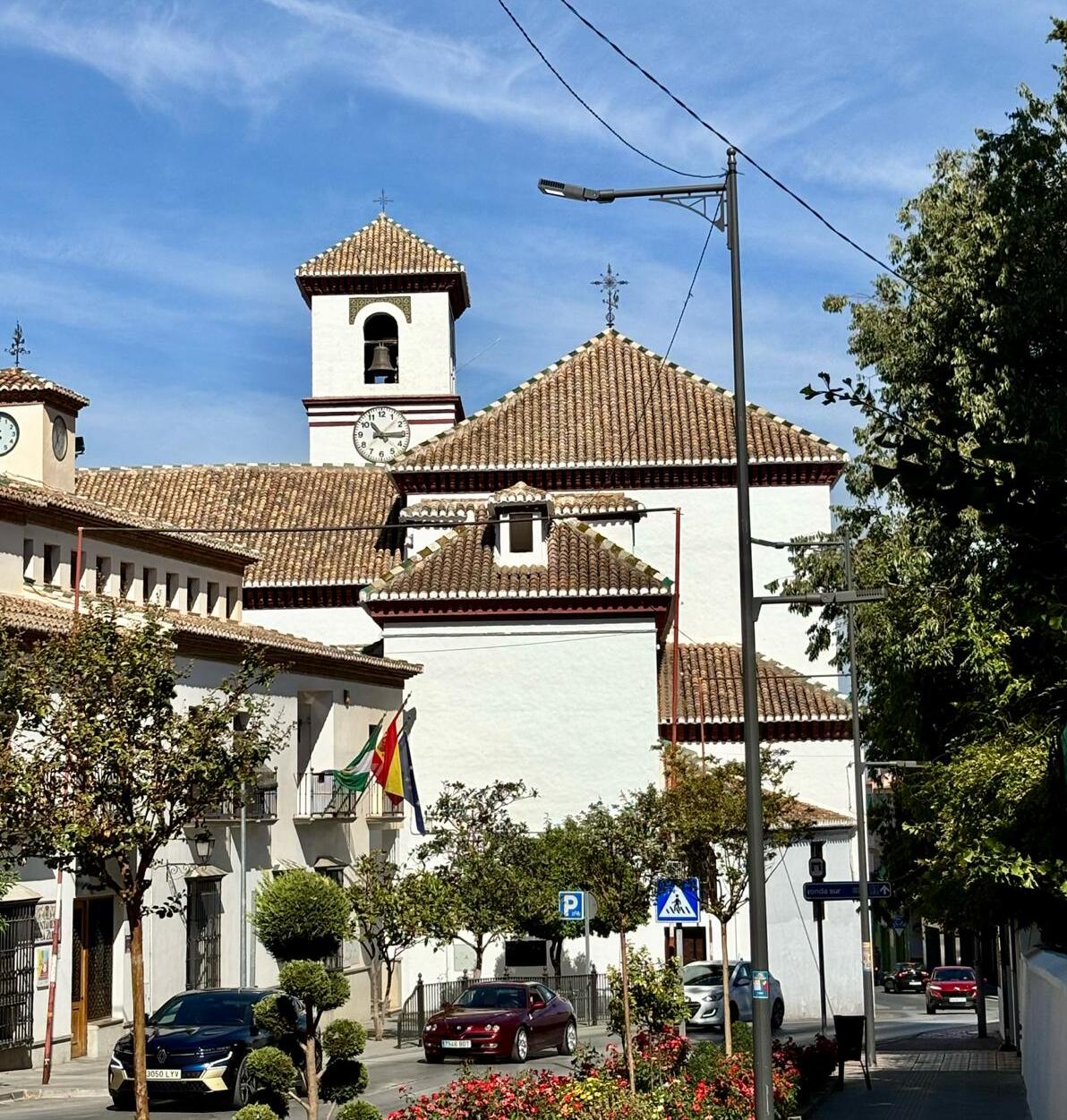
About this place
Iglesia de la Asunción is a historic parish church in La Zubia, a small town just south of Granada at the foot of the Sierra Nevada mountains in Andalusia, Spain. The building ranks among the region's most valuable religious monuments and is officially protected as a cultural heritage site.
How do you get to the church in La Zubia?
La Zubia sits only a few kilometers south of central Granada, so the trip from the city is short and easy, with regular local public transport and a direct road linking the two towns toward the Sierra Nevada. The church stands right in the center of La Zubia, making it a natural landmark for anyone walking through town. Many visitors combine the visit with a trip toward the Sierra Nevada, since La Zubia is often used as a gateway to the mountain range.
What will you see at Iglesia de la Asunción?
Construction of the church began in 1526 under the direction of Rodrigo Hernández, on the site of a former mosque — a common pattern for churches in the province of Granada built after the Christian reconquest of the region. In 1566 the building was reconstructed from the ground up after the earlier works had been interrupted by the Morisco rebellion. The new design was overseen by Juan de Maeda, with Juan Alonso responsible for the masonry work and Andrés de Madrid for the stonework.
The church is built in the Mudejar style and is considered one of the most important examples of sixteenth-century Mudejar architecture in the entire province of Granada — a style blending Christian and Moorish building traditions that is characteristic of Andalusia in the centuries following the Castilian reconquest.
Inside, the main nave leads to a monumental retable with proto-Baroque features, designed by Ambrosio de Vico in 1614 and one of the most striking decorative elements of the whole church. Above the nave rises an octagonal dome covered with a coffered ceiling. Two smaller chapels flank the main structure: a baptismal chapel on the right, and on the left the base of a three-story bell tower decorated with ceramic tiles, a detail typical of Andalusian religious architecture.
Given its historical and architectural value, the church has been declared a Bien de Interés Cultural (Asset of Cultural Interest) under the Monument category, by decree of the Andalusian regional government in 2004.
When is the best time to visit?
The Granada region has a Mediterranean climate with hot summers and mild winters, so spring and autumn are the most pleasant seasons for exploring La Zubia and its surroundings, when temperatures are moderate and the nearby Sierra Nevada peaks can still carry snow. Since the church remains an active parish, visitors should be mindful of ongoing religious services when they stop by.
Frequently Asked Questions
What is the Iglesia de la Asunción in La Zubia? It is a historic parish church built in the sixteenth century in the Mudejar style, listed among Andalusia's protected cultural heritage sites.
When was the church built? Construction started in 1526, and after being interrupted, the church was rebuilt from the ground up in 1566 to a design by Juan de Maeda.
What are the most notable features inside? The monumental 1614 retable by Ambrosio de Vico, the octagonal dome with its coffered ceiling, and the tile-decorated three-story bell tower.
How far is La Zubia from Granada? The town lies just a few kilometers south of central Granada, at the foot of the Sierra Nevada, and is easily reached by local public transport.
Nearby places

Earn badges for the places you visit
Download NextOnTrip, discover new places and check off your trails.